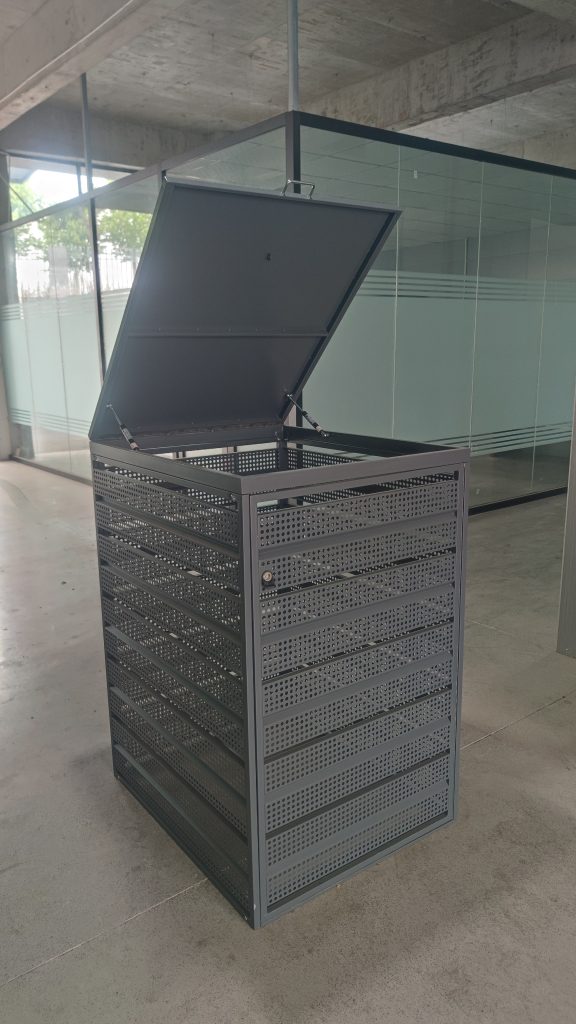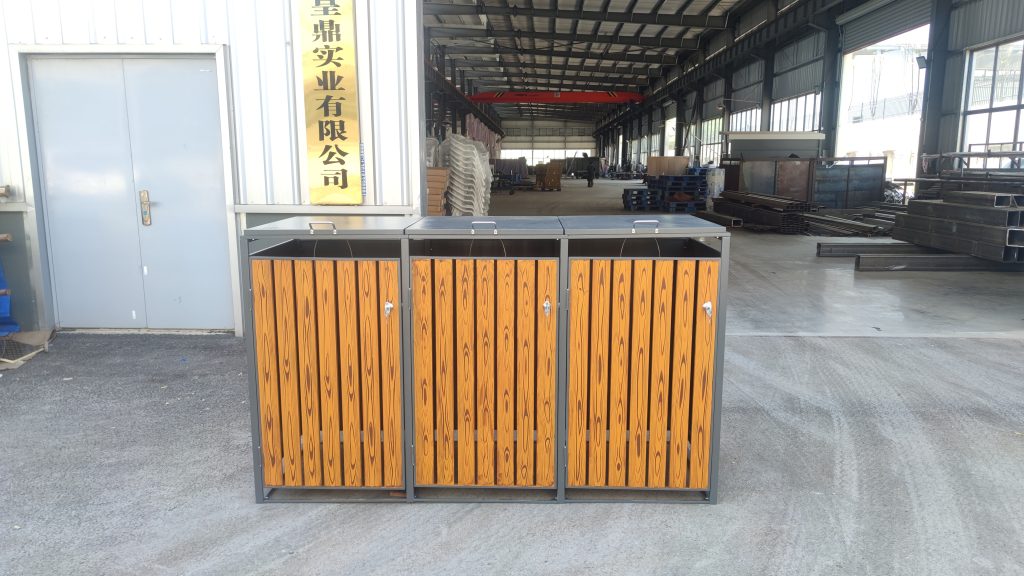
Why a Metal Wheelie Bin Shed Is the Upgrade Over Wooden Alternatives?
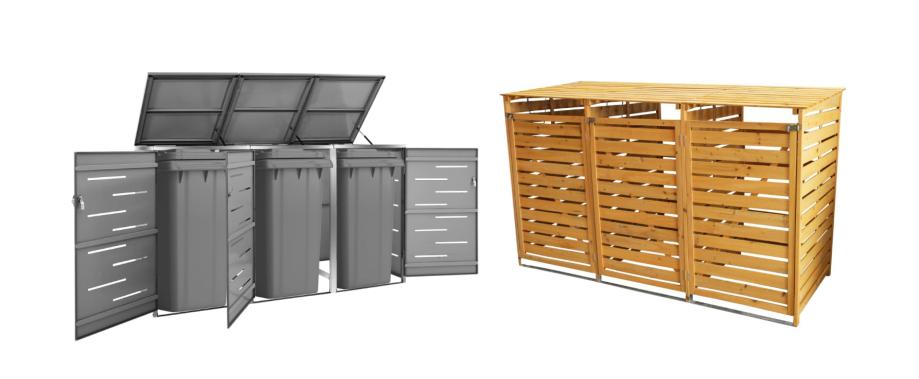
Although bin storage may not necessarily be a priority when developing or managing a property, using the wrong material for this purpose can result in maintenance issues in the future. Wooden bin stores have been common for many years just because they come at a relatively low price tag at first.
In the modern era, however, property managers prefer to purchase robust metal wheelie bin sheds. Why? Because wood requires maintenance and wears off quickly. A metal bin shed is more cost-efficient since it needs no maintenance during its lifetime.
The Degradation of Wood in Outdoor Environments
It is an organic product that continuously takes up water and gives it out. There is no way even the best-treated and painted wood can withstand the effects of the elements for decades.
The failure of wooden constructions under open conditions is manifested in three types of defects:
- Warping and Cracking: Due to constant wetting and drying of wooden planks, they start bending, twisting, and cracking. As a result, already within two or three years, the wooden construction starts to move, and its doors become unusable.
- Hardware Problems: Warping causes additional pressure on hinges, nails, and locks, which eventually loosen up and break down, leaving one without doors.
- Rot and Mold: If wooden products rest on the ground, sooner or later, it will rot and mold. If there is a lot of rain in the area, a wooden storage unit becomes completely useless after five years.
Advantages of Galvanized Metal Wheelie Bin Shed
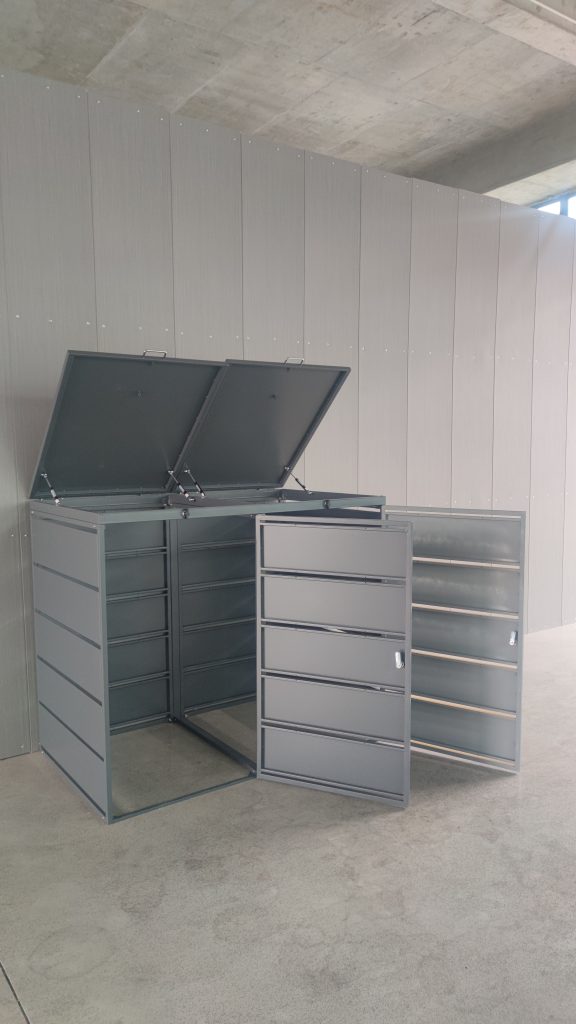
Industrial metal wheelie bin sheds resolve these problems by using stable steel instead of unstable wooden material.
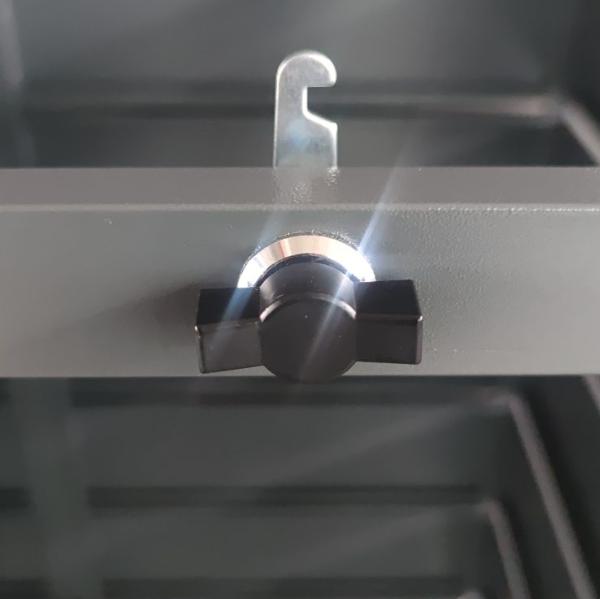

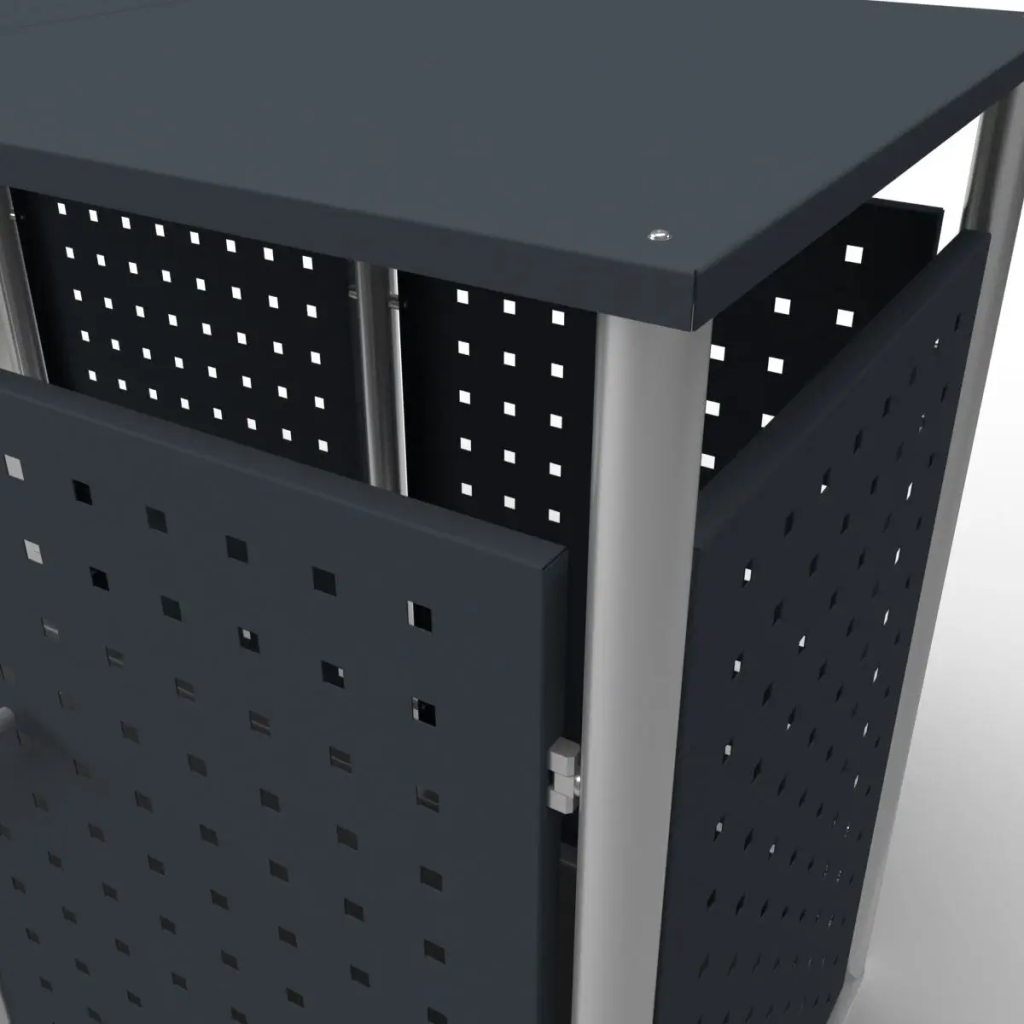
Corrosion Resistance via Hot-Dip Galvanization
Quality metal box buildings do not corrode. These structures are made using hot-dipped galvanized metal or thick aluminum and are further protected by outdoor paint finishes.
Galvanizing means dipping steel into molten zinc, which forms a thin layer bonded with the metal. This layer protects the steel surface even if a scratch occurs on the paint surface due to regular use. Moreover, no other maintenance work except hosing down with garden hoses for 10 to 15 years is needed.
Structural Integrity Under Wind Loads
The wooden slats function like sails, catching the wind and making the structure shake. Strong metal wheelie bins make use of heavy-duty metal sheets and reinforced internal frameworks.
Being bolted securely into place via concrete or paving stones using expansion bolts ensures that the shed does not move from its position. When the wind hits the flat metal panels, the weight is transferred down through the internal frame, and the ground bolts keep the entire unit completely stable, even during severe coastal storms.
Vermin-Proof Precision Design
Rodents such as rats, mice, and foxes present a huge menace to open dump sites. These animals have been known to easily nibble through treated wood corners and gaps in order to access the food waste within.
Steel panels are fully resistant to vermin. Moreover, due to the exact engineering employed in cutting the panels in the factory, there will be no gaps that exceed 5mm around your bin doors or vents. This is too tight for mice or rats to squeeze through, keeping your bin area clean and secure.
Specifications to Look For in a Premium Metal Bin Shed
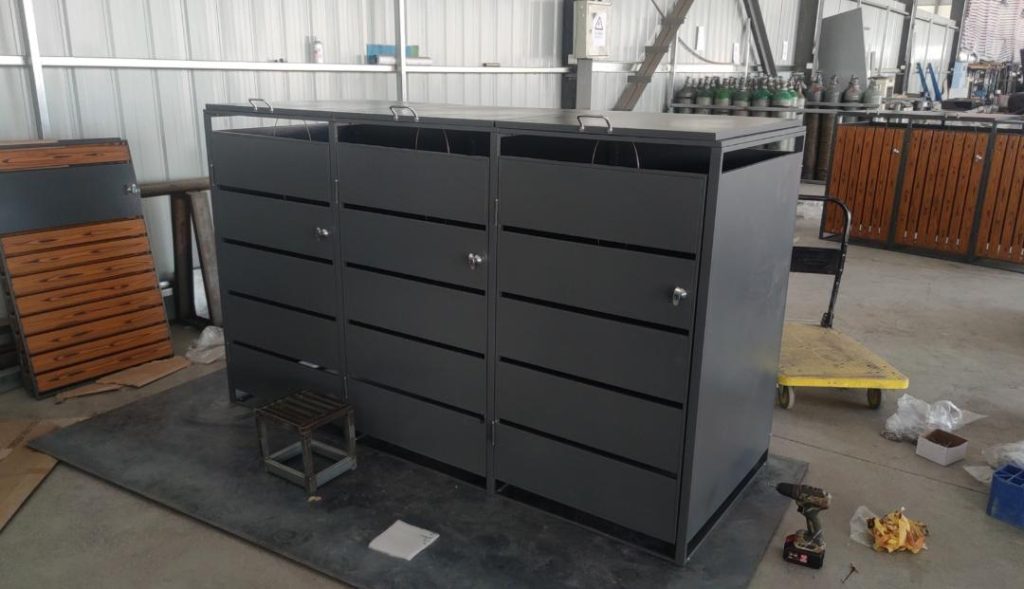
When reviewing manufacturing data sheets or drafting a procurement tender, avoid low-cost retail garden sheds. Thin metal will dent and warp under the daily impact of heavy waste management.
To ensure the enclosure survives high-traffic commercial or residential use, use this technical checklist:
Material Weight and Gauge
It is not enough just to consider the external dimensions; pay attention to the gauge of the material.
- Not recommended: 0.25mm – 0.4mm steel. These types of steel are very lightweight, providing no protection whatsoever from the impact of a full 240L (or other) plastic container.
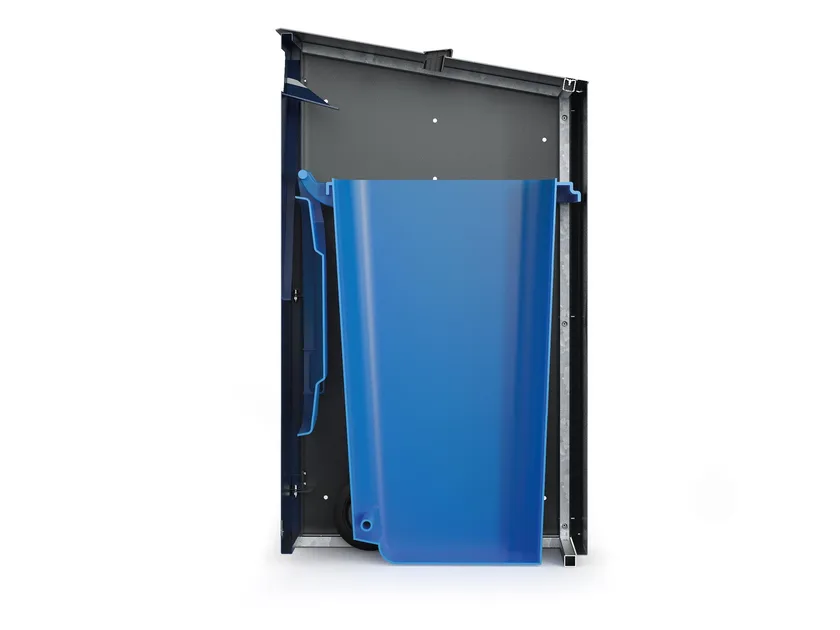
- Recommended: At least 0.8mm – 1.2mm thick hot dip galvanized steel with an internal structure of 1.5mm structural steel frame.
Tip of the Trade: Heavy-duty steel offers sufficient weight necessary to withstand constant impacts without any damage.
Lid Hydraulics and Safety Systems
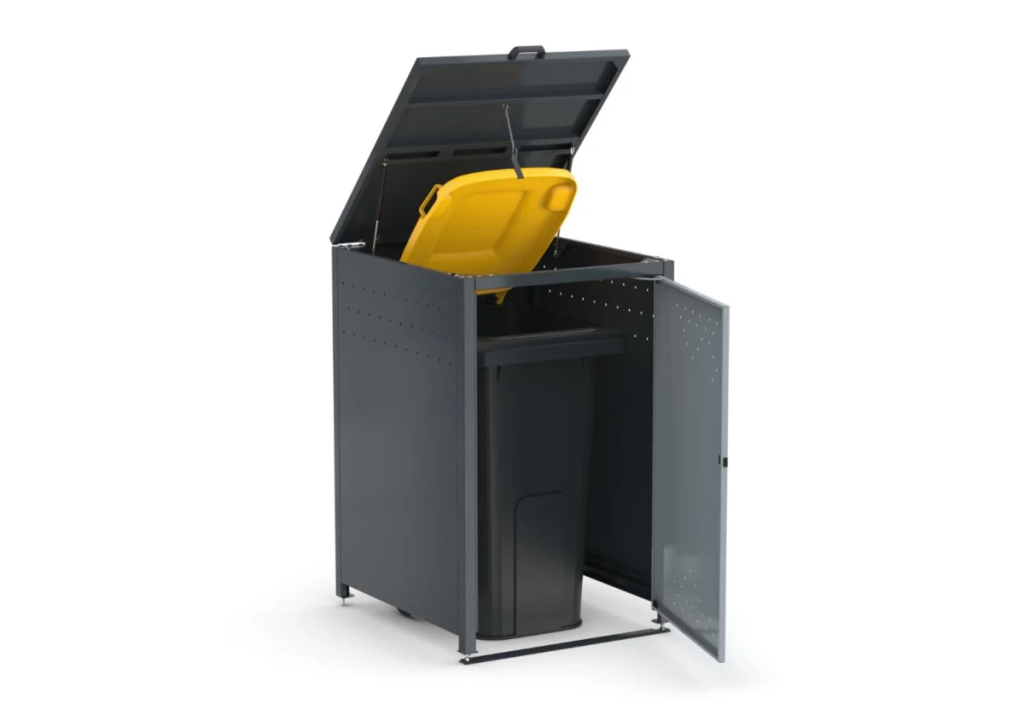
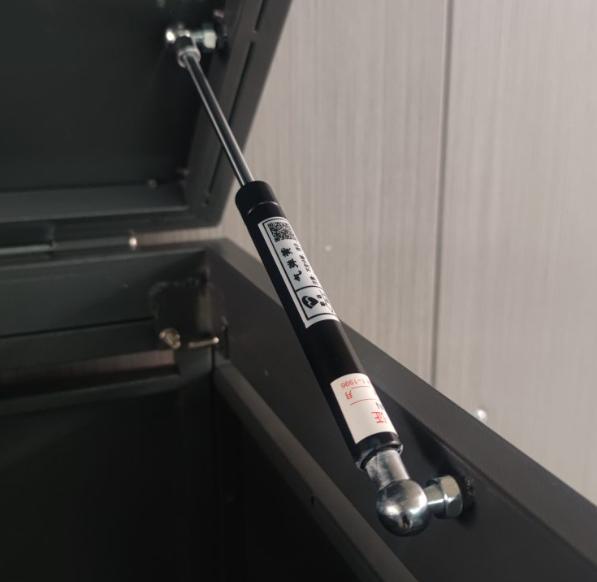
Operating a heavy metal enclosure roof while holding waste bags requires balanced mechanics. A premium shed must treat lid lifting as a safety feature, not an add-on.
| Hardware Feature | Cheap/Standard Sheds | Premium Industrial Enclosures |
| Lifting Mechanism | Manual lift or basic metal prop | Heavy-duty dual gas struts (Pneumatic) |
| User Experience | Requires two hands; high risk of slamming | Smooth, one-handed opening with balanced tension |
| Hands-Free Disposal | Must open the shed, then open the plastic bin | Integrated lid-to-bin chain links (Both lids open together) |
| Safety | High pinch-point hazard for fingers | Controlled, slow-closing dampening system |
Air Exchanges & Airflow Engineering
Putting the organic waste inside an airtight metal bin during the summer gives rise to a foul smell and health issues for people nearby. But putting just holes in such a bin would let in rainwater and corrode the inner parts of the bin.
The bin should have either mathematically engineered louvers (angled openings) or precisely laser-cut ventilation slots to meet two important engineering requirements:
- Air Cross Flow: Facilitates natural ventilation from the top side of the bins to remove methane and foul smells.
- Rainproofing: The angling of the louvers keeps out the rain and prevents moisture from forming internally.
Conclusion
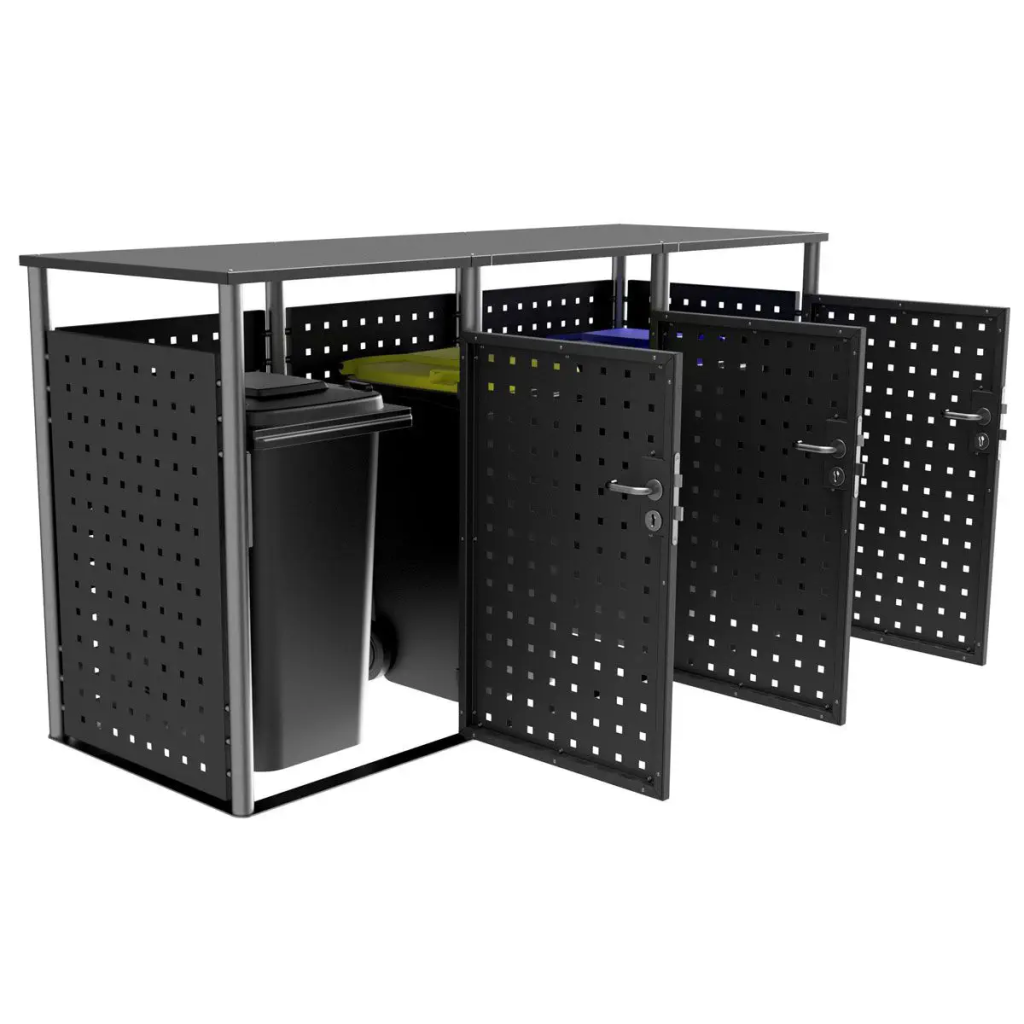
At the end of the day, opting for a cheap timber store to save on initial capital expenditure is a textbook false economy. The math simply does not work out when you factor in the recurring labor costs of annual staining, the inevitable hardware repairs, and the total asset replacement required every five years.
A high-specification, hot-dip galvanized metal wheelie bin shed is not a short-term purchase—it is a 15-year infrastructure asset. By eliminating organic decay, denying pest access, and removing the need for ongoing maintenance, engineered steel delivers a clean balance sheet and a permanent solution for property management. For modern commercial development or high-end residential project, specifying galvanized metal is the only logical choice for long-term reliability.
Related Products