
Is Your Site Suitable for an Underground Waste Container System? 7 Factors to Evaluate Before Purchasing
Underground waste containers have become a viable option for residential areas, commercial sites, public places, and municipal projects. They offer a considerable amount of storage space for waste materials without making most of the equipment visible, and thus help keep the outdoor environment neat.
But then again, an underground waste container may not be ideal for all places. The ground conditions, space, accessibility by collection vehicles, and requirements of the project could influence whether or not its installation is feasible.
So, how do you know if your site is ready for it? Here are seven things to consider before purchasing one.
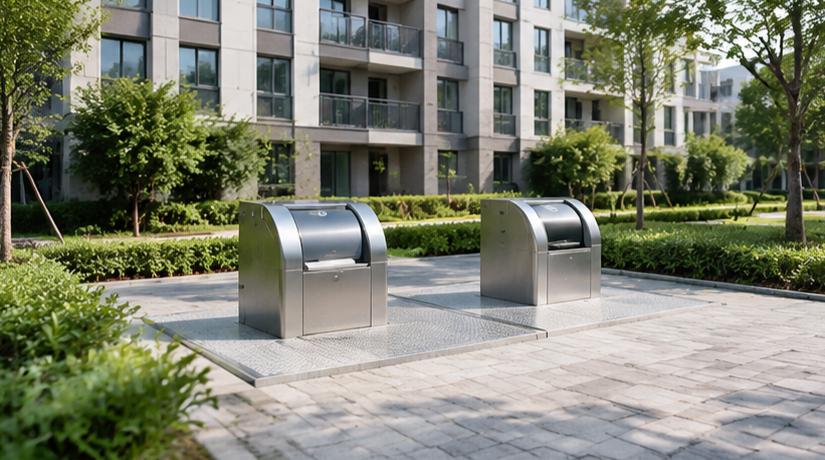
Is There Enough Underground Space?
Unlike outdoor bins, there must be enough space under the ground level for both the bin itself and its structure. While the installation site may look sufficiently large from above, it might be different below ground level.
The existing underground infrastructure is usually one of the primary hindrances. Various pipes like water or drainage system pipes, gas or electricity cables are likely to complicate the process of excavation.
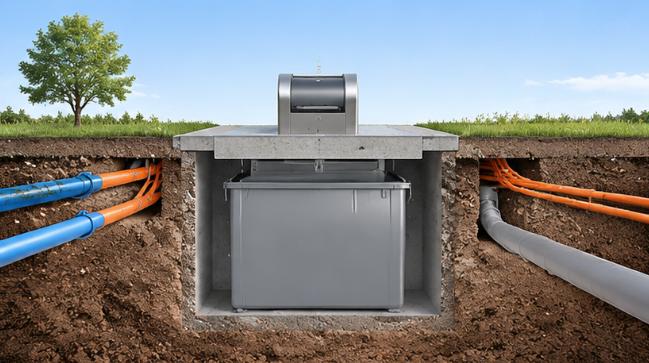
In this respect, having a plan of the underground utility lines is crucial, as is checking the actual situation on-site. In case any obstacles are found early in the game, the design can be modified.
For more details, see our guide to underground trash container installation.
Can the Ground Support the Installation?
Not only the excavation space but also the condition of the ground needs to be considered, since the ground needs to be able to support the underground structure.
The type of soil determines how the foundations will be laid and how stable the underground structure will be. If the soil is not strong enough or is unstable, reinforcements are needed. Groundwater is another issue that comes into play. If the water table is high, there can be infiltration of water and a pressure effect due to the presence of water.
However, these factors do not exclude the possibility of an underground structure. These factors just have a great influence on the costs involved and need proper engineering evaluation.
Can Waste Collection Vehicles Access the Site?
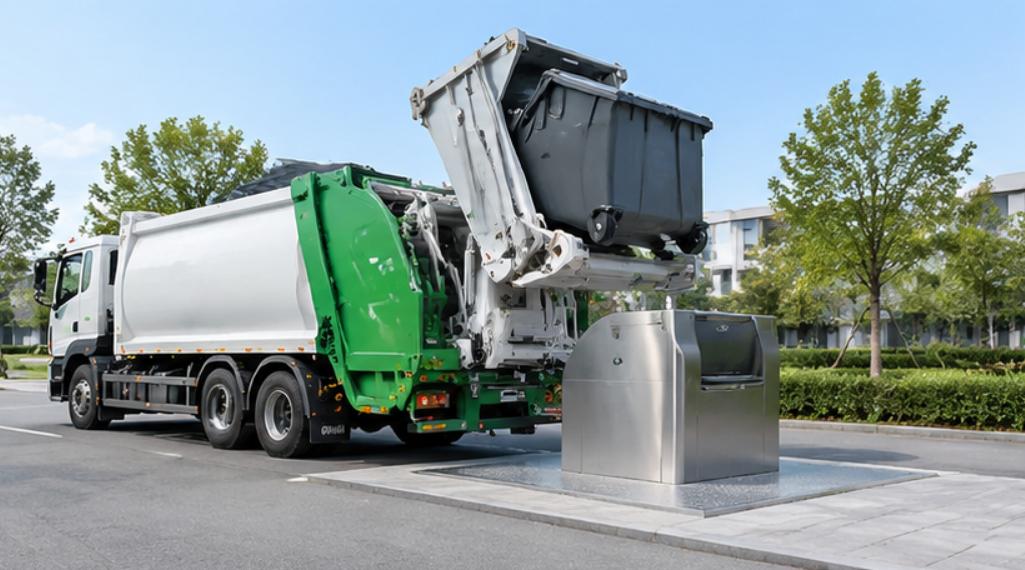
One of the most crucial considerations when making a purchase decision is the compatibility of the underground tank with the existing waste collection machinery.
It is important to note that there are differences in how the underground tanks are emptied. There are different designs that include crane-assisted lifting of the tank or liner, and hydraulic platforms for lifting the standard wheeled bins from the ground.
This is crucial since the difference is in the specifications of the vehicle and the process. For instance, the crane-assisted lifting requires the right lifting vehicle and appropriate overhead clearance. The hydraulic platform requires that the wheeled bins that are compatible with the system are available.
When selecting a system, it is crucial to:
- Know the vehicle available for collection.
- Ensure compatibility with the lifting mechanism.
- Specify the lifting height and overhead clearance.
- Know the access, turning radius, and parking position.
The system that is suitable according to the product specification sheet may not be practical with the local collection fleet.
Before making a decision, compare the available collection equipment with the specifications of the underground waste container system.
Is There Enough Space for Daily Use and Collection?
The system should serve two classes of users: those depositing the waste and those collecting it.
Take the case of a residential development where underground collection bins are located near a walkway. In order to make it convenient for the users to deposit their waste in the bins, there should be adequate space for collection vehicles to operate their equipment without causing problems in the process.
This applies to all public and commercial facilities too. What might appear to be convenient during ordinary use of the space will cause difficulties during the time of collection.
The ideal design would be one that incorporates convenience, ease of access to vehicles, as well as adequate clearance for the operations.
Does the Container Capacity Match Your Waste Volume?
Choosing the optimal capacity does not necessarily mean choosing the largest possible capacity. The system should be proportional to the amount of waste produced and the frequency of collection intervals.
One starting point can be:
Volume of Required Storage = Amount of Waste Produced per Day x Frequency of Collection Intervals
For instance, an urban development housing hundreds of people will require greater capacity or frequency of collection than a small office building. If the projects are expected to manage general waste and recyclable waste separately, the volumes of both waste streams should be considered.
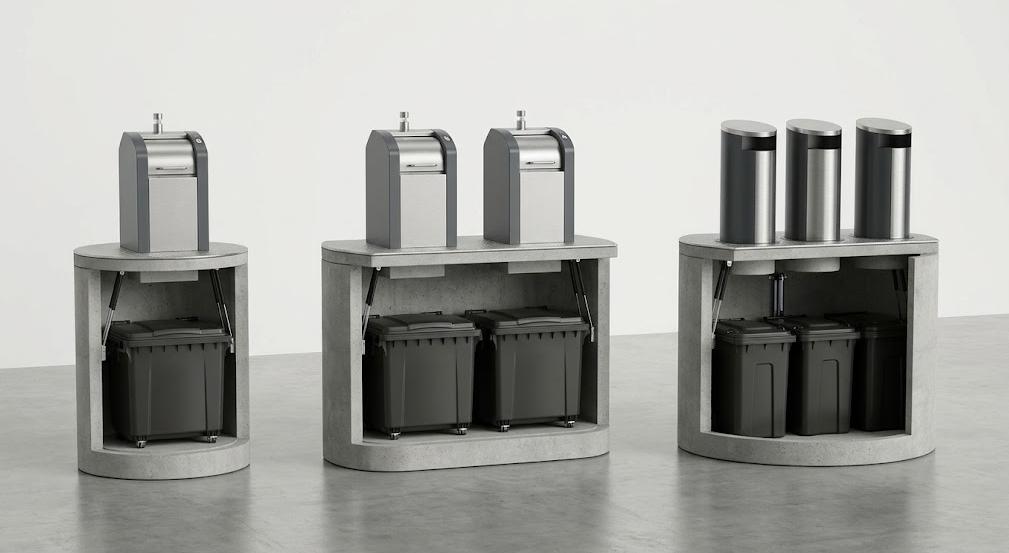
HD Outdoor Facilities provides configurations involving standard wheeled bins with the following capacity sizes:
- 240L: For lower amounts of waste.
- 660L: For moderate amounts of waste.
- 1100L: For higher amounts of waste.
The final configuration should consider the usable capacity, density of the waste, peak load period, and collection frequency. Leaving some margin of capacity may prevent overflow during peak load periods.
What Maintenance Will the System Require?
As most of the system lies underground, issues related to its maintenance must be taken care of before buying the equipment.
Three points need to be taken into account:
- Drainage: Proper drainage of rainwater and water that seeps into the underground system is required.
- Cleaning: Cleaning and inspections are necessary to keep waste residue, leakage, and odor in check.
- Components: Systems that use hydraulic platforms or any other type of lifting mechanism may have some moving parts that need inspection time and again. You should ensure that the parts to be serviced are accessible.
Also ask your vendor about the servicing procedures. This information can be of considerable value.
Does the Project Meet Local Requirements and Budget?
Even if the site is physically feasible, the project must still fulfill local requirements. Depending on the site, excavation permits, construction permits, waste disposal regulations, and public safety regulations may be applicable. It would be best to check these requirements with the relevant local authorities first.
The financial analysis must also go beyond just the cost of the equipment. In an underground waste container project, there could be additional costs such as:
- Site preparation: excavation and site preparation.
- Structural work: foundations and supporting structure.
- Other systems: drainage system, waterproofing, or electricity connection, as needed.
- Equipment and installation: lifting equipment, delivery, and installation service.
- Operations: inspection, cleaning, and maintenance.
The total cost will highly depend on the site conditions and the chosen system configuration. A simple installation will not entail additional costs, but poor site conditions or special vehicle requirements may increase the cost significantly.
When comparing the initial cost to the long-term operating requirements, you can determine if the underground option will be financially viable for your project.
Final Thoughts: Assess Before You Purchase
The underground waste container system could be a practical solution for a project that requires considerable waste storage but has limited surface space. However, the appropriate product should also fit the ground conditions of the project, waste collection arrangements, necessary capacity, and budget.
Taking into account these seven points prior to purchase will help to detect potential issues and make the selection easier.
At HD Outdoor Facilities, we offer customized underground waste container solutions for residential, commercial, and municipal projects. If you want to install underground waste containers, please let us know about your site conditions and waste management needs!