
What Facilities Should Be Included in a Commercial Outdoor Dining Area?
A commercial outdoor dining area needs more than tables and chairs. It should provide shade, shelter from rain, accessible waste bins, and enough room for customers and staff to move around comfortably.
For restaurants, cafés, and hotels, the right setup depends on the available space, local weather, and expected customer traffic. Each facility should serve a clear purpose while making the area practical to maintain and use.
This guide covers the key facilities to include and what to consider when choosing and arranging them.
1. What Facilities Does a Commercial Outdoor Dining Area Need?
The facilities will vary depending on the venue, available space, and number of customers. However, most commercial outdoor dining areas need the following essentials.
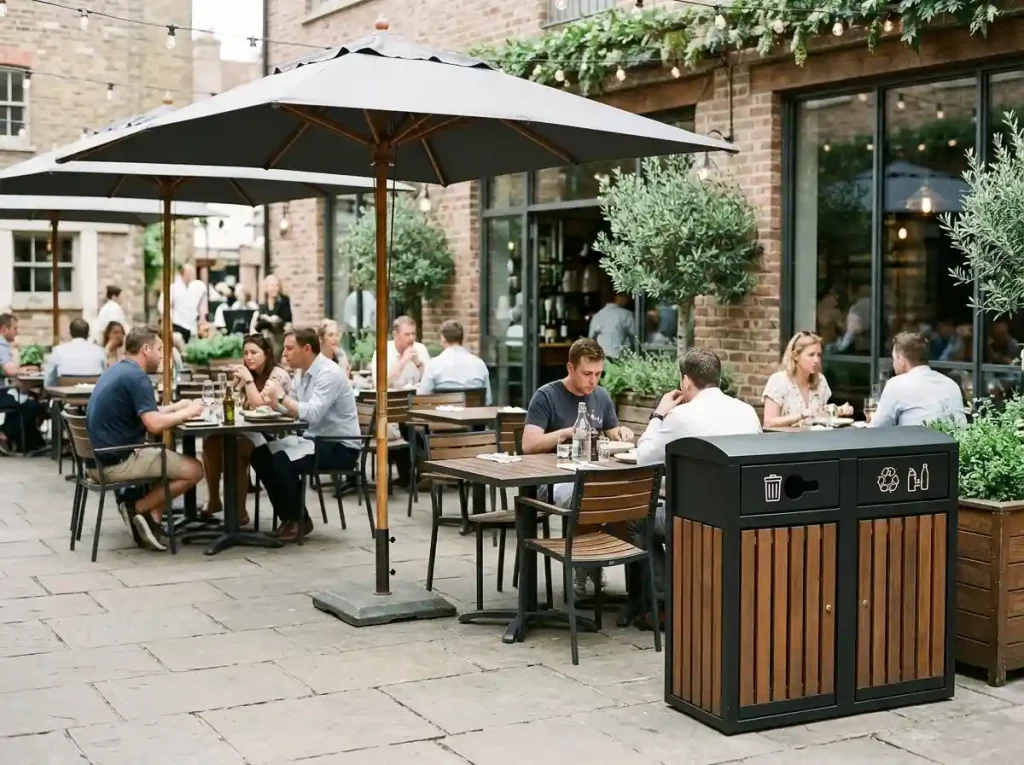
Outdoor Dining Tables and Chairs
Tables and chairs determine how the outdoor dining space is used. Small cafés may choose compact tables for two, while larger restaurants can combine standard dining tables, benches, and larger group seating.
For commercial use, furniture should be stable, weather-resistant, and easy to clean. Metal and properly treated wood are common options, but the choice should depend on local weather and maintenance requirements.
Shade and Weather Protection
Sunlight and rain can quickly make an outdoor dining area uncomfortable. Patio umbrellas, awnings, and canopies provide shade and help protect customers from light rain.
In exposed locations, wind screens can offer additional shelter. Consider the direction of sunlight, prevailing winds, and existing building cover before choosing a solution.
Outdoor Waste Bins and Recycling Facilities
Waste bins help keep outdoor dining areas clean and make it easier for customers to dispose of food packaging, napkins, and drink containers.
Choose a suitable capacity based on customer traffic and how often staff can empty the bins. If the venue offers recycling, provide separate bins with clear labels. Place them where customers can reach them easily without blocking walkways or taking up too much seating space.
Lighting and Accessible Walkways
If the venue stays open after dark, provide enough lighting around dining tables, entrances, and walkways. This helps customers see where they are going and allows staff to serve tables more easily.
Keep walkways clear of furniture, bins, and other obstacles. Leave enough space for customers to pull out chairs and for staff to move between tables. Accessible routes and seating should also meet applicable local requirements.
2. How Should You Arrange the Facilities in an Outdoor Dining Area?
The placement of tables, waste bins, shade structures, and lighting affects how well an outdoor dining area functions. A good layout should leave enough room for customers while allowing staff to move freely between tables.

Plan Seating Around the Available Space
Measure the usable area before deciding on table sizes and seating arrangements. Take entrances, existing structures, and pedestrian routes into account so that furniture does not block access.
A combination of two-person tables and larger seating options can accommodate different group sizes. Movable tables and chairs also make it easier to adjust the layout during busy periods or private events.
Keep Walkways Clear and Waste Bins Accessible
Leave enough space between tables for customers to sit down and move around without disturbing others. Staff should also be able to carry food, clear dishes, and reach each table without squeezing through narrow gaps.
Place waste bins near exits or along the edges of the dining area. They should be easy to find but kept away from tables and main walkways. Larger venues may need several collection points to prevent bins from becoming inconveniently far away.
Position Shade and Lighting Effectively
Position umbrellas and canopies to cover the tables most exposed to direct sunlight. Since the sun changes position throughout the day, consider how much shade each seating area receives at different times.
For evening service, make sure lighting covers dining tables, entrances, and walkways. Choose outdoor-rated fixtures that can withstand moisture and changing weather conditions.
3. What Should You Consider When Choosing Outdoor Dining Facilities?
Before purchasing outdoor dining facilities, consider how often they will be used, the weather they need to withstand, and the maintenance they require. The right choices can help reduce replacement costs and make daily operations easier.
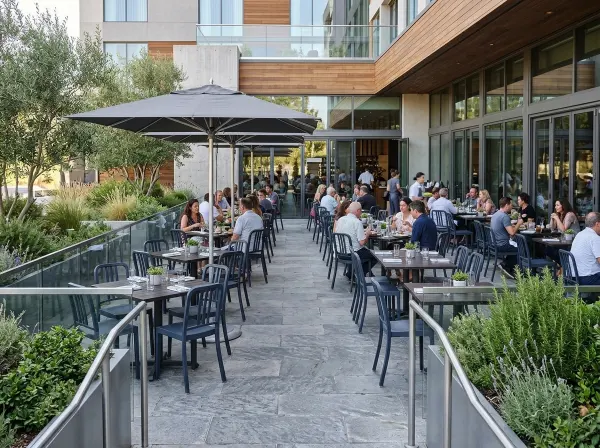
Customer Capacity and Frequency of Use
Estimate how many customers the area needs to accommodate during peak hours. A busy restaurant may need more durable furniture and additional waste bins, while a small café may benefit from a more compact setup.
However, adding more tables does not always mean making better use of the space. Leave enough room for customers to sit comfortably and for staff to serve each table.
Weather Resistance and Durability
Outdoor furniture and equipment are regularly exposed to sunlight, rain, humidity, and temperature changes. Choose materials and finishes that can withstand the conditions in your area.
Metal furniture, for example, should have suitable corrosion protection, especially in coastal or humid environments. Check product specifications for details about weather resistance, suitable applications, and maintenance requirements before making a purchase.
Cleaning and Maintenance
Outdoor dining facilities need regular cleaning, particularly in busy commercial settings. Choose furniture with easy-to-clean surfaces and waste bins that are simple to empty and wash.
Also consider whether individual parts can be repaired or replaced. Check tables, chairs, and bins regularly for loose fittings, surface damage, and other signs of wear before they become bigger problems.
Conclusion
A well-planned outdoor dining area should give customers a comfortable place to eat while allowing staff to work efficiently. Choosing suitable furniture, weather protection, waste bins, and lighting, then arranging them around the available space, makes the area easier to use and maintain.
HD Outdoor Facilities provides outdoor furniture and waste collection solutions for commercial and public spaces. Restaurants, cafés, and other hospitality businesses can explore its product range when planning or upgrading their outdoor dining facilities.
Frequently Asked Questions
How Many Tables Can Fit in an Outdoor Dining Area?
The number depends on the available floor space, table sizes, and room needed for chairs and walkways. Make sure entrances and accessible routes remain clear, and check any local requirements before finalizing the layout.
What Type of Furniture Is Best for a Commercial Outdoor Dining Area?
Look for stable, weather-resistant furniture that is easy to clean and maintain. Metal and treated wood are common choices. Consider the local climate, budget, and how frequently the furniture will be used before deciding.
Where Should Waste Bins Be Placed in an Outdoor Dining Area?
Place bins near exits or along the edges of seating areas, where customers can reach them without walking far. Keep them away from dining tables and clear of main walkways.
How Can You Protect an Outdoor Dining Area from Rain and Sun?
Patio umbrellas, awnings, and canopies provide shade and help keep rain off dining areas. In exposed locations, wind screens can offer extra protection. Choose a setup that suits the local weather and the layout of the space.