
What Size Wheelie Bin Enclosure Do You Need for 120L, 240L and 360L Bins?
Selecting the correct wheelie bin enclosure goes beyond simply matching its stated capacity to that of the wheelie bin. For example, two 240L wheelie bins can have different external dimensions, meaning that one may fit a particular enclosure while another may not.
If you need an outdoor wheelie bin storage solution for a domestic, commercial, or public application, verifying the bin and enclosure dimensions before purchase can help prevent fitting problems.
This guide discusses the typical dimensions of 120L, 240L, and 360L wheelie bins, explains how to measure them accurately, and outlines the key factors to consider when choosing a suitable metal enclosure.
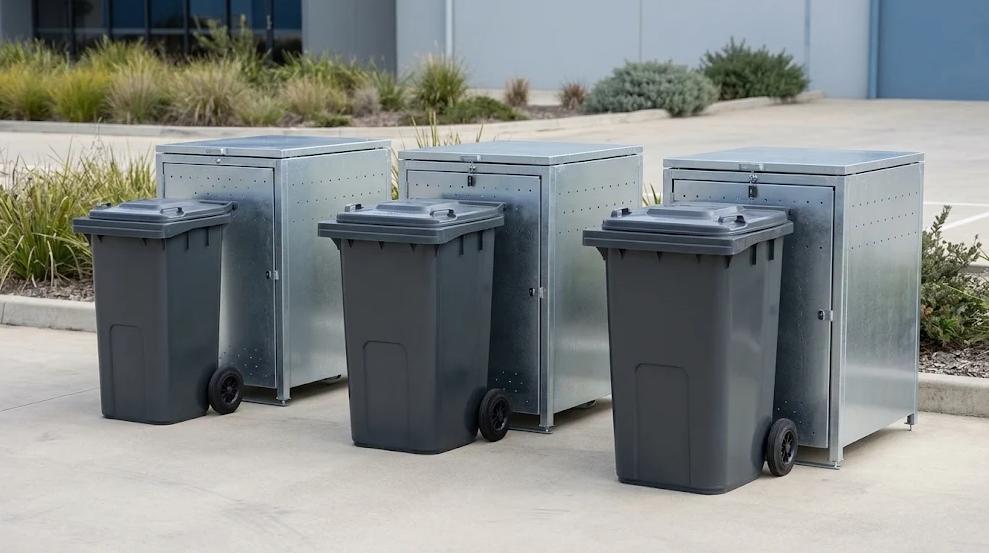
What Are the Standard Dimensions of 120L, 240L and 360L Wheelie Bins?
Wheelie bin capacity is a good point to start with; however, it does not define the precise exterior dimensions. Different producers might have slightly different body shapes, lid shapes, handles, and wheels.
The figures below show approximate reference dimensions for common two-wheel mobile bins:
| Bin Capacity | Approx. Height | Approx. Width | Approx. Depth |
| 120L | 940 mm | 485 mm | 530 mm |
| 240L | 1,080 mm | 580 mm | 735 mm |
| 360L | 1,100 mm | 600 mm | 820 mm |
Note: The above-mentioned dimensions are reference ones only. Actual dimensions can differ depending on the manufacturers and bin type. Make sure to always verify the dimensions of the bins that you will use before placing your order.
The table reveals one key difference in capacities. The 360L bin is not just taller than the 240L bin. It is also deeper, which affects the size of the storage unit.
This issue becomes especially relevant in case of multiple bin usage. A storage unit that is made for a standard 240L bin cannot be presumed to fit a bigger 360L one.
How to Measure Your Wheelie Bin Before Choosing an Enclosure
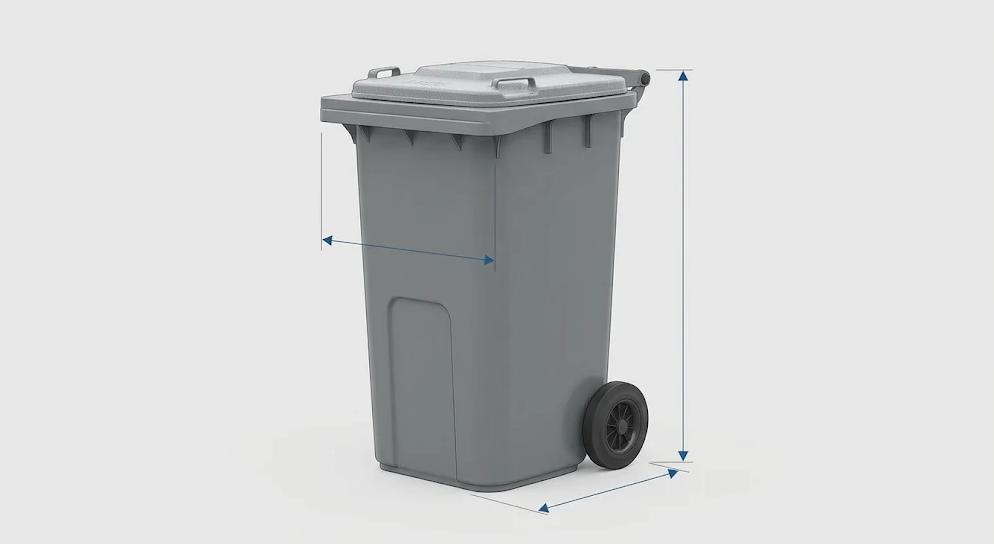
Prior to purchasing a wheelie bin enclosure, measure the exact size of the bin rather than basing the decision on its capacity alone. There are three key measurements to take.
Measure the Bin’s Width
Measure the width of the bin at its widest point, including any handles or other parts that might make it difficult to fit into the enclosure and pass through the door opening.
Check the Depth and Wheel Clearance
Measure from the front edge of the bin to its rear edge, including the handle and wheel area where applicable. Also check the wheel and handle area to make sure they do not interfere with the enclosure or prevent the bin from being pulled out smoothly.
Measure the Height and Lid Clearance
Measure the height of the bin from the floor up to the highest point of its closed lid. In the case of a top-opening enclosure, measure the height required for the lid to open fully.
The enclosure’s access design is just as important as the bin’s dimensions. Some enclosures provide front access, while others use a lifting lid, or combine both features. Each design has different clearance requirements depending on whether the bin is emptied in place or removed from the enclosure for collection.
When different manufacturers’ bins are used in one place, individual measurements become especially necessary.
How Much Internal Space Should a Wheelie Bin Enclosure Have?
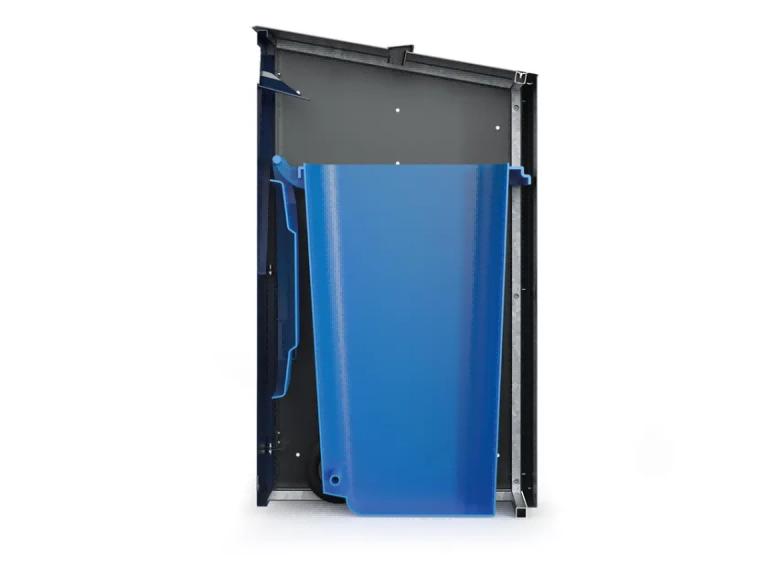
The mistake that is often made when sizing is mixing up the external dimensions of the enclosure with its internal dimensions.
External dimensions refer to the total footprint of the storage facility. Internal dimensions refer to the actual dimensions available for placing the wheelie bin. This is not the same, since some of the space is taken up by steel plates, framework, and door structures.
The right enclosure needs to be big enough to allow the bin to enter and exit without too much friction. Some additional clearance is also needed to accommodate variations in bin dimensions and allow the bin to be moved in and out smoothly.
Height, too, needs consideration. In case users need to access the lid of the bin when it is still within the enclosure, then there should be enough clearance for it. If the lid does not need to be opened inside the enclosure, the required vertical clearance may be different because the bin can be removed before the lid is opened.
The dimensions of the doorway should also be considered in isolation. It is possible that even with an adequate inner compartment size, a narrow entrance or a doorway structure can complicate the removal process.
For this reason, when requesting a quotation, provide the bin’s width, depth, height, and preferred access method. This allows the manufacturer to assess the usable dimensions rather than relying on capacity labels alone.
Choosing the Right Enclosure for 120L, 240L and 360L Bins
The right enclosure configuration depends on the number of bins, available installation space, and how the bins will be accessed and collected. The right type of enclosure design will depend on the number of bins, space available for installation, and how often these bins need to be used.
120L Wheelie Bin Storage
A 120L wheelie bin generally requires less storage space and can be suitable for properties with limited outdoor space. The enclosure should still provide enough internal clearance for the bin to be inserted and removed easily.
A single-bin configuration could work well for such an application.
240L Wheelie Bin Storage
240L wheelie bins are widely used in residential complexes, commercial premises, and shared waste collection areas. This provides a good compromise between storage volume and physical size.
When purchasing these products, customers need to take into account not only the real size of the bin but also the access design of the enclosure. Double wheelie bin storage could also offer an effective solution if two separate bins are needed for general waste and recycling.
360L Wheelie Bin Storage
The 360L size needs a larger area, especially due to its increased depth. Buyers should pay particular attention to the enclosure’s internal depth, door opening, and overall height.
If a 360L bin does not fit the dimensions of a standard enclosure, a customized metal wheelie bin storage solution may be more appropriate.
What Else Should You Check Before Ordering a Wheelie Bin Enclosure?
Dimensions alone are not the only things to consider when choosing appropriate outdoor wheelie bin storage. There should be consideration of the installation surface, door opening direction, waste collection access, and the space surrounding the enclosure prior to ordering.
The material and construction method of outdoor wheelie bin storage units are also important, especially for applications that need a robust metal storage unit. One choice would be a galvanized steel structure with the correct protective surface treatment.
For developments or facilities using non-standard wheelie bins or requiring multiple storage compartments, custom-made units may provide a better fit for the project requirements.
HD Outdoor Facilities produces galvanized steel wheelie bin enclosures in customizable sizes, colors, and configurations.
Final
It is important that the proper-sized enclosure be selected based on your actual wheelie bin measurements, necessary clearance space, and intended use of the storage area. Instead of going just by capacity, measure the interior and access sizes prior to purchasing.
Please visit HD Outdoor Facilities for a selection of metal storage areas for wheelie bins, both single and multiple. Please contact us if you require custom sizes for your bin specifications.