
What Size Mobile Waste Compactor Do You Need? And How to Choose
When choosing a mobile waste compactor, it is not necessarily the larger the capacity, the better. A too-small capacity will increase the frequency of collection, while a too-large capacity will occupy more space and increase the investment cost.
The equipment capacity mainly depends on the daily waste volume, the type of waste, the collection frequency, the site space and the transportation method.
So, how large a capacity does a mobile waste compactor need? The following guide will help you select the appropriate equipment based on your actual needs.
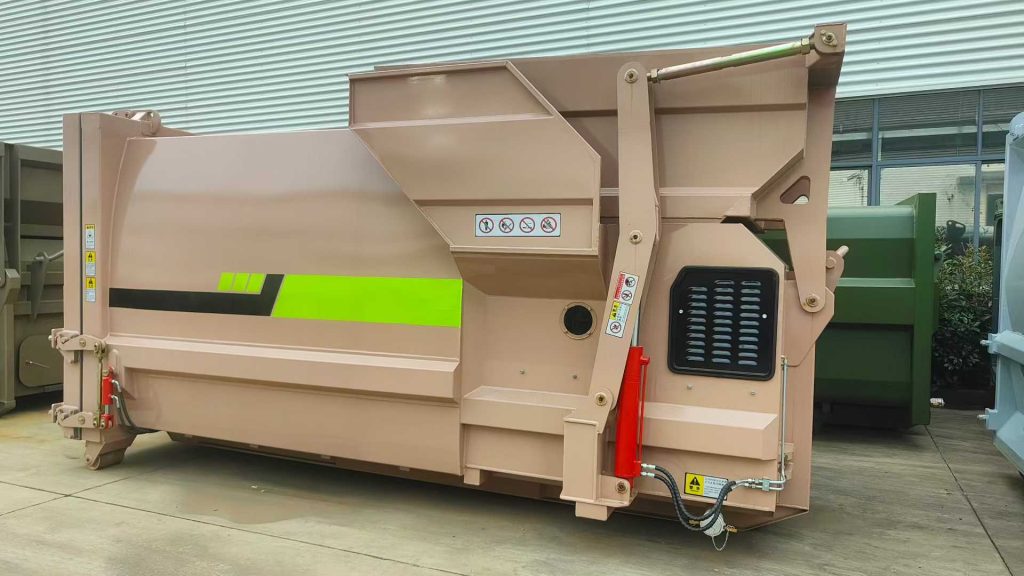
How to Choose the Right Mobile Waste Compactor Size
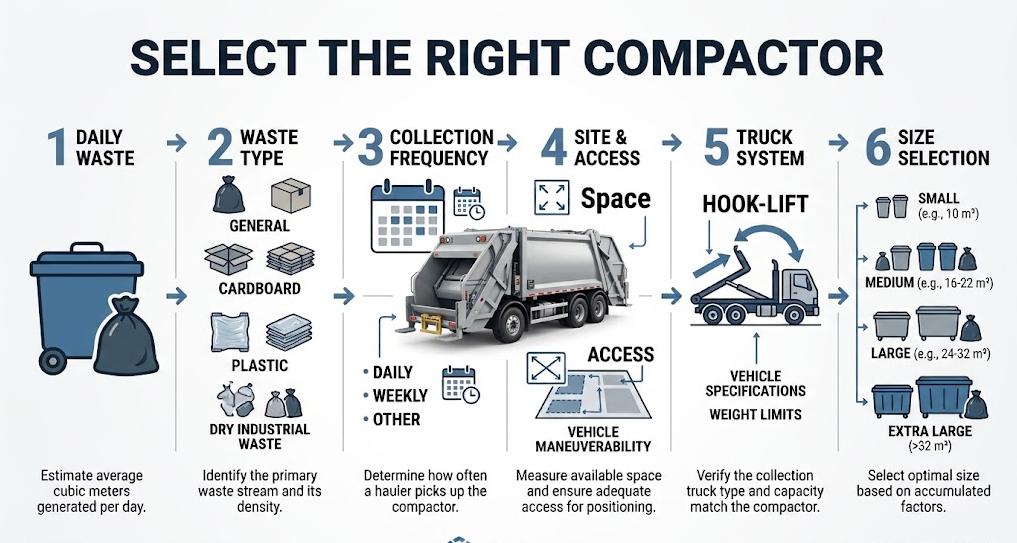
The first step is to understand the actual amount of waste generated, rather than choosing the compactor solely based on the size of the container.
Before determining the capacity, consider the following questions:
- How much waste does the facility produce each day?
- How many days of waste does the equipment need to store?
- How often is the waste removed?
- What type of waste is it?
- How much available space is there on site?
For example, two facilities with the same daily waste volume may require different storage capacities if one is removed twice a week and the other is removed every day. The former usually needs a larger storage capacity.
Therefore, the capacity of the mobile waste compressor should match the waste generation volume, the removal frequency, and the site conditions. It should meet the operational requirements while avoiding an oversized equipment.
Mobile Waste Compactor Capacity: How Much Waste Do You Need to Handle?
Capacity is an important factor in choosing a mobile garbage compactor, but the density of the garbage and its compression performance should also be taken into account.
First, calculate the average daily garbage volume. If conditions permit, actual weighing data should be used instead of estimates.
The basic calculation formula is:
Required storage capacity = Average daily garbage volume × Collection interval
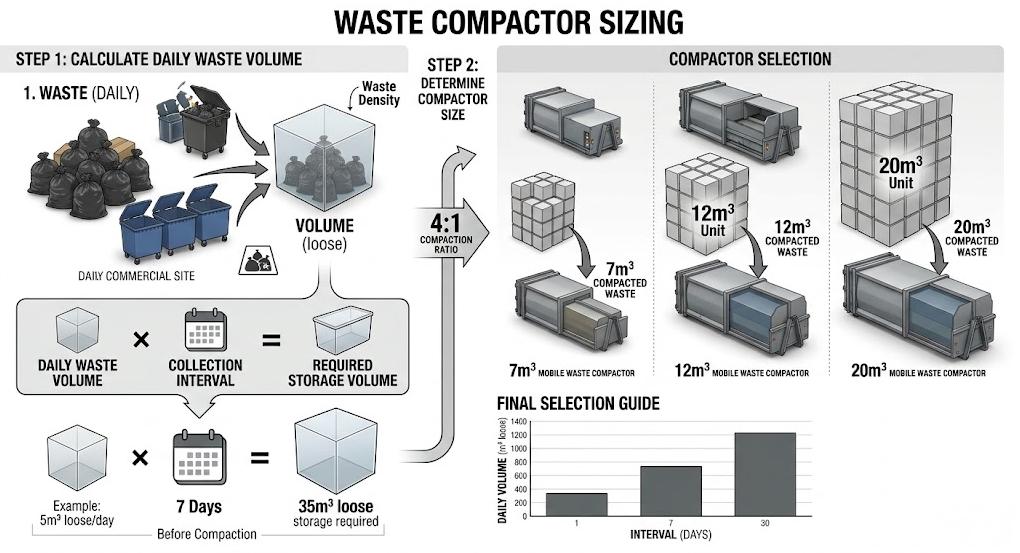
However, this is only a preliminary estimate. The densities and compression characteristics of different types of garbage vary significantly, such as packaging garbage, mixed commercial garbage, food garbage, and industrial garbage may have different volumes after compression.
At the same time, a certain operating margin should be reserved to avoid the compressor operating at full load for a long time.
For commercial or municipal scenarios with high garbage volumes, large-capacity mobile garbage compressors can reduce the frequency of collection; for small facilities with limited space, more compact equipment is usually more practical.
For example, HD offers a 7m³mobile garbage compactor, suitable for applications that require both garbage storage, transportation efficiency, and site space.
Therefore, when choosing capacity, one should not only consider “how many cubic meters are needed”, but also consider:
Garbage volume + Garbage density + Collection frequency + Available space = Required compressor capacity
How Waste Type Affects Mobile Waste Compactor Performance
The type and quantity of the waste you handle are equally important. Different waste streams usually require different equipment configurations.
- General commercial waste, such as packaging, paper, and mixed garbage, can typically use standard compaction configurations.
- Food and wet waste, on the other hand, place greater emphasis on sealing, drainage, leachate collection, deodorization, and corrosion resistance. A compaction machine designed for dry waste may not be suitable for facilities with a higher proportion of wet waste.
- Industrial waste usually requires a stronger structure, appropriate compression force, and a loading system capable of handling heavier or irregular materials.
Therefore, even if two facilities have the same amount of waste, the required mobile waste compaction machine configuration may still differ.
Before choosing a model, it is necessary to inform the supplier about the type of waste, the approximate moisture content, and whether there are large volumes or heavy weights of materials. This information helps to determine the appropriate compaction system and internal configuration.
Mobile Waste Compactor Dimensions, Site Space and Truck Compatibility
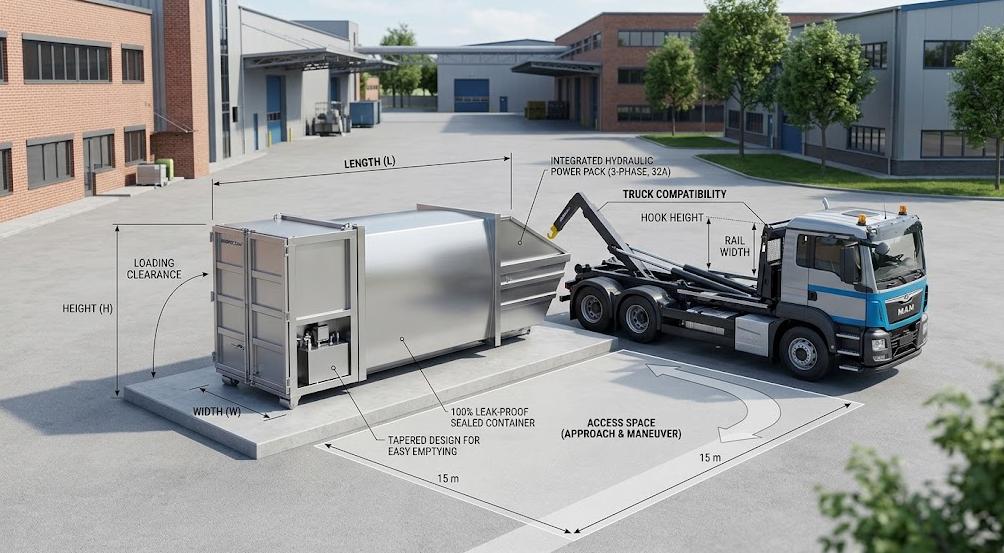
Capacity is only one part of equipment selection. The actual size of the mobile waste compressor must also match the site conditions.
Before selecting the equipment, the following spaces should be measured:
- Length and width
- Height and clear space
- Loading area
- Entry and exit passage
- Turning space
- Distance to the collection area
This is particularly important for spaces with limited access such as underground parking lots, commercial facilities, and narrow service areas.
Although larger compressors have higher capacity, if the truck cannot enter the installation area or the loading space is insufficient, the actual use may not be convenient.
Transportation conditions should also be confirmed before placing the order. If a telescopic truck is used, the size of the compressor, the lifting points, the total weight, and the compatibility with existing vehicles should be checked.
Even if the equipment capacity meets the requirements, if it cannot be transported, installed, or operated normally, it is not suitable for the project. For sites with restricted clearances or passageways, low-profile or custom mobile waste compressors may be more practical than large standard equipment.
How to Select the Right Mobile Waste Compactor Configuration
After understanding the amount of garbage, the types of garbage, the site conditions and the transportation requirements, the equipment configuration can be further determined.
A simple selection process is as follows:
- Calculate the amount of garbage: Determine the average amount of garbage per day or per collection cycle.
- Determine the types of garbage: General garbage, kitchen waste, wet waste, industrial waste and mixed waste may require different configurations.
- Confirm the collection frequency: The longer the collection interval, the usually larger the storage capacity is required.
- Measure the site: Confirm the equipment size, loading space, passageways and power conditions.
- Check the transportation method: Confirm the compatibility of the equipment with the existing collection system or telescopic trucks.
In addition, functions such as compression force, compression cycle, loading method, sealing, drainage system, control system and intelligent monitoring should also be considered based on the actual application.
A suitable mobile garbage compactor is not necessarily the largest or the most powerful model, but should match the types of garbage, the site, the transportation system and the actual operational requirements.
View more: Stationary vs. Mobile Waste Compactor
Final
If you are not sure which mobile waste compactor capacity or configuration is suitable for your project, provide your daily waste volume, waste type, collection frequency, site dimensions, and truck information.
Our team can help you evaluate the requirements and recommend a suitable configuration for your application.
Contact HD for a customized mobile waste compactor solution and quotation.