
How Much Space Can an Inground Trash Can Save?
Traditional outdoor trash cans can take up more space than you might expect. Put several of them along a park walkway, commercial plaza, residential community, or busy street, and the footprint quickly adds up. They can narrow walking areas, block sightlines, and take up space that could otherwise be used for landscaping, seating, or simply keeping the area open.
So, how much space can an inground trash can actually save?
In many cases, quite a bit. A typical inground unit can replace around four to eight conventional outdoor bins, depending on its capacity and how often the site is serviced. Instead of having several large bins sitting above ground, the storage chamber is installed below the surface, leaving only the access area and inlets visible.
That difference can be especially useful in places where every square meter matters. Below, we’ll compare the space used by traditional and inground trash cans, look at some common installation scenarios, and break down when switching to an inground system can make a noticeable difference.
What Is an Inground Trash Can?
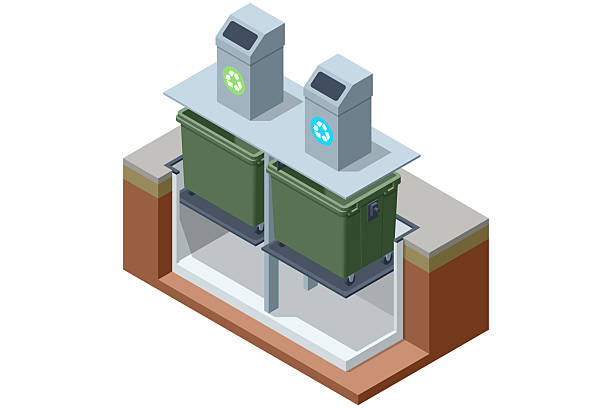
An inground trash can, also called an underground trash container, stores the main waste volume below ground. Users deposit trash through one or more inlets on a surface platform. The bulk of the container remains hidden, protected from weather, animals, and visual clutter.
This differs from standard outdoor bins that sit fully exposed. Those units require clear space around them for access, bag changes, and collection vehicles. Inground systems reduce that footprint because the heavy lifting and storage happen underground. You can read more about how these systems work in our earlier guide on what an underground trash container is.
Traditional Bins vs. Inground Units: The Real Space Difference
The difference becomes much easier to see when you look at both footprint and capacity.
A typical 240-liter or 660-liter outdoor bin already takes up a fair amount of ground space. The problem gets bigger when several bins are placed together for general waste, recycling, and organics. You also need enough clearance around them for people to access the bins and for collection crews to work safely. In busy public areas, that can quickly turn into several square meters of space used mainly for waste storage.
An inground system takes a different approach by moving most of the storage capacity below ground. For example, a dual 1,100-liter unit can provide the capacity of several standard bins while keeping the surface installation relatively compact. Above ground, you mainly see the access platform, while the larger storage chamber sits below it. This leaves more room around the station for walkways, landscaping, seating, or other public facilities.
For many sites, one properly sized inground station can replace around four to eight conventional bins, depending on the model and the site’s waste volume. The exact saving will vary from project to project, but the basic advantage is straightforward: more waste capacity is moved underground, so less of the surface area needs to be reserved for bins.
This is particularly useful in parks, commercial areas, residential communities, and other locations where every square meter of usable space matters.
Additional Advantages That Come with the Space Savings
Saving space is only part of the benefit. With more waste stored in a single underground unit, collection may not need to happen as often. Fewer collection visits also mean less disruption when trucks and staff need access to the area.
The underground design can also help keep the surrounding area cleaner. Waste is stored below ground, so odors are less noticeable and animals have less access to the contents. There is also less chance of bags or loose waste being left around the bin area.
For facility teams, these small improvements can make daily maintenance easier. Instead of regularly dealing with overflowing bins, scattered litter, or crowded collection points, staff can keep the area more organized with less effort. In this way, the space saved by an inground trash can comes with practical benefits for both site users and facility management.
When the Space Savings Matter Most
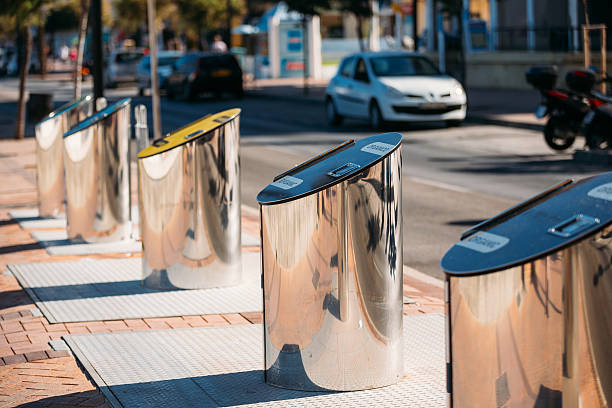
The space savings are easier to notice in places where every bit of room matters. Dense urban parks, busy commercial sidewalks, older residential courtyards, and public plazas are good examples. If several bins are grouped in the same area, replacing them with one inground unit can make the difference quite obvious. The same is true in spaces where keeping walkways clear and the overall appearance tidy is important.
The benefit may be less significant in large, open areas, especially on rural sites. Projects with complicated underground utilities may also have fewer options, since installation needs to be planned around existing infrastructure. For most urban and suburban locations, though, recovering part of the surface area can be a practical advantage rather than just a design improvement.
A useful starting point is to look at your current bin setup. If four or more surface bins are taking up the same area, or if the bins are getting in the way of pedestrian traffic, landscaping, or usable space, it may be worth considering an inground system.
Practical Steps to Maximize the Space Benefit
Start by choosing a unit with the right capacity and number of inlets. The goal is to handle the site’s busiest periods without adding more collection points than necessary. If one inground station can take the place of several surface bins, you get more usable space without compromising waste capacity.
Location matters just as much. The platform should be easy for collection vehicles to access, but it should not sit in the middle of a main walkway or interfere with everyday pedestrian movement.
It also helps to involve the landscape design team early. The visible platform can be planned around existing paving, planting areas, and seating rather than treated as something added later. Depending on the system, inlet shapes, colors, and surface finishes can also be customized to better match the surrounding environment.
Before installation, make sure drainage and structural requirements have been considered. Good planning at this stage can prevent problems later and help the system remain stable and easy to use over the long term. For more details, see our guide to avoiding common mistakes when installing underground trash containers.
Frequently Asked Questions
How much ground space does a typical inground unit occupy?
Only the platform and inlets remain visible. The exact dimensions vary by model, but the surface area is far smaller than the equivalent number of traditional bins.
Can one unit replace several conventional bins?
Yes. Depending on capacity, a single station commonly replaces four to eight standard outdoor bins while maintaining or increasing total storage volume.
Is the space savings permanent?
Once installed correctly, the underground chamber stays in place. Surface use of the reclaimed area can evolve with the site’s needs.
Does the system work with existing collection trucks?
Many models lift standard wheelie bins to ground level for conventional emptying, so specialized vehicles are not always required.
Where can I see current product options?
Explore the range of underground trash containers available in different capacities and configurations.
Conclusion
Inground trash cans make better use of the space that is often lost to surface-level waste storage. By moving most of the container underground, they can keep walkways clearer, reduce visual clutter, and give parks, streets, commercial areas, and residential communities more room to work with.
The actual space savings will depend on the number and size of bins being replaced, as well as the layout of the site. Getting the capacity and placement right is what makes the difference. With proper planning and installation, the recovered space can remain useful for the long term.If you are planning an outdoor waste project and want to see how much space an inground system could save, you can share your current bin layout with us. We can provide product specifications and discuss a layout that fits the site.