
How to Choose the Right Waste Collection Equipment for Commercial and Municipal Projects?
When choosing waste collection equipment, it’s not just about the capacity of the garbage bins or the performance of the compressors.
For commercial and municipal projects, the equipment selection mainly depends on three factors: the type of garbage, the site conditions, and the way the garbage flows through the system.
Any mismatch among these factors can affect the operational efficiency of the equipment.
So, where should we start?
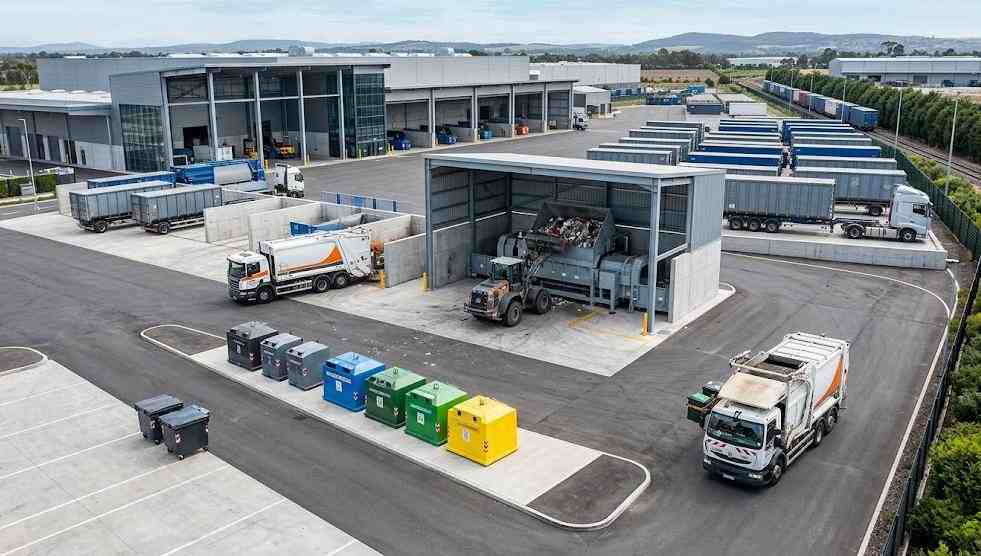
Start With the Waste, Not the Equipment
Before comparing products, it is necessary to clearly understand the actual requirements of the site.
The following four questions can serve as a starting point:
- How much waste is generated? The daily and weekly amounts of waste determine the required processing capacity.
- What types of waste are there? General waste, recyclables, food waste, etc. may require different equipment.
- How frequently is the waste collected? Frequent collection can reduce the demand for on-site processing capacity, while low-frequency collection usually requires stronger compression capacity.
- What are the site conditions? Available space, access routes, loading and unloading areas, and vehicle traffic conditions all affect equipment selection.
These factors directly influence the procurement plan. For commercial sites with a small amount of waste and a high collection frequency, they may only need garbage bins of the appropriate size. Large municipal facilities may need to combine the use of garbage bins, compressors, and transportation containers.
The selection of equipment should be determined based on the actual flow pattern of the waste.
Match the Equipment to Each Stage of the Collection Process
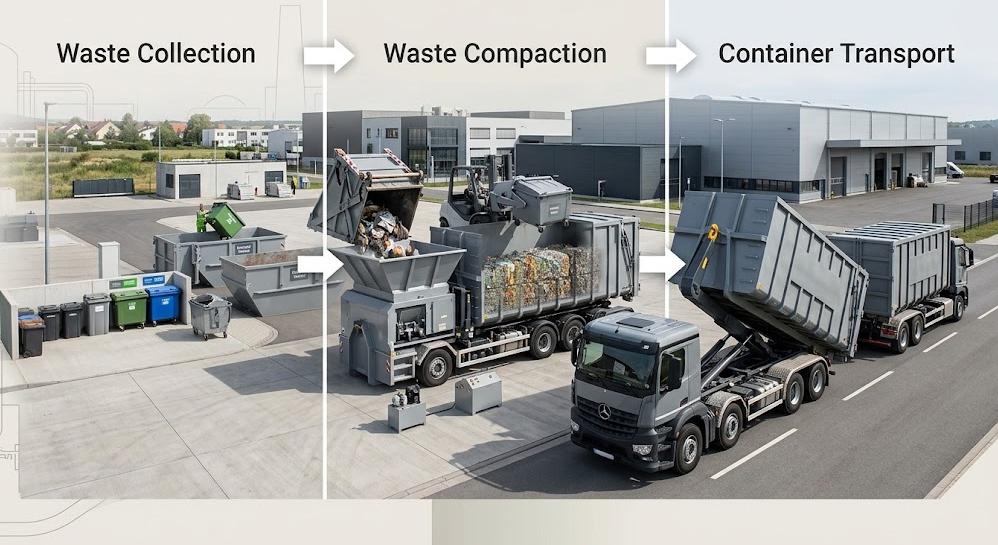
A complete waste collection system is easier to plan when you break it into three connected stages.
1. Waste Collection: Get the Right Bin for the Site
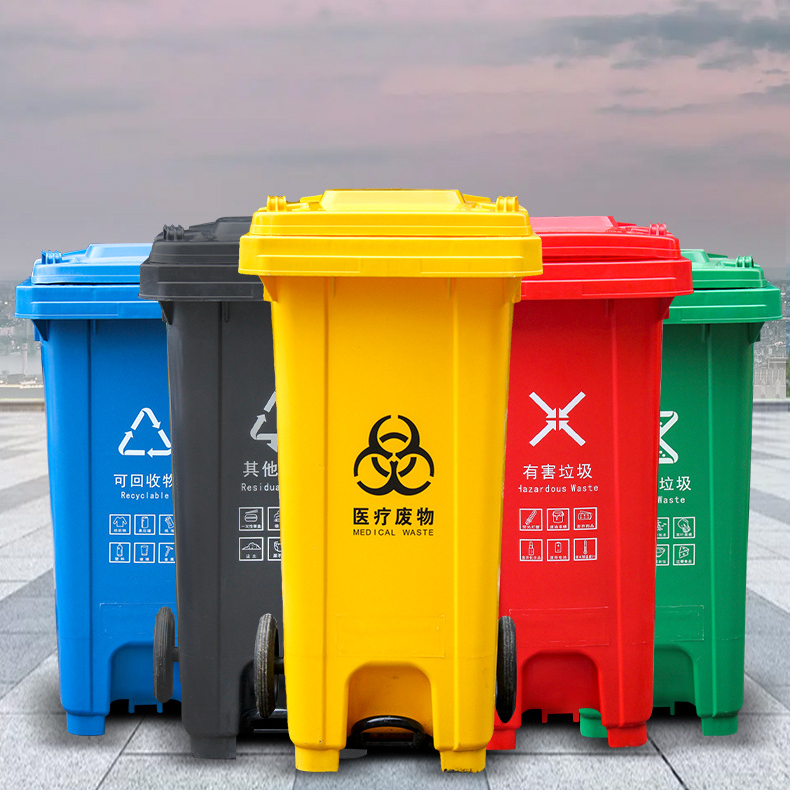
The collection bins are the starting point of the system, but the specific choice depends on the usage scenario. First, consider the installation location and usage method of the equipment.
In residential communities, large-capacity public trash cans may need to be set up at centralized collection points.
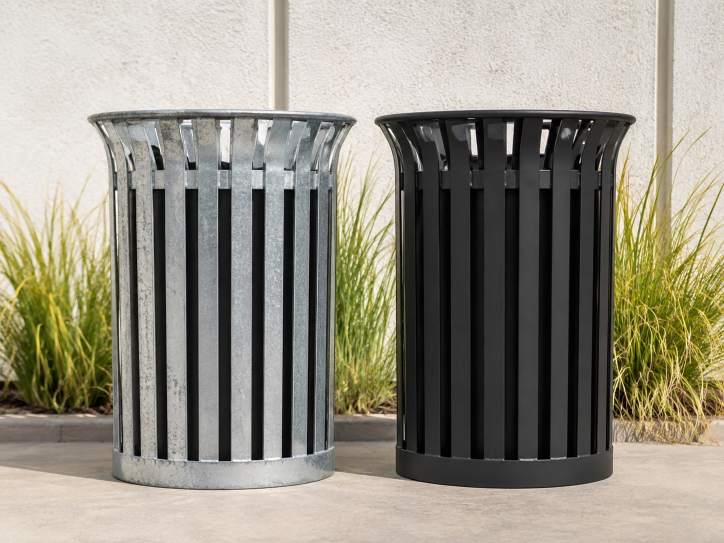
In public places, durable and easily accessible trash cans are usually required to cope with frequent use.
For recycling projects, clear collection points need to be set up for different materials.
In areas with high foot traffic, smart recycling bins can provide filling information to help optimize collection times.
The goal is not to set up more bins, but to provide the appropriate capacity at the right location.
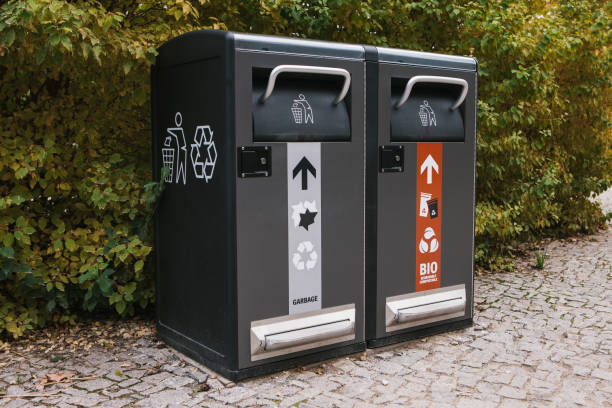
2. Waste Compaction: Reduce Volume Before Transport
As the amount of garbage increases, transportation becomes a crucial part of the processing process.
Uncompressed garbage will occupy more container space and may also increase the collection frequency.
Garbage compressors can reduce the volume of garbage before transportation, thereby increasing the utilization rate of the existing transportation capacity.
The specific compression plan depends on the project requirements:
| Project consideration | What to look at |
| Fixed waste generation point | Stationary waste compactor |
| Need for mobility | Mobile waste compactor |
| High waste volume | Compaction capacity |
| Limited site space | Equipment footprint |
| Existing transport system | Container and interface compatibility |
The important point is that a compactor should not be selected in isolation. Its capacity and configuration need to make sense with the collection equipment and transportation system around it.
3. Waste Transportation: Don’t Overlook the Container
Garbage ultimately needs to be transported and processed. Therefore, transportation containers should be selected as part of the equipment design, rather than being considered afterwards.
The appropriate transportation containers should match the following factors:
- Garbage volume
- Compressor output capacity
- Loading and unloading method
- Vehicle capacity
- Space at collection or transfer points
For example, a large-capacity compressor paired with an overly small transportation container may cause a bottleneck in the process. Although the compressor can handle garbage efficiently, the entire system will still be limited by downstream equipment.
The efficiency of the garbage collection system depends on the degree of matching among each link.
Check Compatibility Before You Check the Price
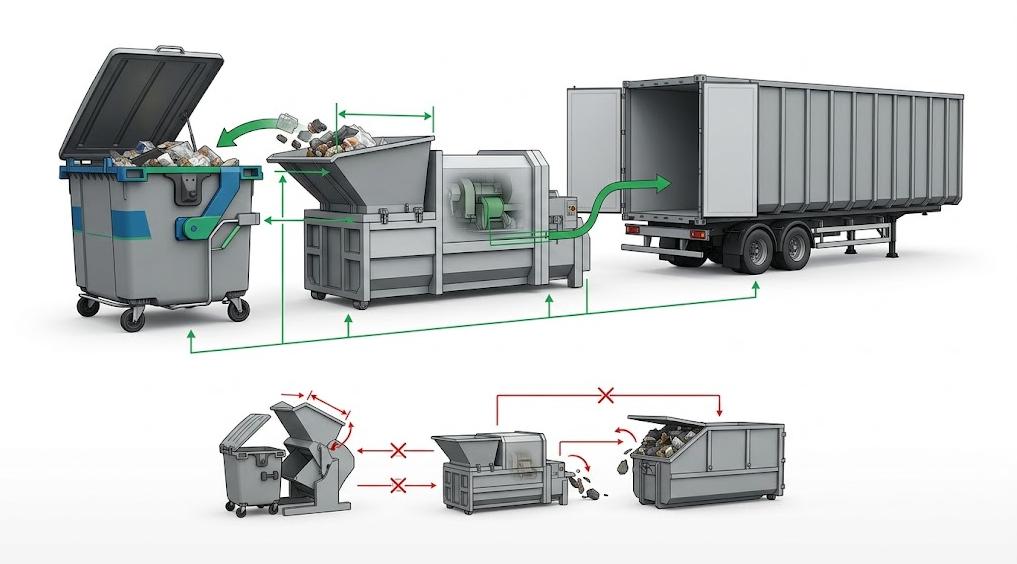
The equipment procurement for many waste treatment projects is more complicated than expected.
Selecting each component individually seems straightforward:
Garbage bin → Compressor → Transport container → Transport vehicle
However, the key lies in whether these devices can operate in coordination. Before making a choice, three aspects should be carefully examined:
- Size
Does the size of the garbage bin match the feed inlet of the compressor?
Can the equipment be installed and used normally within the existing operational area?
- Capacity
Does the capacity of the garbage bin meet the processing requirements of the compressor?
Can the transportation container accommodate the output volume and prevent frequent replacements?
- Interface
Can the garbage be smoothly transferred from one device to the next?
Incompatibilities in size, capacity or interface can all lead to manual handling, additional space occupation or increased collection frequency.
For projects that require coordinated collection, compaction, sorting, and transportation, a complete waste collection and management solution can help ensure that the equipment works together from the start.
Consider the Site Before You Finalize the Equipment
Even if the paper parameters seem appropriate, the equipment may not be suitable in actual use. Before making the final decision, the actual environment and operating conditions around the equipment should be examined.
- Available space: Measuring the space for installation, operation, maintenance, and personnel access. If high-capacity equipment affects other on-site activities, it may not be a suitable choice.
- Vehicle passage: Can the collection and transportation vehicles reach the equipment smoothly? Consider the entrance route, turning space, loading and unloading area, and vehicle passage frequency.
- Garbage loading area: Garbage bins or compressors should be set up at a location convenient for staff, residents, and other users to dispose of garbage.
- Installation and operation conditions: Indoor and outdoor environmental requirements may differ. Weather, drainage, passage restrictions, and existing infrastructure will all affect the equipment selection.
The on-site conditions of commercial and municipal projects can vary greatly, so equipment selection should be based on the actual operating environment, rather than just the specification parameters.
When a Complete Waste Management Solution Makes More Sense
For small-scale sites, a single trash can or compactor might be sufficient. As the amount of garbage, collection points, and operational requirements increase, managing each device individually becomes more complex.
A complete waste management solution should integrate three key components:
- Collection: Trash cans, recycling bins, smart recycling bins, and other collection equipment.
- Treatment: Mobile or fixed compressors, sorting equipment, and other specialized treatment equipment.
- Transportation: Garbage transportation containers that match the upstream equipment.
The key lies in the coordination among the devices. Planning the collection, treatment, and transportation equipment as a system can reduce compatibility issues, simplify the procurement process, and enhance overall efficiency.
For commercial and municipal projects, it is easier to develop practical and reliable solutions by considering the entire waste flow rather than individual products.
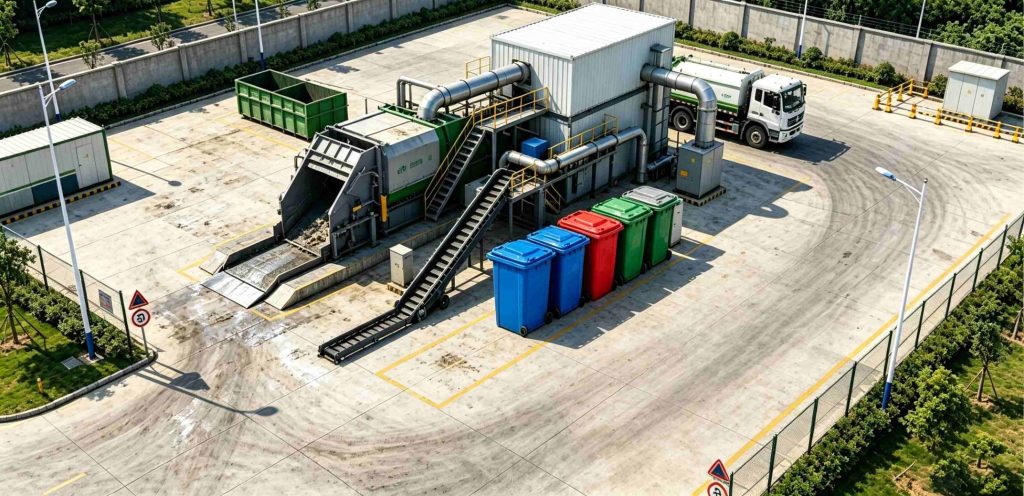
The right waste collection equipment should match your waste volume, site conditions, and collection workflow—not just your budget or a single product specification.
For commercial and municipal projects, taking a system-based approach can make collection, compaction, and transportation more efficient from the start.
Looking for a complete waste collection and management solution for your project? Explore HD Outdoor Facilities’ solutions to find the right equipment for your needs.