
Stationary vs. Mobile Waste Compactor: Which is Right for Your Business?
Counting on open dumpsters without realizing it is sapping the operational budget of your business. In light of ever-rising international hauling costs and waste disposal charges, switching to a superior commercial waste compactor system is the only proven solution for saving up to 70% on your hauling costs.
But a vital decision needs to be made by corporate buyers evaluating different equipment options: should they buy the stationary waste compactor or the mobile waste compactor?
Selecting one over the other of the two highly effective systems entails finding the exact fit for the machine and your work process. Making the wrong choice can result in problems both for the environment and logistics. This guide will help you choose the right equipment for your corporation.
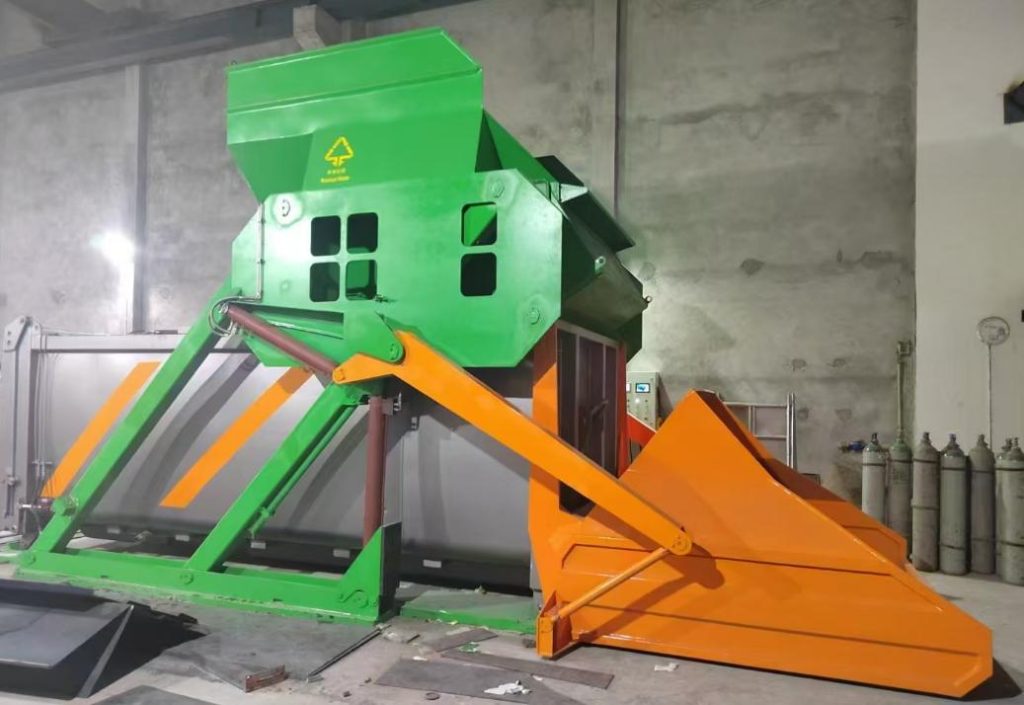
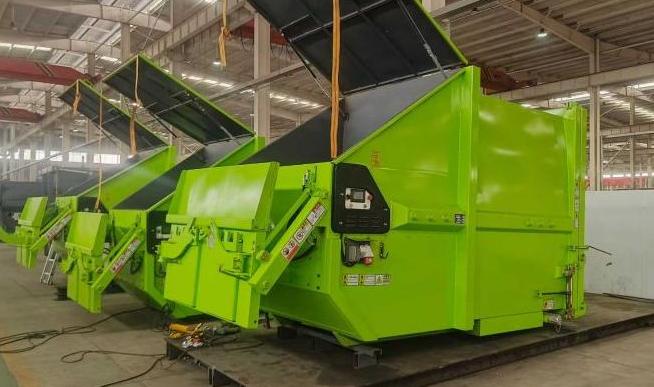
Design & Layout: Fixed Footprint vs. Plug-and-Play Flexibility
One of the main differences between the two waste compactors is in how they are installed and the flexibility that they give to your layout in terms of space.
Stationary Compactor (Split System)
The robust mechanical compaction ram will be fixed to a reinforced concrete base in your property. The only removable part will be the receiver container once it is fully loaded, and the power head remains stationary. It needs a professional civil engineer for the installation, along with some ground anchoring. It gives you an immovable layout.
Mobile Compactor (Monolithic System)
It is otherwise referred to as a portable compactor and is a combination of the compaction ram, structural container, and hydraulic power pack on one single chassis. It allows for 100% plug-and-play operation. It does not need any ground anchoring or modifications to concrete. You just need to place it on any surface and power it up.
Head-to-Head Technical Comparison
To help your procurement team quickly scan the core engineering and operational differences, we have mapped out this direct comparison matrix:
| Evaluation Factors | Stationary Waste Compactor | Mobile Waste Compactor |
| Core Structure | Split design (Fixed head + separate bin) | Integrated design (All-in-one chassis) |
| Site Installation | High civil works (Concrete pad required) | Zero installation (Plug-and-play) |
| Liquid Retention | Risk of dripping at the coupling joint | 100% Liquid-tight & sealed |
| Spatial Flexibility | Permanent footprint; locked in place | High agility; easy to relocate via hook-lift |
| Best Suited For | Heavy dry bulk materials & packaging | High-moisture organic waste & general refuse |
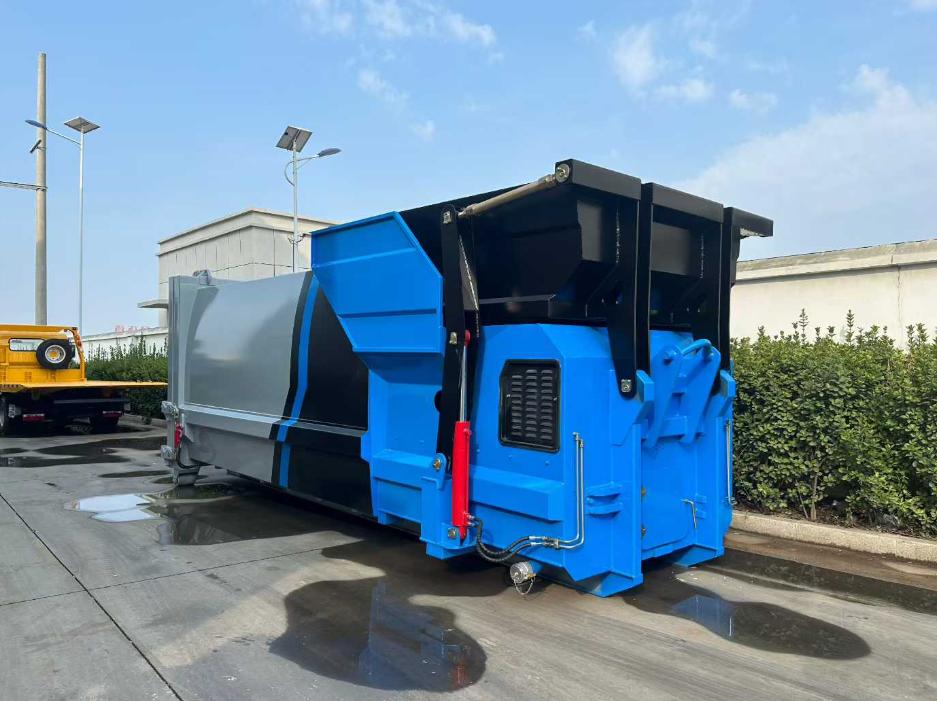
Waste Type Suitability: Dry Bulk Material vs. Liquid-Tight Wet Refuse
It depends on the moisture content of your waste stream, which determines what kind of compactor will function properly and not create major sanitation problems or fines.
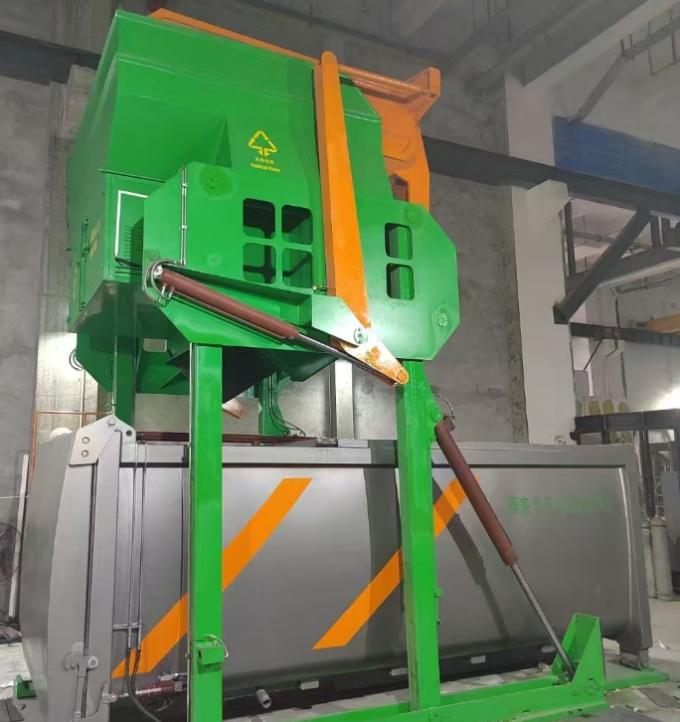
For Dry, Bulk Industrial Waste ➔ Go For Stationary
Since it utilizes an open charging chamber and a mechanical clamp coupling with the container, it is highly suitable for secondary packaging applications. Your plant produces a continuous flow of double-walled cardboard boxes, wood pallets, plastic scraps, or dry industrial waste. A stationary ram compactor will easily compress them and help you achieve maximum density of dry shipments.
For Wet, Organic Commercial Waste ➔ Go For Mobile
Whenever your plant starts producing wet waste with a split stationary unit, the unsealed joint will definitely leak. An advanced mobile waste compactor will fix this problem due to its continuously robotic-welded seams and reinforced rubber perimeter gaskets. Liquid waste from food processing lines, kitchens, or supermarkets is stored safely inside the holding tank – there will be no unpleasant odors and vermin infestations.
Operational Costs: Civil Engineering vs. Hauling Frequency
Every business use has to weigh its fixed setup costs against potential future savings in operating costs.
- The stationary waste compactor comes with higher costs of site preparation as a result of the concrete engineering involved. It compensates for this in ultra-high-volume industrial settings. The removable container doesn’t have any of its own electronics or motor to contain, thus offering a greater net storage capacity in the same space. As such, huge industrial manufacturing facilities can increase their dry weight capacity for many years until they have to call in the trucks.
- In the case of a mobile waste compactor, all upfront civil engineering budgets are completely eradicated. Through compacting loose general waste in high ratios, you will help reduce your hauling rates from day one. Additionally, since the whole unit gets loaded on the truck, there is zero chance of spills or having to clean up the mess during container swapping.
Application Match: Which Compactor Fits Your Industry?
For you to complete the procurement plan for your business, it would be prudent to match these characteristics with actual commercial and industrial facilities as follows:
- Stationary System If: Your facility is an expansive regional warehouse, logistics center, or printing factory where the waste is mostly dry cardboard packing, and you have sufficient outdoor space at the loading dock that can be used for waste treatment.
- Mobile System If: Your business is a bustling shopping mall, posh hotel, sprawling hospital facility, or food processing company. This system is ideal if your facility uses leased premises and therefore no permanent structural changes using concrete are allowed by the owner of the land.
Summary
The choice of the right infrastructure for waste management is very important in reducing the carbon footprint of your business organization and improving your profitability as well. Be it an industrial stationary unit or a compact and liquid-tight mobile waste compactor that you may need, we are available for you.
Check Out Our Range of Modern Mobile Waste Compactors & Get Your Customized Quote Now!