
How to Choose the Right Size of Clothes Recycling Bins for Schools
Selecting the correct size of clothing recycling bins for schools is important to ensure an efficient organization of the collection points at schools. If the size of the bin is too small, the bin may get filled even before the next pick-up, while an oversized bin could take up unnecessary space and incur additional costs. The ideal bin would depend on the volume of clothing expected to be collected by the school, frequency of collection, and the installation location of the bins.

What Determines the Right Size of Clothes Recycling Bins for Schools?
Various variables contribute to the clothing bin’s need for storage capacity.
- Number of students: More students will not necessarily imply more clothing donations collected from the students. Institutions that house many boarding students and university campuses may donate many clothes at times of moving out more than commuter students institutions.
- Volume of clothing collection expected: Estimate the volume of clothes donated by students and other staff in the institution. There is data if there was an existing donation program in the institution in the past.
- Frequency of clothing pick-ups: Clothes bins picked up after several days may need less capacity than those that are picked up every week or even every month.
Periods of seasonal spikes in clothing donations: Seasonal clothing donation spikes include times when students graduate, semester break ends, and at move-out time for dormitories.
How to Calculate the Required Clothes Recycling Bin Capacity
A basic calculation will assist in determining the capacity required between collections:
Bin capacity required = Volume of daily collection x Days between collections ÷ Desired fill rate
For example, let us say that a school assumes that it will produce 100 liters of clothing per day, will make collections every four days, and wishes to ensure that the bin will not be filled up beyond 80 percent of its nominal capacity.
Then the above calculation would look like:
100 x 4 ÷ 0.8 = 500 liters.
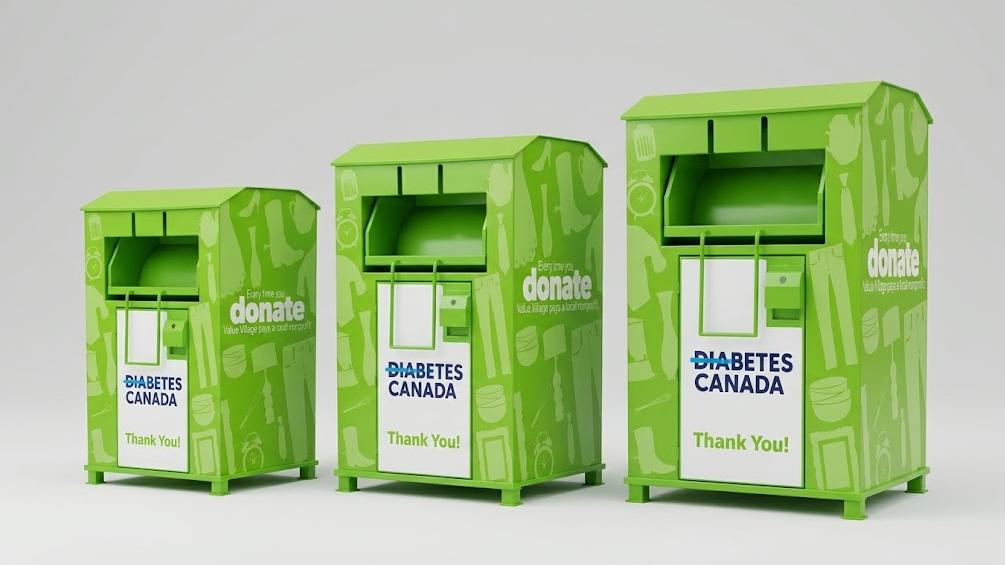
Here, it would be advisable to use a bin that has a nominal capacity of around 500 liters.
This is merely a guideline for planning, and it is not a hard industry standard. The actual requirement will depend upon the way clothes get collected and the efficiency of filling up the available space, among other considerations.
A school that does not have any history with the collection process can begin with a trial run. Schools should measure the filling capacity of the bin during various collection processes that last several weeks.
Should Schools Choose One Large Bin or Several Smaller Bins?

It all depends on the layout of the campus and whether students can easily get to collection points.
A single large collection bin would serve best where a school has a centralized collection point and enough space to install it. Collection at a centralized point will be easier to monitor and service.
Several small collection bins would be better for schools with several residence halls or for campuses where buildings are spaced far apart. Convenient collection points can encourage participation, although they will need to be monitored and serviced more often.
Students should weigh their total storage, convenience, cost of servicing, and available space in making their decision. A large bin is not necessarily more cost-effective if it is not easily accessible or is usually not filled much. Likewise, having multiple bins around a campus is not always desirable if collection amounts are too few.
The optimal strategy is the one that best satisfies both of these considerations.
Schools planning multiple collection points can also consider how custom clothes drop boxes can support a more organized textile collection program.
How to Match Bin Dimensions to Campus Space and Usage
Capacity is just one criterion for choosing the right recycling bin. Schools will also have to consider the unit’s external measurements and requirements for installing it.
Determine the available space and consider the bin’s external width, depth, and height. Ensure enough room around the bin’s entrance opening for students as well as authorized persons who will open the collection container.
In indoor installations, it may also be necessary to have compact models that fit into the available space, such as a corridor or designated collection area, without blocking access. For outside installations, provisions for weatherproofing, locking, and adequate placement for collection trucks should be considered.
The HD brand offers different models of clothing and textile recycling bins. The available external measurements of a particular model may be 810 x 610 x 1,520 mm; however, other larger sizes and customized dimensions can also be obtained.
For more details, explore our textile recycling bins with customizable dimensions.
It should be noted that external measurements of clothing and textile bins are distinct from their capacity. Make sure to verify the capacity, deposit opening, access, and installation requirements before placing your order.
Explore the clothing and textile recycling bins product range to learn more.
How to Plan Pickup Frequency and Seasonal Collection Peaks
When a school’s clothes recycling bin gets full too often, buying a bigger bin is just one of the many solutions available.
Instead, more frequent pickups may prove to be a better option in case of high demand for collection and limited space for installation. At universities, temporary collection locations or extra bins during graduation and move-out time may help to cope with peak periods without investing in huge installations.
It is important that schools keep track of fill rates during regular weeks and busy periods to see how fast bins get filled and how well the schedule corresponds to the need for collection services.
Before buying, make a list of all aspects to consider, including expected collection volume, pickup frequency, size of the bin, available space for installation, security, and possible customizations.
Need clothes recycling bins for your school? HD offers you customizable clothing and textile recycling bins for educational campuses. Just contact us with the plan for your campus, expected collection volume, and desired frequency of pickups, or explore the clothing and textile recycling bins product range to learn more.