What Is An Underground Trash Container? Everything You Should Know
In today’s era where urban space is increasingly scarce and environmental requirements are getting higher, traditional ground trash cans have become unable to meet the needs of modern urban management. Therefore, a more concealed, efficient and clean method of garbage collection has begun to be widely adopted – underground trash containers.
So, what is an underground trash container? How does it work? And why are more and more cities choosing this system? In the following section, we will introduce this solution systematically from multiple perspectives such as principle, advantages, safety and application.
What Is An Underground Trash Container?
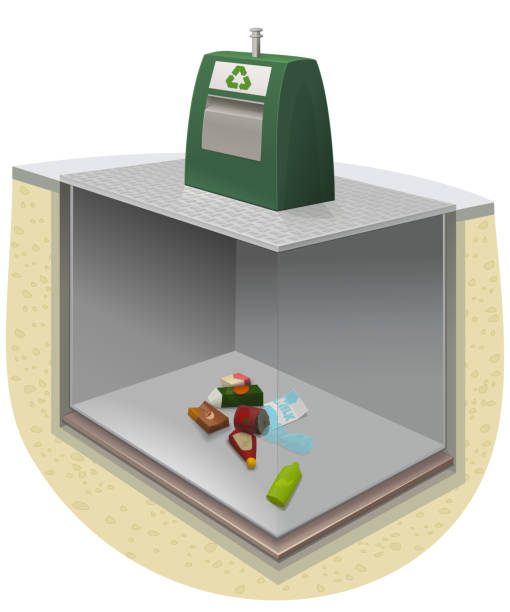
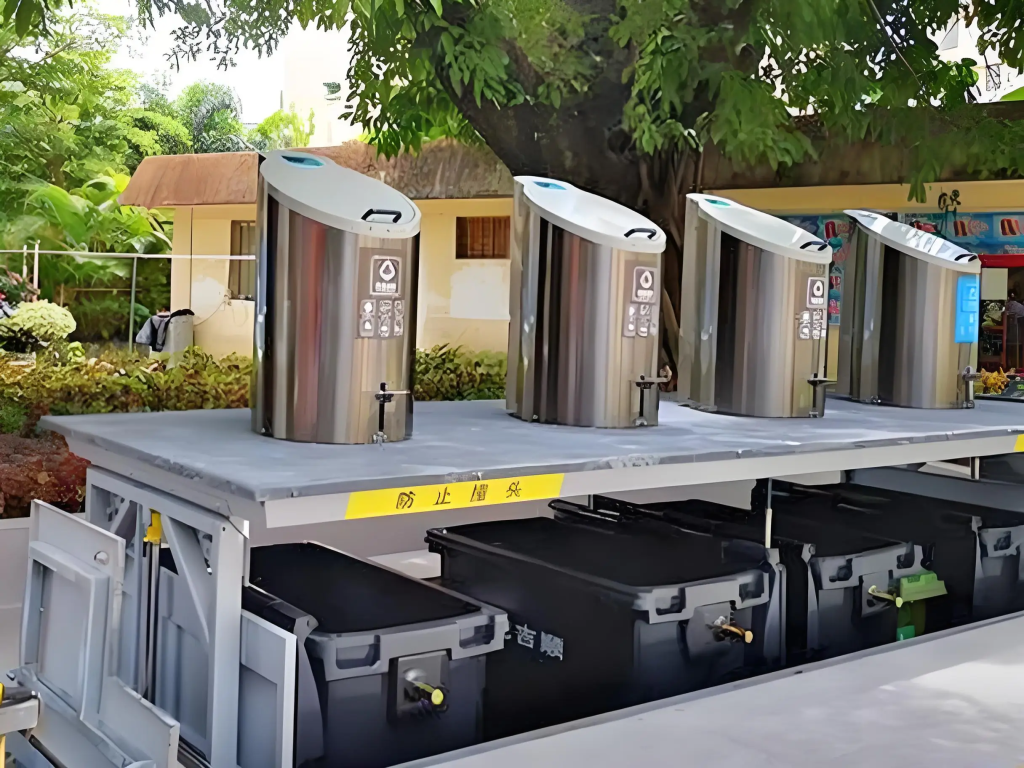
The underground trash container is a type of garbage collection equipment that stores the main storage units underground and only retains the ground disposal ports on the surface. Its core function is to achieve standardized garbage collection while reducing the occupation of ground space and optimizing the environmental appearance. Essentially, it is an integrated garbage treatment system of “ground disposal + underground storage + mechanical collection”, breaking the traditional mode where garbage collection equipment is completely exposed on the ground.
Compared with traditional ground-based trash cans, underground trash containers are more suitable for modern cities. Usually applied to:
- Residential communities and apartment complexes
- Commercial districts and shopping centers
- Parks, squares and public spaces
- Campus, airport and smart city projects
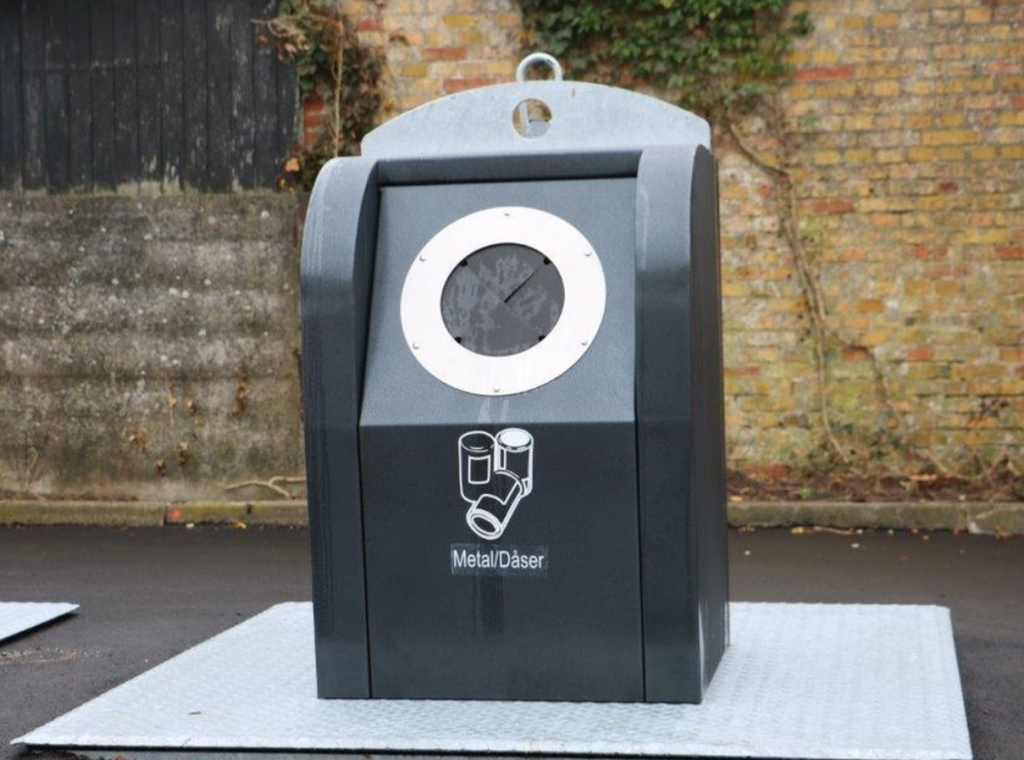
For urban aesthetics, traditional ground-based garbage containers (including ordinary trash cans, classified fruit waste bins, large garbage collection stations, etc.) are all placed on the ground, with the entire or main part exposed, making them easily the visual focal points; while underground trash containers only retain the discharge openings that are level with or slightly higher than the ground, and the main structure is hidden underground, causing minimal damage to the ground landscape.
For space utilization, traditional ground-based trash cans require a dedicated area on the ground, which may lead to space congestion in densely populated residential areas or commercial districts. In contrast, underground trash containers fully utilize the unused space underground and do not require additional occupation of valuable ground area. They are particularly suitable for areas with limited space resources.
Furthermore, in terms of environmental protection and hygiene performance, there are also significant differences between the two. Traditional ground-based trash cans usually have poor sealing performance, which can lead to the spread of odors and the exposure of garbage. In contrast, underground trash containers, with their fully enclosed design and underground installation features, can effectively control odors and reduce secondary pollution caused by the exposure of garbage.

Key Components of an Underground Trash Container System
1. Ground Inlet
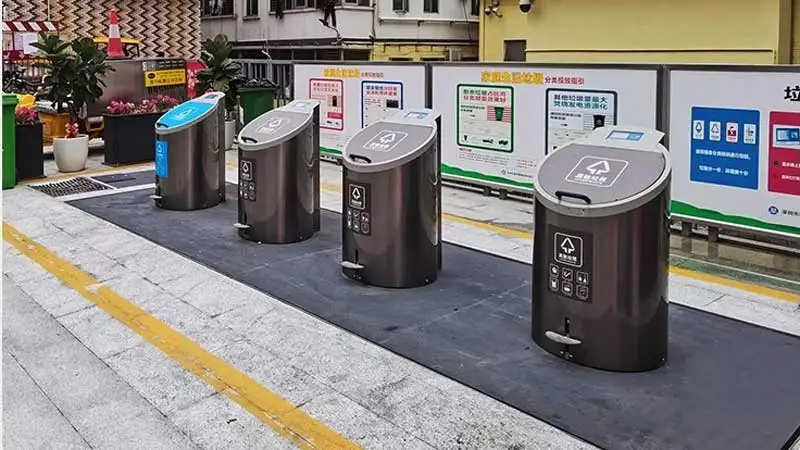
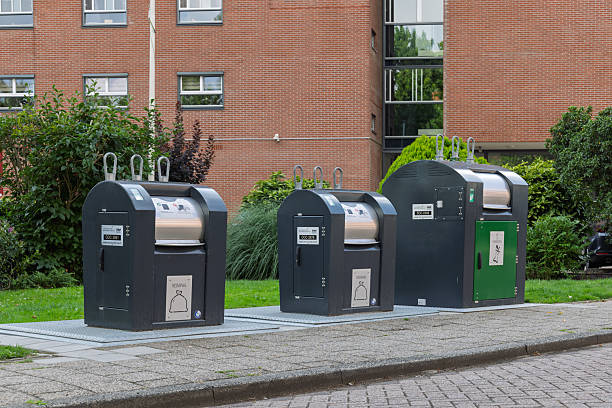
The inlet is classified by garbage type into single-inlet and multi-inlet types. The multi-inlet type is mainly used for garbage classification collection, corresponding to different categories such as recyclables, food waste, and other garbage. At the inlet, a sealing cover (manual, pedal, or sensor type) is usually equipped. After disposal, it automatically closes to prevent odor leakage and mosquito breeding.
2. Underground Storage Unit (Concrete Bunker)
Usually made of high-strength and corrosion-resistant materials (such as stainless steel, reinforced fiberglass, special concrete, etc.), its shape is mostly cylindrical or square, and it has excellent sealing and load-bearing properties. Residential communities typically use storage units with a capacity of 5 to 20 cubic meters, while commercial districts or public places can customize larger capacity storage units.
3. Inner Liner (Liner/Container)
This is the actual container that holds the garbage. It is usually placed inside the underground storage unit and can be removed and replaced separately. The inner liner is typically made of high-strength plastic, rubber, or stainless steel, featuring properties such as wear resistance, corrosion resistance, and easy cleaning. Some inner liners also have anti-leak coating to prevent the leakage of garbage filtrate from polluting the soil and groundwater.
4. Lifting/Assembly Structure
Specialized grasping points have been designed to facilitate the vertical lifting operation of the sanitation garbage truck.
How Does The Underground Trash Container Work?
The collection and emptying of underground trash containers are mainly accomplished through the cooperation of professional collection vehicles (equipped with lifting equipment) and the vehicle’s own lifting structure, using the “vertical hoisting” method.
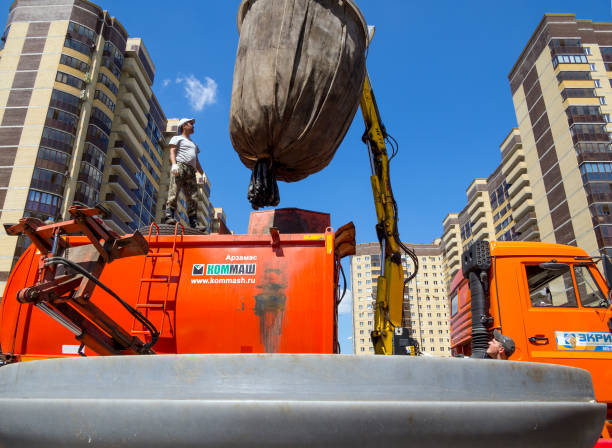
First, after the cleaning crew arrives at the site, they activate the lifting structure through the system’s accompanying control device (either a manual control box or an intelligent control system), and lift the garbage-filled inner containers in the underground storage unit vertically to the ground.
Secondly, once the positioning is completed, the lifting equipment (such as the hydraulic boom) of the cleaning vehicle will fix the inner container, and then transfer the inner container from the lifting structure to the cargo compartment of the cleaning vehicle.
Again, if the system is equipped with a backup inner container, the cleaning personnel will place the empty inner container on the lifting structure, and then use the lifting structure to vertically lower it into the underground storage unit. After closing the sealing door, the garbage collection function of the system will be restored.
Finally, the collection vehicles will transport the garbage containers filled with waste to the designated waste disposal site for further processing, completing the entire collection and emptying process.
Throughout the entire process, the coordination of the mechanical/hydraulic/lifting vehicles is crucial. The hydraulic lifting device provides stable vertical lifting power, while the lifting vehicle is responsible for the transfer of the inner container. Compared to the manual transportation or dumping method used for traditional ground trash cans, this method significantly improves efficiency, reduces the labor intensity of the cleaning staff, and minimizes the secondary pollution caused by garbage scattering.
What Safety Considerations Should Be Taken When Installing Underground Trash Containers?
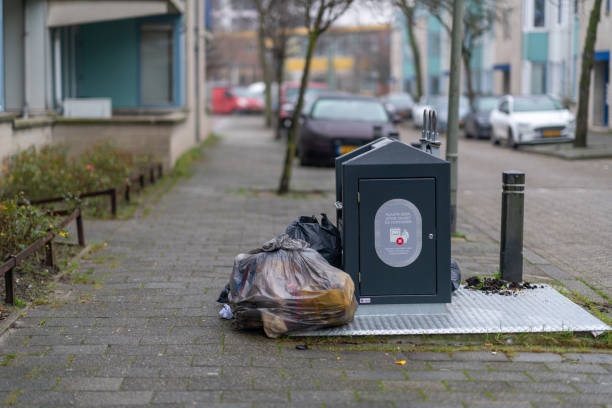
Although the underground trash containers are structurally concealed, they have relatively high requirements for the installation environment and engineering safety.
Site selection and assessment of underground conditions
Before the construction begins, it is necessary to confirm whether there are any underground pipelines, cables or drainage systems, and to assess the soil’s bearing capacity.
Structural and Load-bearing Safety
The underground well structure must have sufficient strength to prevent collapse or deformation of the structure after long-term use.
Use of safety and protection design
The discharge opening should be equipped with designs to prevent falls and avoid misoperations, ensuring the safety of children and pedestrians.
Compliant with local regulations and standards
The installation process should comply with the relevant local regulations concerning municipal facilities, fire safety and environmental protection.
What Are the Benefits of Using Underground Trash Containers?
The underground trash containers are not merely designed to look nice, they have many practical advantages in actual use.
Large capacity
An underground container can often hold the equivalent amount of waste as several ordinary trash cans. This means that the frequency of garbage collection can be significantly reduced. For example, in a typical community, if they use traditional ground trash cans, they might need to clear out the trash 1-2 times a day. However, if they use underground trash containers, the frequency can be extended to 2-3 days per collection.
The odor and hygiene control are better
The garbage is stored underground in a relatively enclosed environment, resulting in less odor diffusion and making it harder for mosquitoes and rats to approach. Mosquitoes cannot enter the storage units to lay eggs or breed, and the odor is effectively controlled underground, significantly improving the hygiene level of the surrounding environment.
Reduced Noise
The collection process of traditional ground trash bins (such as manual dumping and vehicle loading/unloading) will generate considerable noise, especially in residential areas where collection vehicles usually operate in the early morning, and the noise will affect the normal rest of residents. However, the collection process of underground trash containers adopts a mechanical hoisting method, which is more stable and has lower noise.
Underground trash containers are not a universal solution and may not be suitable in all situations. However, in scenarios with limited space, high environmental requirements, and detailed management, they do offer a more modern and sustainable option. It eliminates the visual burden of garbage and shifts urban management from passive cleaning to systematic planning. If you are considering finding a more reasonable garbage collection method for a community, park or urban project, HD is a garbage system manufacturer worth considering.
Related Products