Why Outdoor Trash Can Colors Matter More Than You Think?
Most people pick an outdoor trash can based on size, material, or price. Color is usually an afterthought and that’s exactly where things go wrong.
Whether you’re managing a public park, a commercial property, or a multi-unit building, the color of your trash cans does more than affect how the space looks. It tells people what goes where. And when people don’t know what goes where, recycling rates drop, contamination rises, and waste management costs climb.
Here’s what the colors actually mean, why they vary by region, and how to choose the right setup for your space.
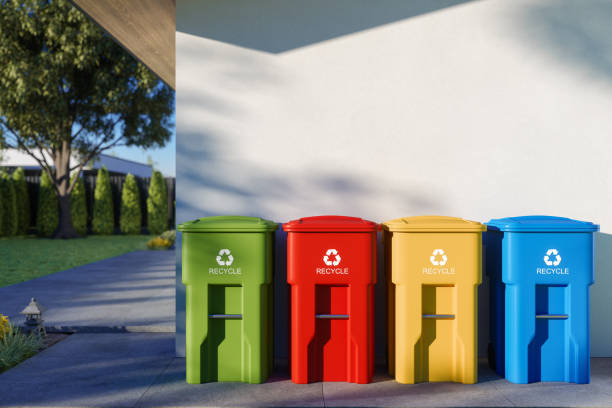
The Standard Outdoor Trash Can Color Code
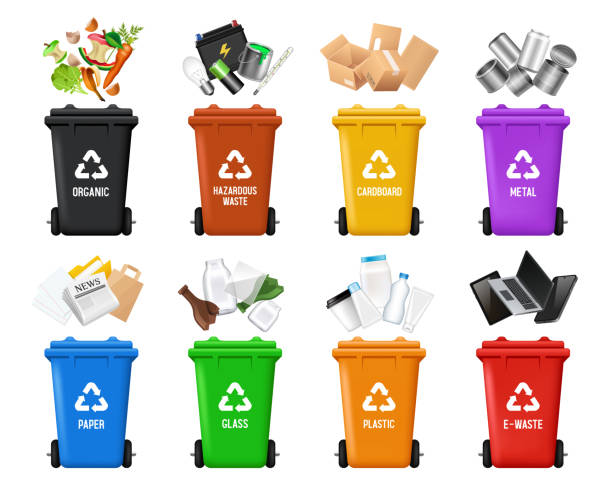
There’s no single global rulebook for trash can colors, but a widely recognized set of conventions has emerged, especially in North America and Europe. Here’s how the most common colors are used:
| Color | Primary Use | Typical Setting |
| Green | General waste | Parks, streets, public spaces |
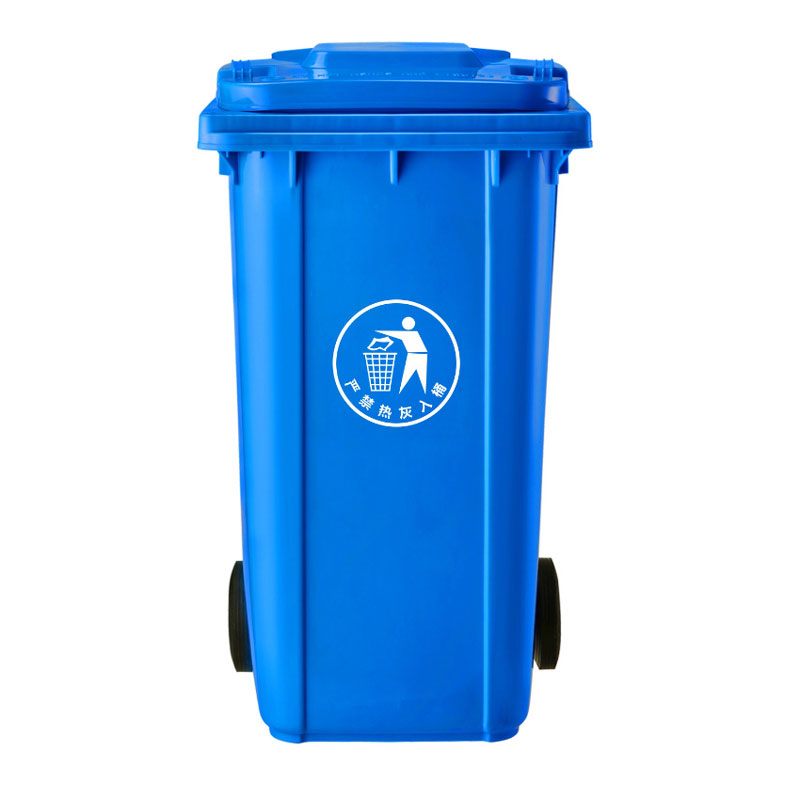
| Blue | Recycling (paper, plastic, cans) | Offices, schools, commercial areas |
| Black | General waste / landfill | Residential, commercial |
| Brown | Organic waste / compost | Food courts, gardens, campuses |
| Red | Hazardous or medical waste | Hospitals, labs, construction sites |
| Yellow | Mixed recyclables | Industrial zones, warehouses |
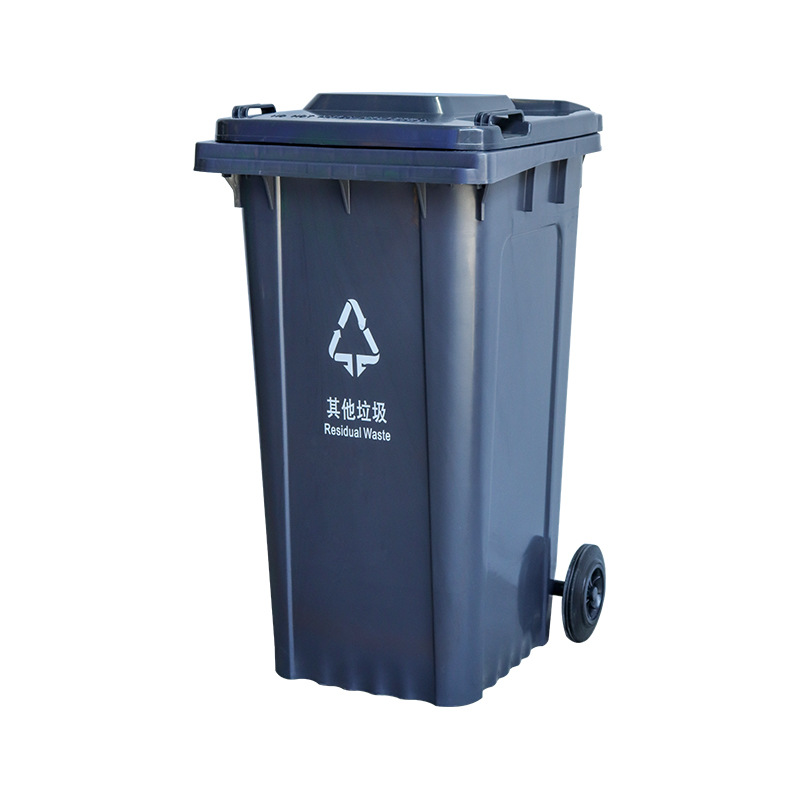
| Gray | Residual / non-recyclable waste | Mixed-use public areas |
These aren’t arbitrary choices. Color-coded bins give people an instant visual cue and no reading required. That split-second decision at the bin is exactly what color coding is designed to support.
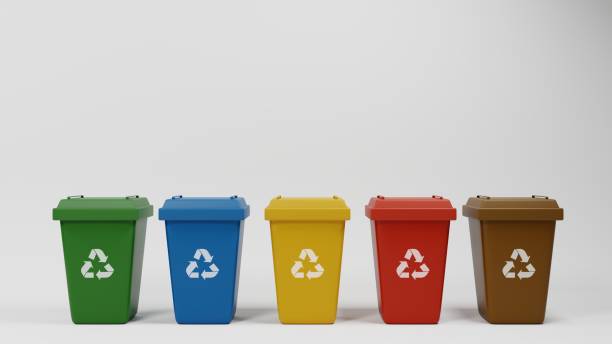
Why Trash Can Color Coding Actually Works
Studies on waste sorting behavior consistently show that visual prompts outperform written instructions at the point of disposal. When someone is walking past a bin with both hands full, they’re not stopping to read a label. They’re going by color.
Research published by Keep America Beautiful found that clear, consistent bin identification, color being a key element, significantly improves recycling compliance in public spaces. The logic is simple: the easier you make it to sort correctly, the more often people will.
Beyond individual behavior, color consistency also benefits waste haulers and sorting facilities. A clearly color-coded collection point reduces contamination at the source, which means fewer rejected loads and lower overall processing costs.
Color Standards Vary by Region — and It Matters
Here’s where things get more complicated. The color conventions above are common, but they’re not universal. Before you order a set of bins, it’s worth knowing what standard applies in your area.
United States
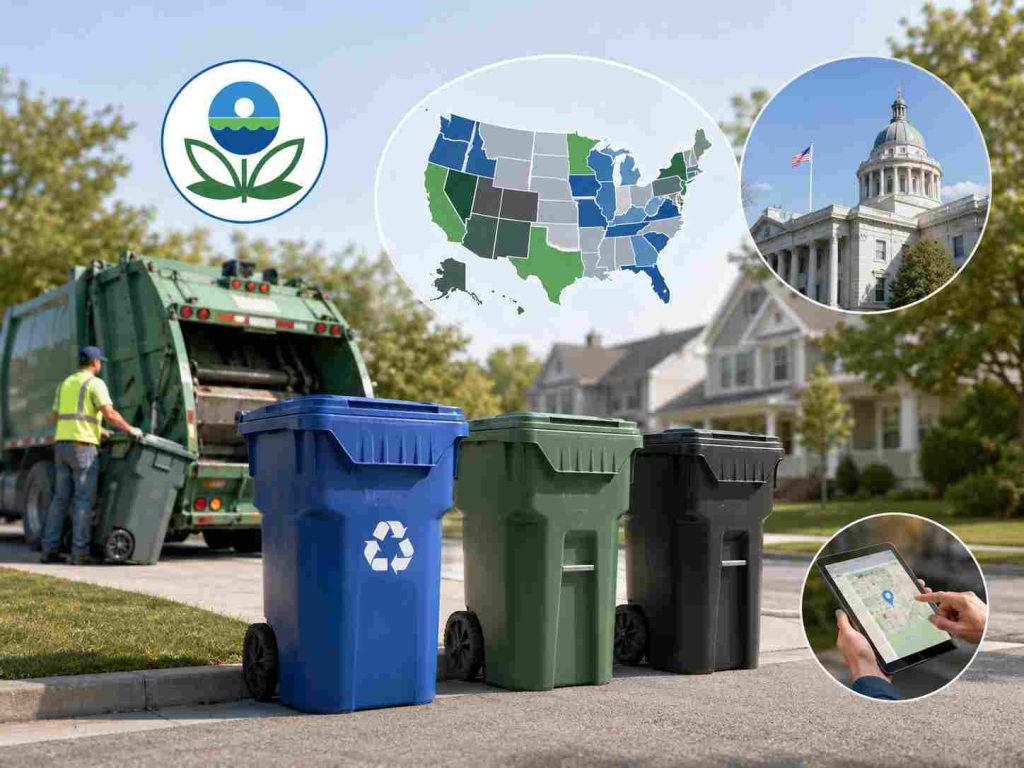
The U.S. doesn’t have a federally mandated trash can color standard, but the EPA’s guidelines and many state-level programs lean toward blue for recycling and green or black for general waste. Some municipalities have their own specific requirements, so it’s always worth checking with your local waste management authority before making bulk purchases.
Europe
The European Union has moved toward harmonizing recycling bin colors across member states, with blue generally designated for paper, yellow for packaging (plastic, metal, cartons), brown for organic waste, and green or gray for residual waste. That said, individual countries still have variations, Germany’s system, for example, is quite different from Spain’s.
China
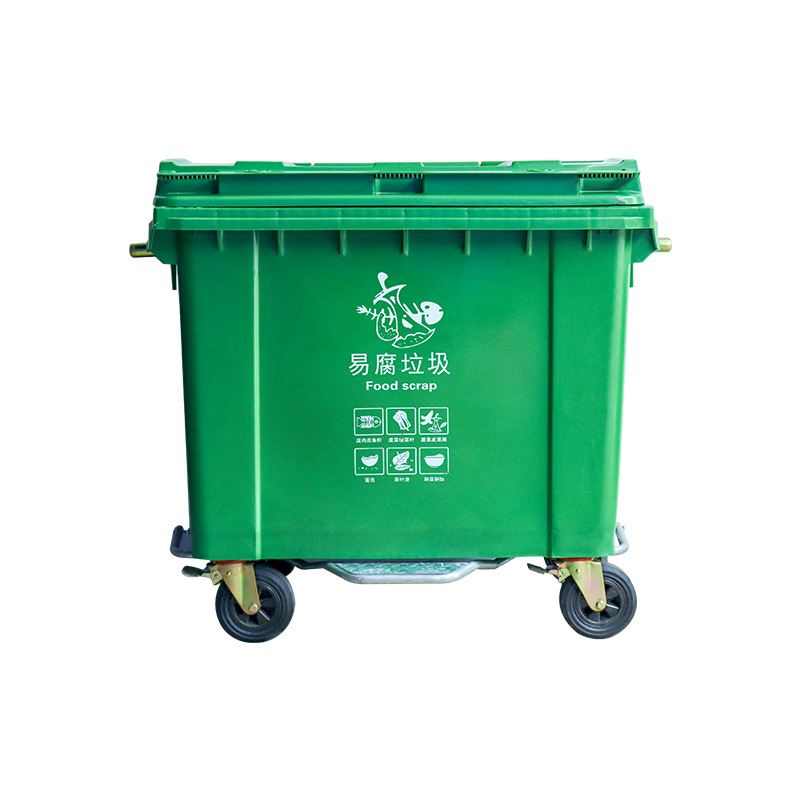
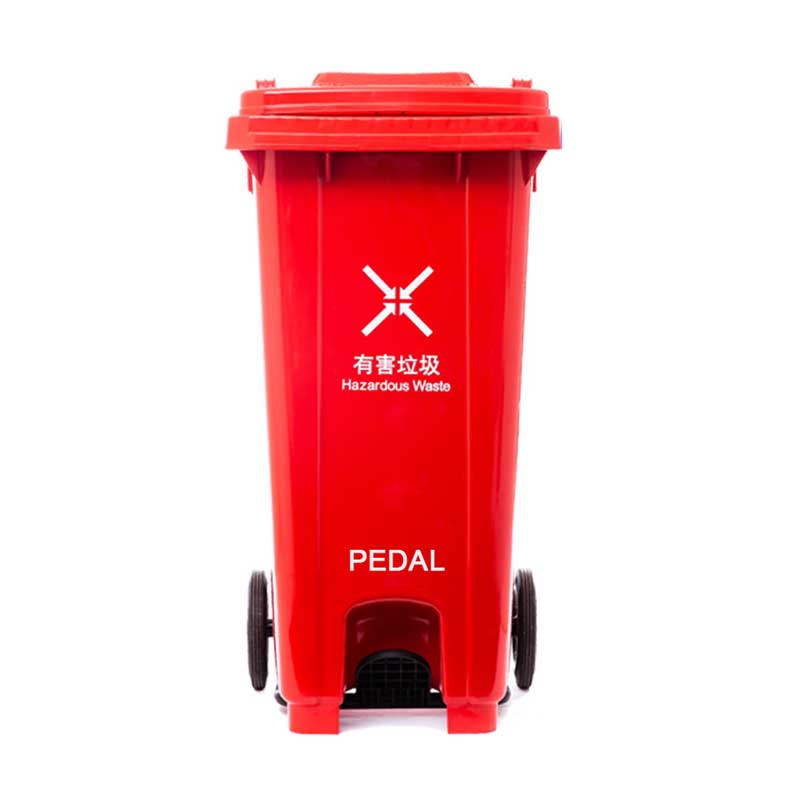
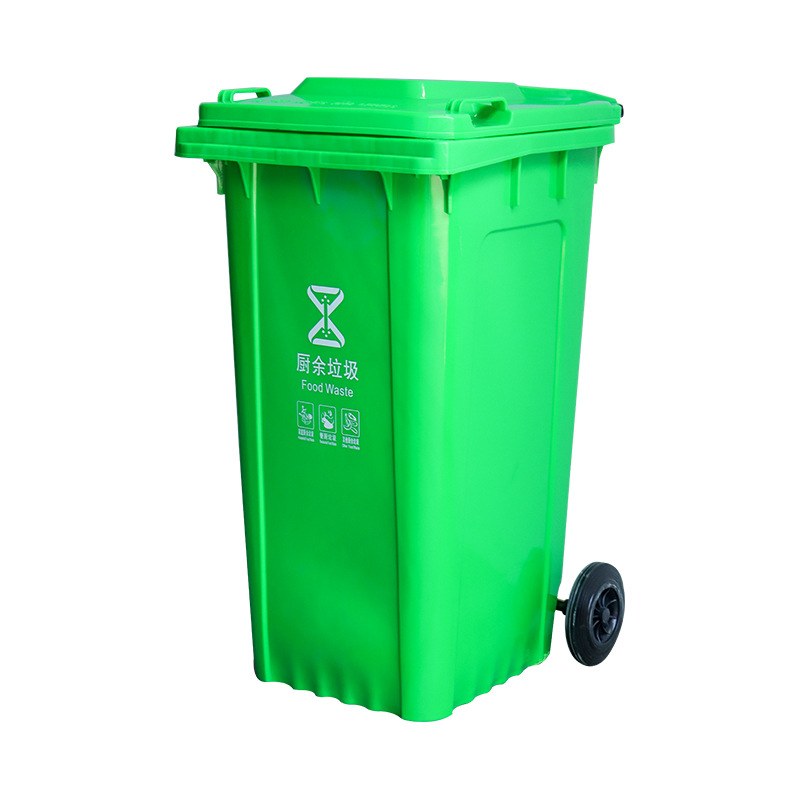
China introduced a mandatory four-color waste classification system in major cities starting around 2019. The colors are: red for hazardous waste, blue for recyclables, green for food/kitchen waste, and gray (or black) for other waste. If you’re sourcing bins for a Chinese market or operating in China, this system is the one to follow.
The main takeaway: don’t assume your color choices will translate across borders. If you manage properties or source products internationally, this is a real compliance consideration.
Choosing the Right Colors for Your Space
Knowing what the colors mean is one thing. Knowing how to apply them to a specific location is another. Here’s a practical breakdown by setting:
Parks and Public Spaces
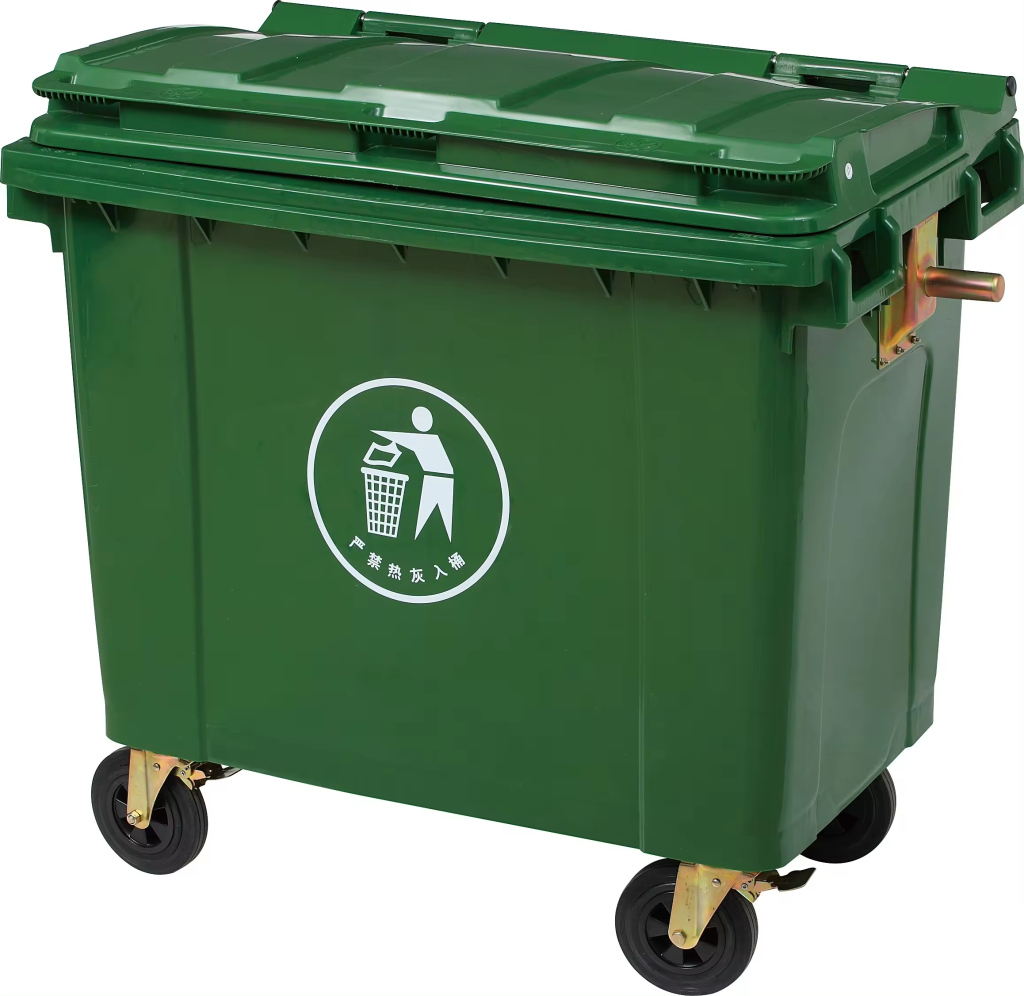
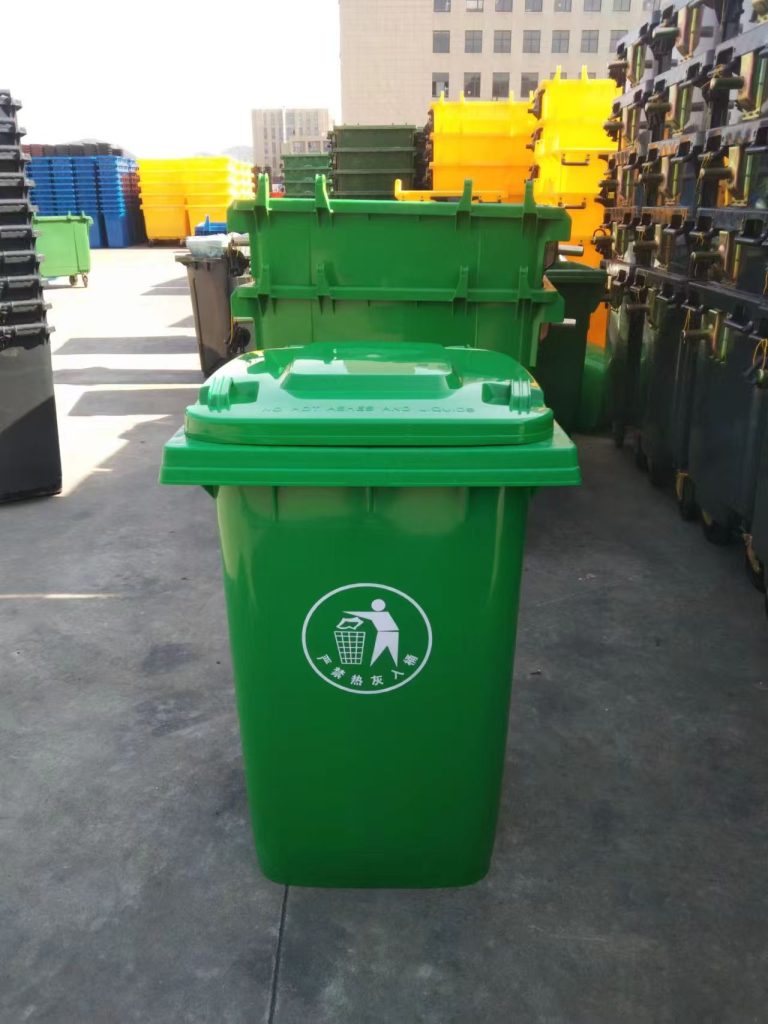
Green and blue are the most intuitive pairing here. Green covers general waste; blue handles recyclables like bottles and cans. In high-traffic areas, consider adding a third brown bin for food waste if you have food vendors on-site.
Office Buildings
The dominant waste streams in offices are paper, beverage containers, and general trash. A blue bin for mixed recycling and a black or gray bin for general waste covers most situations. If your building has a break room or cafeteria, a brown compost bin is worth adding.
Restaurants and Food Courts
Food waste is the priority here. Brown bins for organic waste paired with black bins for general trash is the standard setup. If your local program supports it, a blue bin for clean packaging rounds out the system.
Shopping Malls
High foot traffic means a wider mix of waste types including food packaging, plastic bottles, paper, and general trash. A three-bin setup (blue, brown, black) is usually the minimum. Clear signage on each bin is especially important in retail environments where visitors may not be familiar with local conventions.
Hospitals and Medical Facilities
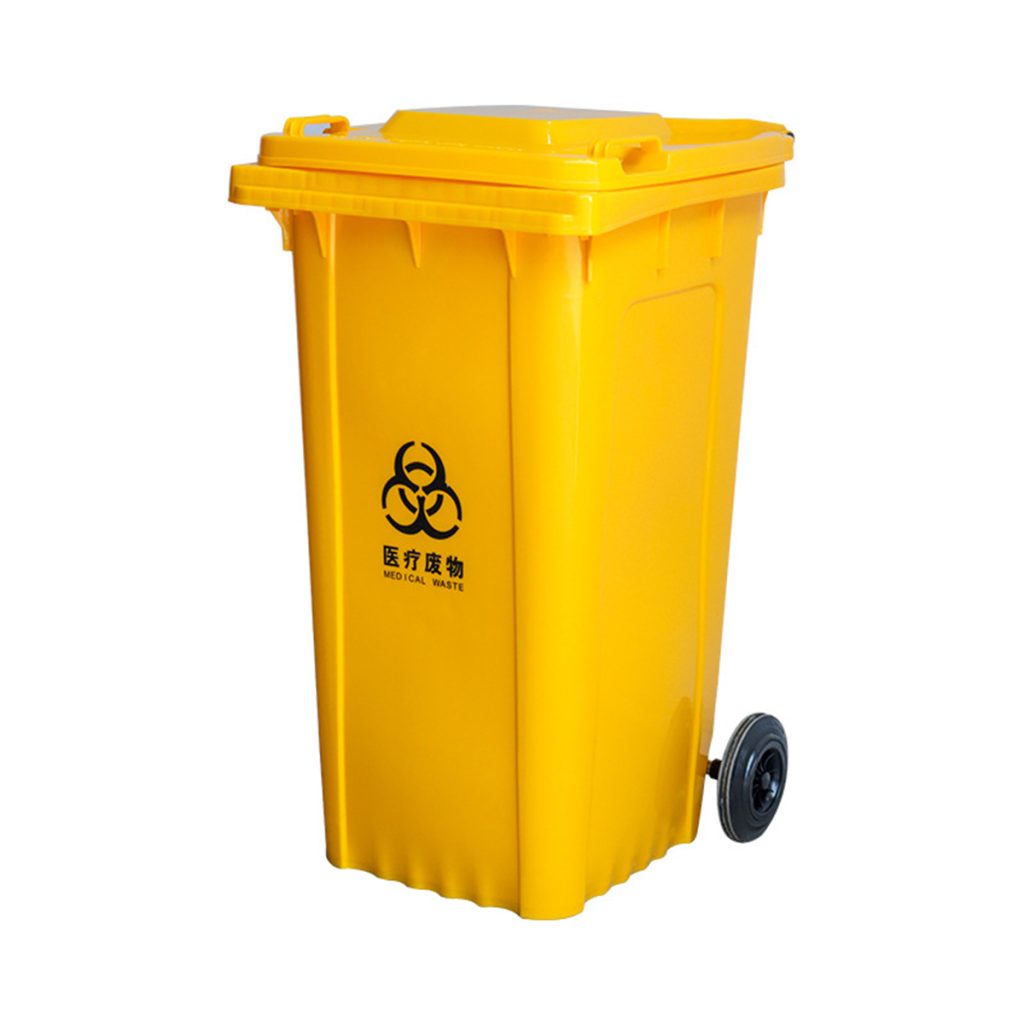
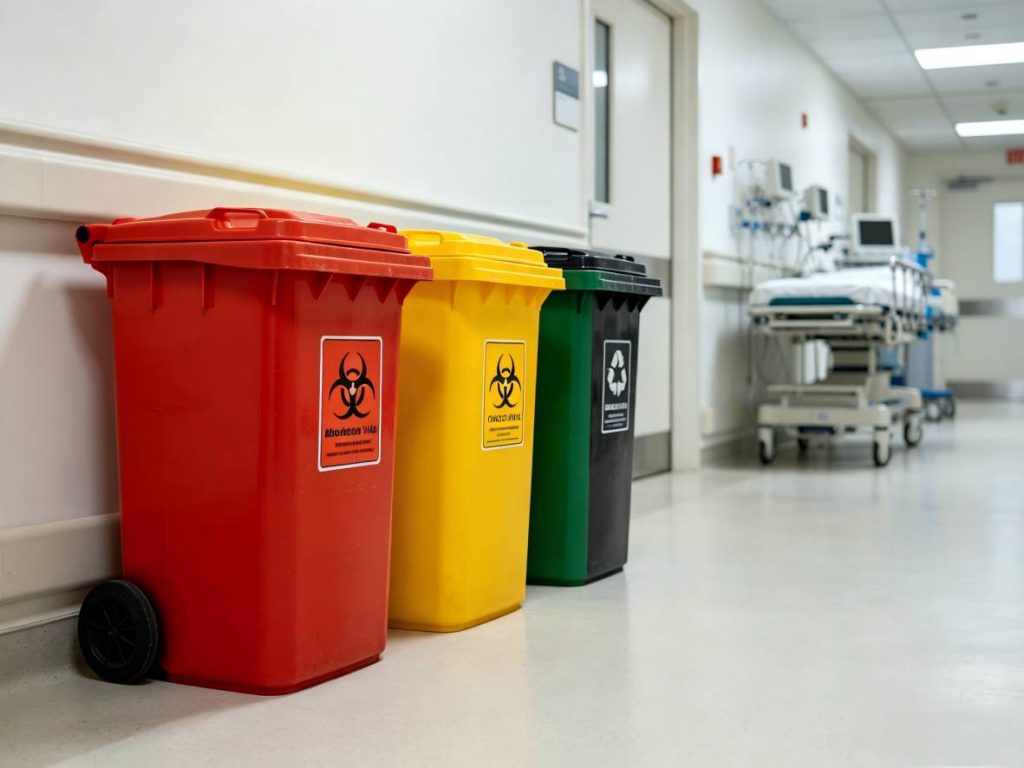
In healthcare settings, red and yellow bins are commonly used for regulated medical waste, infectious materials, and biohazard disposal, although the exact color coding varies by country and facility regulations. These containers operate under strict compliance requirements, including OSHA standards and other local healthcare waste standards, and should never be confused with general trash bins. Red bins are often associated with biohazardous waste, while yellow bins are widely used for clinical or infectious waste in many international healthcare systems. Standard green or black bins are typically reserved for everyday non-medical waste.
Common Mistakes to Avoid
Even well-intentioned setups fall short when these mistakes are made:
Using the same color for everything.
It seems simpler, but it eliminates the entire functional benefit of color coding. If all your bins are black, users have no visual cue and waste sorting suffers.
Choosing colors that conflict with local standards.
A red bin in a public park in a city where red means hazardous waste will confuse people. When in doubt, check your municipal guidelines first.
Skipping the signage.
Color alone isn’t always enough, particularly in multi-language environments or when you’re introducing a new bin type. A simple icon or label on the lid reinforces the color cue and reduces incorrect use.
Buying mismatched sets over time.
When bins need to be replaced individually, it’s easy to end up with shades that don’t match across manufacturers. Standardizing on one supplier for a site helps maintain visual consistency.
If you’re purchasing outdoor bins for a commercial property, a public space, or a multi-site operation, it’s worth taking a few minutes to confirm what color standards apply in your area before placing an order. Getting it right upfront saves the headache of replacing non-compliant bins later.
Looking for outdoor trash cans in specific colors for your property? Browse our full range of commercial outdoor bins.
FAQ
What do different color trash cans mean?
The most common coding: blue = recycling, green = general waste, brown = organic/compost, red = hazardous, black = landfill/general waste. These vary by region, so always check local guidelines.
Is there a universal trash can color standard?
No. Color conventions are widely recognized but not globally standardized. The U.S., EU, and China each have their own guidelines, and even within regions there are local variations.
What color trash can is for recycling?
Blue is the most widely used color for recycling in North America and Europe. Yellow is also used in some European countries for mixed packaging.
What does a red outdoor trash can mean?
In most contexts, red indicates hazardous or medical waste. It’s commonly used in hospitals, labs, and construction sites. Red should not be used for general public waste collection, as it signals a specific disposal requirement.
What color should outdoor trash cans be for parks?
Green for general waste and blue for recycling is the most common and intuitive combination for parks. If food vendors are present, adding a brown bin for compost is a practical addition.
Related Products