
What Is Commercial Kitchen Waste Treatment? A Guide for Hotels and Central Kitchens
Commercial kitchens produce far more organic waste than most people realize. A single central kitchen serving a hotel chain or a restaurant group can generate several tons of food scraps, trimmings, and spoiled ingredients every week, and sending it straight to a landfill or incinerator gets expensive fast. In a growing number of regions, it’s also no longer legal.
Commercial kitchen waste treatment covers the equipment and processes that reduce, separate, and repurpose that waste on-site or at a dedicated facility instead of hauling it away untreated. Waste-tracking software measures how much food gets thrown out. Treatment equipment removes contaminants, breaks the waste down physically, and prepares it for composting, anaerobic digestion, or animal feed production.
Hotels, central kitchens, and food-service operators weighing on-site treatment need to know what system types exist, how the most common one works, and what determines whether the investment pays off.
Why Untreated Food Waste Disposal Doesn’t Work at Scale
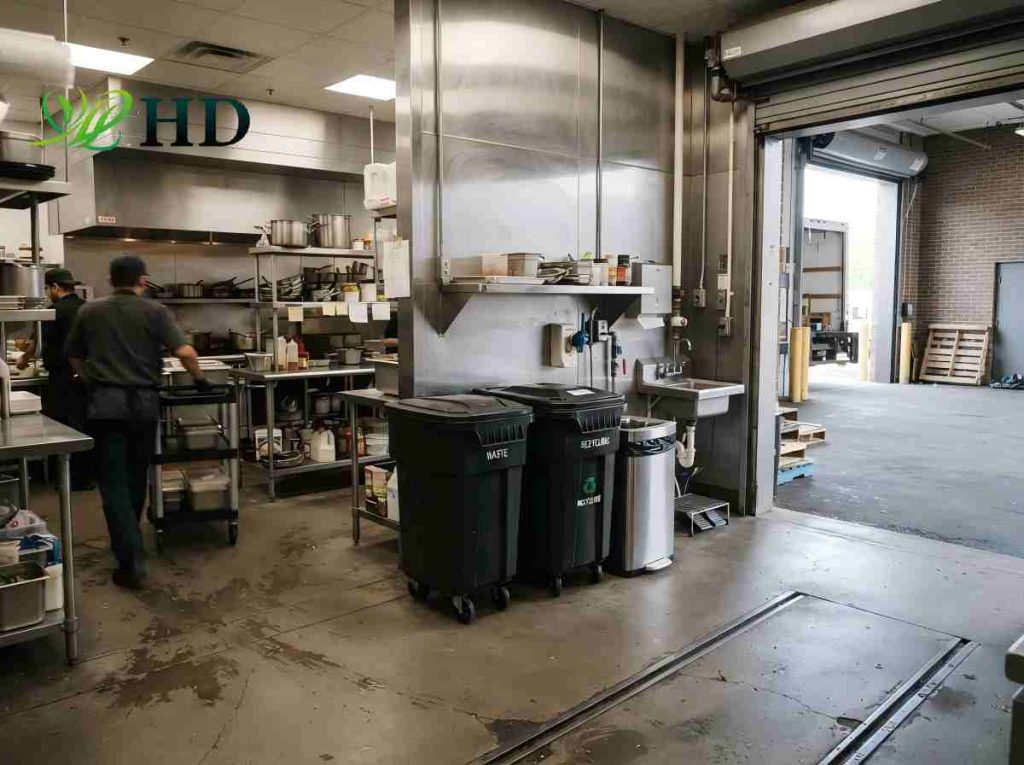
Hauling food waste out with regular trash used to be the default, and in smaller operations it still is. Scale changes that math.
Raw food waste is heavy and mostly water, so transportation costs climb quickly when a facility pays by weight or pickup frequency. It also decomposes fast, and anything stored on-site for more than a day or two turns into an odor and pest problem. Regulation adds another layer — the EPA’s guidance on sustainable food management points to landfilled organic waste as a major source of methane emissions, and more cities and states are restricting how commercial kitchens can dispose of it as a result.
A small kitchen throwing out a few bins a week probably doesn’t need to think about any of this yet. A central kitchen processing several tons a week is running very different numbers.
Types of Commercial Kitchen Waste Treatment Systems
Facilities generally choose from four approaches, and the right one depends on volume, available space, and what happens to the waste afterward.
On-site pretreatment paired with anaerobic digestion runs food waste through a mechanical system before microorganisms break it down and produce biogas. Larger central kitchens, hotel groups, and waste-management operators tend to land here when they’re handling high daily volumes and want the organic material turned into usable energy or fertilizer byproducts, not just reduced in size.
Aerobic composting machines break down food waste with oxygen and heat, producing finished compost in as little as 24 to 48 hours. Properties with landscaping or garden space that can use the output directly get the most out of this option, and it skips the downstream infrastructure anaerobic digestion needs.
Dehydrators strip moisture from food waste, cutting volume by roughly 80 to 90 percent. The dried output works as animal feed or a soil additive. Hotels with limited space often go this route — the units are compact and don’t carry the odor problems that come with storing wet waste.
Off-site collection keeps things simple: a facility separates food waste on-site, then sends it untreated to a third-party processor or municipal program. It’s the lowest-investment path, and it’s usually where smaller kitchens end up when space or budget rules out equipment altogether.
| System type | Processing time | Space needed | Best fit |
| On-site pretreatment + anaerobic digestion | Continuous | Large | High-volume central kitchens, hotel groups |
| Aerobic composting | 24–48 hours | Moderate | Properties with landscaping/garden use |
| Dehydration | Hours | Small | Space-constrained hotels |
| Off-site collection | N/A | Minimal | Smaller kitchens, limited budget |
None of these is universally better. A boutique hotel with a small kitchen and a third-party compost hauler nearby may never need to look past off-site collection. A regional central kitchen processing several tons a week is a different conversation entirely.
How Commercial Food Waste Pretreatment Works: Step by Step
For facilities that do have the volume to justify on-site pretreatment, the process typically runs through several connected stages.
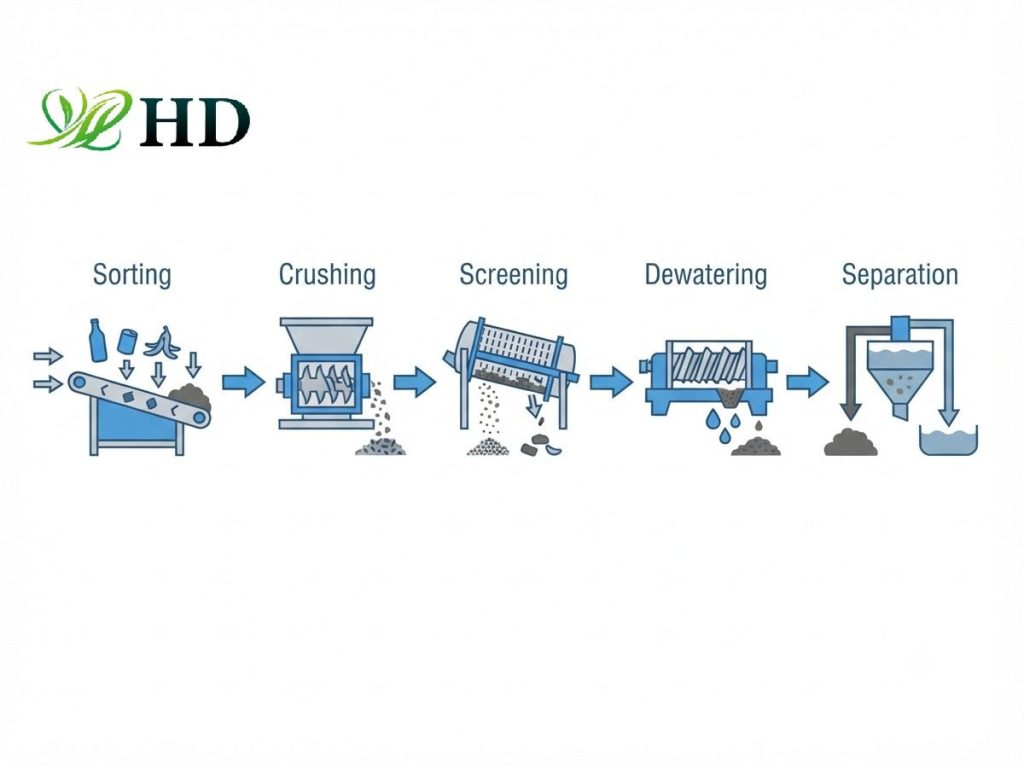
Step 1: Pre-sorting
Non-organic contaminants — plastic packaging, utensils, bones too large for the system — get pulled out first. Skipping this step is the most common reason pretreatment equipment wears out faster than expected; contamination is hard on the machinery downstream.
Step 2: Crushing and screening
Sorted material gets crushed, reducing particle size and breaking down cell structure so the waste processes more easily later on. It then passes through screening, which catches any remaining oversized or unwanted material.
Step 3: Dewatering and pressing
This stage removes excess liquid and cuts overall volume. Food waste runs over 70 percent water by weight in many cases, and every gallon left in the material adds cost to whatever stage comes next.
Step 4: Heating and buffering
The material gets stabilized here, with odor kept under control before it moves to the final stage.
Step 5: Three-phase separation
The waste splits into organic, oil, and water fractions. Organics go to anaerobic digestion, oil gets recovered, and water moves to treatment or discharge.
Diet and food composition shift the numbers by market, so the same process doesn’t run identically everywhere. A kitchen handling mostly produce trimmings deals with different fat and moisture levels than one processing meat-heavy waste, and equipment settings get tuned to match.
What Happens to Food Waste After Pretreatment?
Pretreated organic material typically moves on to anaerobic digestion, where bacteria break it down in an oxygen-free environment. The process produces biogas mostly methane that gets captured and used for heat or electricity. What’s left over, the digestate, usually ends up as a soil amendment or fertilizer input.
Poorly separated, high-contamination waste damages digesters and drags down biogas yield. Clean, dewatered organic material keeps the system running efficiently and shortens how long the equipment takes to pay for itself which is really the whole point of the pretreatment stage.
Facilities without anaerobic digestion on-site aren’t stuck. Pretreated and dewatered material weighs less and travels more easily to a centralized digestion facility, and that alone can cut hauling costs compared to shipping untreated waste.
How to Choose a Kitchen Waste Treatment System for Your Facility
1. How much waste are you generating daily?
Facilities under a few hundred kilograms a day rarely justify the capital cost of on-site pretreatment equipment. Above that threshold — especially for central kitchens supplying multiple properties — the economics start favoring on-site treatment.
2. What’s your available space and infrastructure?
Pretreatment and digestion systems need dedicated space, utility connections, and usually some outdoor footprint. Dehydrators and small composters fit into much tighter spaces.
3. What happens downstream?
Pretreatment alone doesn’t complete the loop. Without a local anaerobic digestion facility or an offtake for digestate, the output still needs somewhere to go.
4. Does your region have regulatory requirements?
Some jurisdictions mandate organic waste diversion above certain generation thresholds. Where that applies, the decision stops being optional.
Guessing at capacity is how facilities end up with underpowered equipment or an oversized investment that never pays for itself. A facility assessment that measures actual daily waste volume and composition first is worth the extra step, especially for operators sizing a system for the first time.
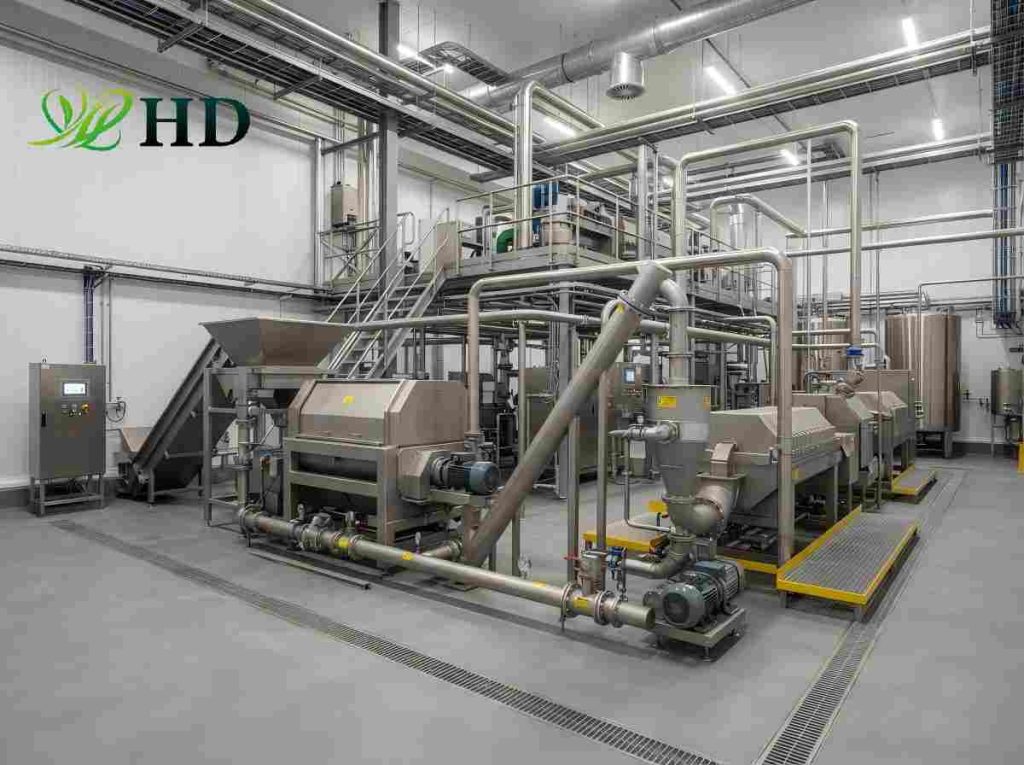
HD’s commercial food waste treatment systems cover this range, from standalone pretreatment units to full OEM and ODM configurations sized around a facility’s actual waste volume and regional requirements.
FAQs
How much food waste does a typical hotel kitchen produce daily?
It varies widely by property size and service style, but full-service hotels with restaurants and banquet operations commonly generate several hundred kilograms to over a ton per day across their food and beverage operations.
Is on-site food waste treatment worth the investment?
For high-volume operations, yes — reduced hauling costs, lower disposal fees, and in some cases biogas or compost revenue tend to offset the equipment cost over a few years. For smaller kitchens, off-site collection or a compact dehydrator often makes more financial sense.
Can one system handle both food waste and packaging waste?
No. Pretreatment and digestion systems are built for organic material. Packaging and non-organic waste need to be separated out beforehand, either manually or through the pre-sorting stage of the system.