Galvanized Steel vs. Powder-Coated Steel Trash Cans: Which Lasts Longer Outdoors?
When you’re sourcing outdoor trash cans for a park, a commercial property, or a municipal project, the finish on the steel matters more than most product listings suggest. Two options come up constantly: galvanized steel and powder-coated steel. Both look solid on paper. Both are marketed as “weather-resistant.” But they protect the metal in fundamentally different ways and that difference becomes very visible after a few years outdoors.
This guide breaks down how each finish works, where each one holds up, and which makes more sense depending on your specific environment and maintenance capacity.
Galvanized Steel vs. Powder-Coated Steel: How Each Finish Actually Protects the Metal
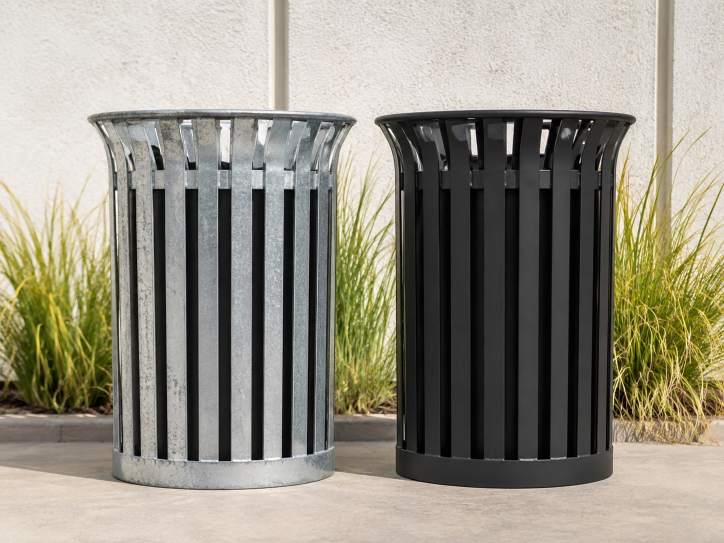
Galvanized steel is made by submerging the steel in molten zinc at around 450°C. The zinc doesn’t just coat the surface, it forms a metallurgical bond with the steel itself. The resulting layer is typically 45 to 85 microns thick and becomes part of the steel structure. What makes this particularly useful outdoors is a property called cathodic protection: if the surface gets scratched, the surrounding zinc sacrifices itself to protect the exposed steel. The coating essentially self-repairs at a microscopic level.
One thing worth knowing: not all galvanized steel is the same. Hot-dip galvanizing (described above) produces a thick, bonded layer. Electro-galvanizing uses an electrochemical process at room temperature and produces a much thinner coating with weaker adhesion. Two bins can both be labeled “galvanized steel” and perform very differently in the field. More on how to check which one you’re actually buying later.
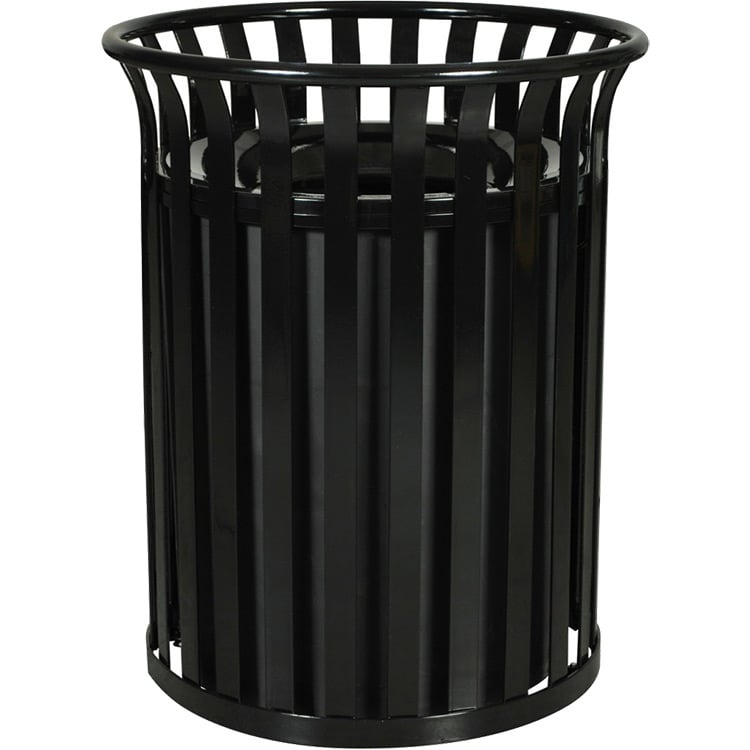
Powder-coated steel, on the other hand, uses an electrostatic process to apply a dry powder to the metal surface, which is then baked to form a hard, even finish. It looks clean, comes in a wide range of colors, and resists UV fading and surface scratches well. The limitation is that it’s a surface coating. Once the coating is breached — at a weld seam, a corner edge, or a point of impact, moisture gets underneath and corrosion spreads outward from that point. There’s no self-repair mechanism.
Neither finish is inherently bad. They just work differently, and the environment you’re placing the bin in will largely determine which one holds up better over time.
How Each Finish Performs by Environment
Coastal and High-Humidity Locations
Salt air is genuinely aggressive toward both finishes, but it causes different failure modes.
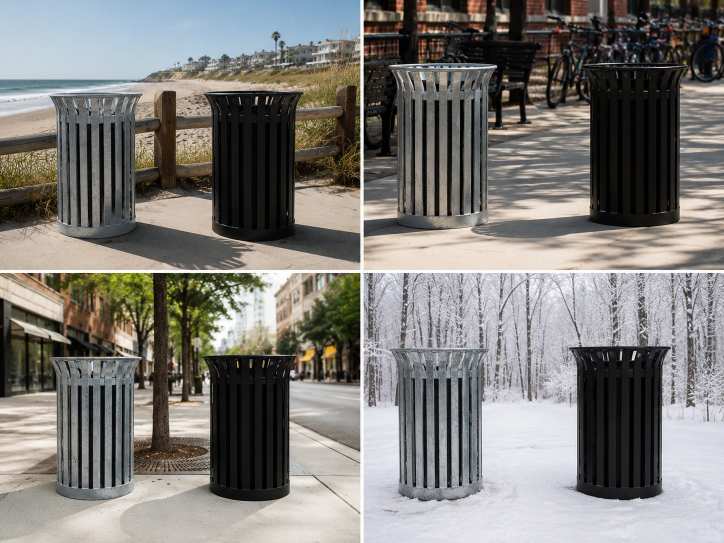
Powder-coated bins in coastal settings tend to fail at the edges first. Salt-laden moisture works its way under the coating at any small breach, and once that process starts, the corrosion spreads under the surface before it’s even visible. By the time you see bubbling or flaking, the damage underneath is usually worse than it looks.
Galvanized steel handles salt air more predictably. The zinc layer does get consumed faster in saline environments, but the thickness of a hot-dip galvanized coating means there’s significant material to work through before the steel is exposed. For coastal parks, waterfront properties, or anywhere with persistent humidity, galvanized is the more reliable long-term choice or a bin built on a galvanized substrate with a powder coat over the top, which combines both advantages.
High-Traffic Public Spaces
Parks, transit stations, school campuses, and similar environments put outdoor bins through a different kind of punishment: physical impact. Garbage trucks, maintenance carts, and general daily contact create frequent low-level impacts that gradually chip and scuff the coating.
This is where the self-healing property of galvanized steel becomes genuinely practical. A scratch on a galvanized bin doesn’t compromise its corrosion resistance. The same scratch on a powder-coated bin is the beginning of a larger problem if it isn’t caught and touched up.
For high-traffic environments where regular inspection and maintenance aren’t realistic, galvanized steel is the lower-risk choice.
Urban Streetscapes and Commercial Properties
Aesthetics matter more in some locations than others. A city center, a hotel entrance, or a branded commercial development often requires bins that match a specific color palette or design standard. This is where powder coating has a clear advantage, the range of finishes available is extensive, and a well-maintained powder-coated bin holds its appearance better than bare galvanized steel, which develops a flat grey patina over time.
If the property has a maintenance program in place and staff who can check for coating damage regularly, powder-coated bins can perform well for a decade or more in urban settings. The key word is “maintained.” Powder coat on a neglected bin in a wet climate will fail faster than most buyers expect.
Extreme Temperature Climates
In locations with significant temperature swings between seasons, thermal expansion and contraction put stress on surface coatings over time. Powder coat can develop edge adhesion issues in these conditions, particularly around welds and corners where the coating is thinnest.
Galvanized steel doesn’t have this problem. Because the zinc is metallurgically bonded to the steel, it expands and contracts at the same rate. There’s no interface layer to delaminate.
Realistic Lifespan Expectations
Putting specific numbers to lifespan is difficult without knowing the exact environment, but general ranges are useful for planning.
A properly hot-dip galvanized outdoor trash can in a typical inland environment can reasonably be expected to last 20 to 50 years before the zinc layer is fully consumed and steel corrosion begins. In coastal or industrial environments with higher corrosive load, that range drops, but it’s still measured in decades.
Powder-coated bins, with normal maintenance, typically maintain coating integrity for 10 to 15 years. After that, refinishing or replacement becomes necessary. In harsher conditions or without regular maintenance, that timeline shortens considerably.
A dual-treated bin — hot-dip galvanized substrate with a powder coat applied over it — is the specification used in many long-term commercial and municipal projects. It delivers both the corrosion resilience of galvanized steel and the color customization of powder coating. The powder coat will eventually need attention, but the underlying steel remains protected even if it does.
Maintenance Requirements
Galvanized steel is close to maintenance-free in practice. Periodic cleaning to remove debris and surface grime is sufficient. You may notice white rust — a chalky white deposit, forming on the surface over time. This is zinc oxide, a normal byproduct of the protective process, and it doesn’t indicate structural failure. It can be removed with a soft brush if appearance is a concern.
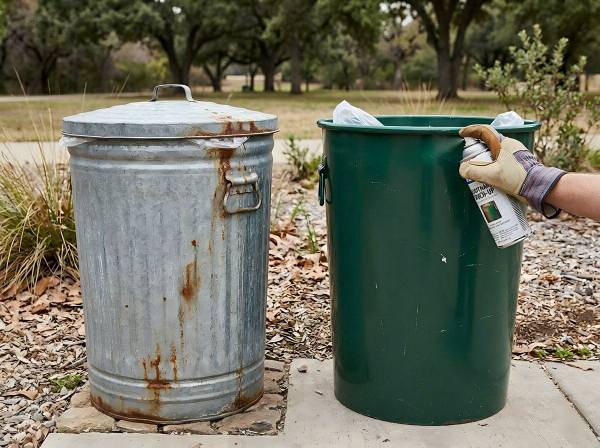
Powder-coated steel requires more active attention. The coating should be inspected regularly, particularly at weld points, bottom edges, and any area that takes regular physical contact. Small chips or scratches should be addressed with a compatible touch-up product before moisture gets a foothold. Cleaning should use a mild, pH-neutral detergent, abrasive cleaners and alkaline chemicals will degrade the coating faster.
The maintenance difference is worth factoring into total cost of ownership, not just the purchase price.
How to Confirm What You’re Actually Getting
This matters more than it might seem. Hot-dip galvanized and electro-galvanized bins can look identical in photos and product listings. The performance gap between them is significant, a hot-dip galvanized bin can outlast an electro-galvanized one by a factor of three or more in outdoor conditions.
Before placing a bulk order, ask the supplier for a coating thickness test report. For hot-dip galvanized steel, the relevant standard is ASTM A653 (North American market) or EN 10346 (European market). If a supplier can’t provide actual test data that’s a meaningful red flag.
For powder-coated bins, 60 to 80 microns is the standard coating thickness for commercial outdoor use. Thinner coatings are sometimes used to reduce costs and will show wear sooner.
Also confirm the steel gauge separately from the finish specification. A well-applied coating on thin-gauge steel still produces a bin that dents easily and has a shorter structural lifespan.
Choosing the Right Finish for Your Project
The honest answer is that neither finish is universally better. The right choice depends on where the bins will be placed, how much physical contact they’ll take, and whether you have a maintenance program in place.
As a general guide:
- Coastal, high-humidity, or marine environments: Hot-dip galvanized, or galvanized with powder coat over it
- High-traffic public spaces with limited maintenance: Hot-dip galvanized
- Urban or commercial settings with aesthetics requirements: Powder-coated, provided there’s a maintenance budget
- Long-term low-maintenance installations: Hot-dip galvanized
- Projects requiring custom colors and maximum corrosion resistance: Dual-treated (galvanized substrate + powder coat)
If you’re specifying outdoor metal trash cans for a large project and aren’t sure which specification fits your site conditions, it’s worth getting into the details with your supplier before the order goes through. The finish is a small line item in the purchase price and a significant factor in how long the bins actually last.
Related Products