How to Choose Outdoor Picnic Tables for Schools?
Outdoor picnic tables are rarely at the top of a school’s procurement list but once installed, they stay for a decade or more. The right choice becomes a low-maintenance fixture of campus life. The wrong one turns into a recurring line item: repainting, repairs, replacements, and the occasional safety complaint.
This guide covers what facility managers and procurement officers actually need to evaluate before placing an order including use case, sizing, materials, compliance, and installation.
Where Will the Outdoor Picnic Tables Be Used?
Before settling on a product, it’s worth mapping out where the tables will go and what students will actually do there. Location and use pattern drive most of the spec decisions that follow.
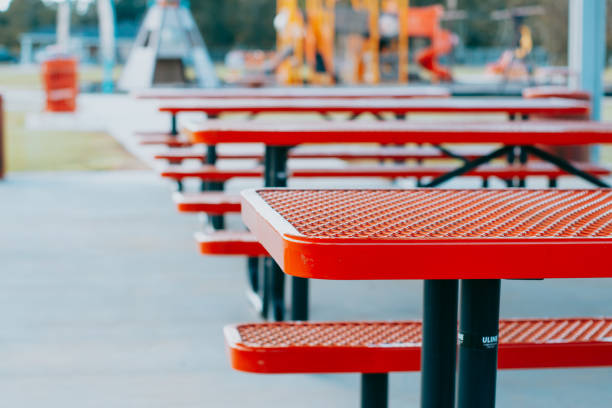
Outdoor lunch and dining areas are the most demanding installation. High daily traffic, food and liquid exposure, and constant physical contact with the furniture mean durability and seating capacity come first.
Courtyards and social spaces work differently. Students use these areas in smaller groups, often outside of scheduled meal times. The structural requirements are lower, and there’s more flexibility in table shape and arrangement.
Outdoor classrooms have their own priorities. Tabletop surface area matters more than capacity, and the seating configuration should allow students to work facing each other, not just sit side by side.
Recreation areas and sports field sidelines see lighter daily use, but the tables are exposed to weather year-round with little regular maintenance. Finish durability and material quality carry more weight here than seating count.
Defining the use case upfront prevents a common outcome: discovering six months after installation that the wrong table ended up in the wrong place.
School Picnic Table Height and Seating Dimensions by Age Group
Two things determine the right table spec for a school: the physical dimensions relative to the students using them, and the total number of tables needed to cover peak usage periods. Both are worth getting right before placing an order.
Preschool and kindergarten students need smaller tables, standard commercial sizing is built for adults and doesn’t scale down well for young children. Table height in this range should fall between 18–20 inches (46–51 cm), with seat heights around 11–12 inches (28–30 cm). Rounded edges and a smaller overall footprint are also practical considerations at this age.
Elementary school students (grades 1–5) are well served by table heights of 22–26 inches (56–66 cm) and seat heights of 15–17 inches (38–43 cm). This range accommodates most primary-age students without requiring custom sizing.
Middle and high school students can use standard commercial dimensions typically 28–30 inches (71–76 cm) table height, consistent with adult outdoor furniture specs.
Mixed-age campuses are where uniform sizing tends to create problems. A single table spec across a K–12 school will fit some students well and others poorly. Zoning areas by age group and specifying the appropriate size for each zone is the more practical approach.
On the capacity side, the number to work from is peak simultaneous usage, not total enrollment. A school with 600 students running two lunch sittings needs seating for roughly 300 at a time, minus staff areas, plus a buffer for schedule overlap. Total enrollment as a baseline leads to either significant over-ordering or, more commonly, not enough tables during the busiest periods.
Which Material Works Best for School Picnic Tables?
Material selection has a direct effect on maintenance frequency, long-term appearance, and how well the tables hold up in the local climate. For school environments, the practical options are:
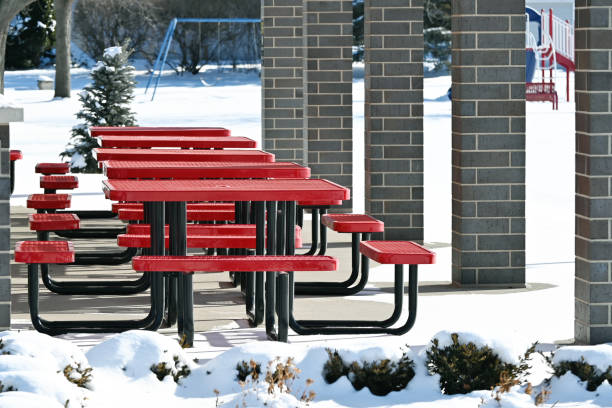
Powder-coated steel is the standard choice for commercial school furniture. It’s structurally strong, available in a wide range of colors, and performs well under normal outdoor conditions. Coating thickness and surface preparation are what separate a durable finish from one that starts showing wear within a few years — powder coat applied over properly primed steel lasts considerably longer than the same finish over bare metal.
Thermoplastic-coated steel has a thicker surface layer that resists impact and scratching better than standard powder coat. It’s also more resistant to graffiti, which makes it a reasonable upgrade for high-traffic areas or campuses where vandalism is a recurring issue. The unit cost is higher, but the maintenance savings often offset that over time.
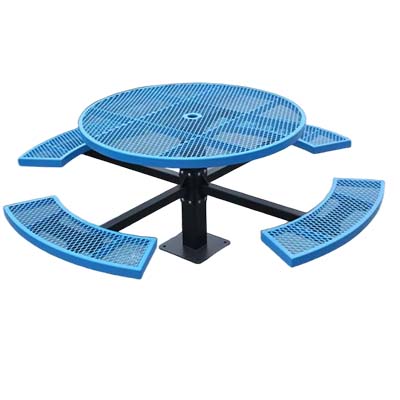
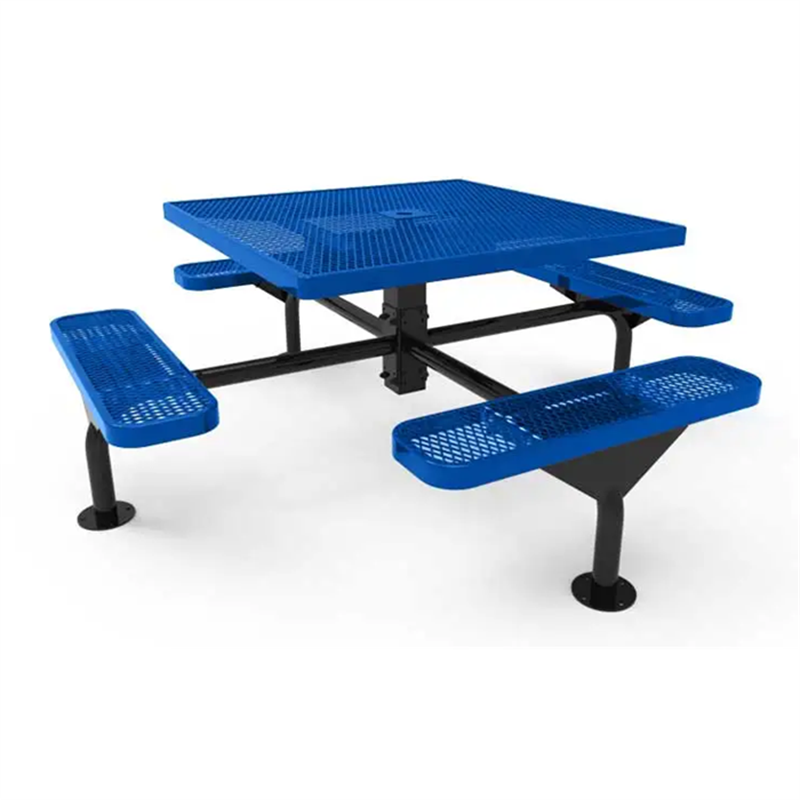
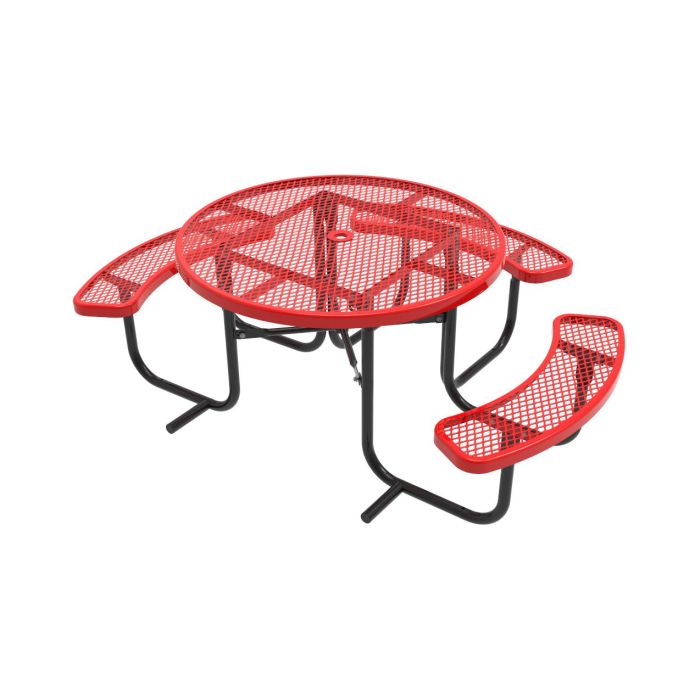
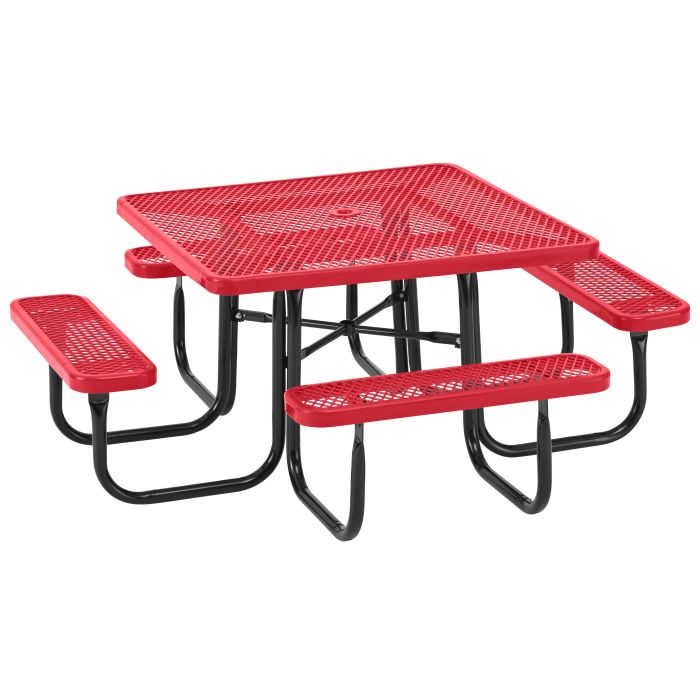
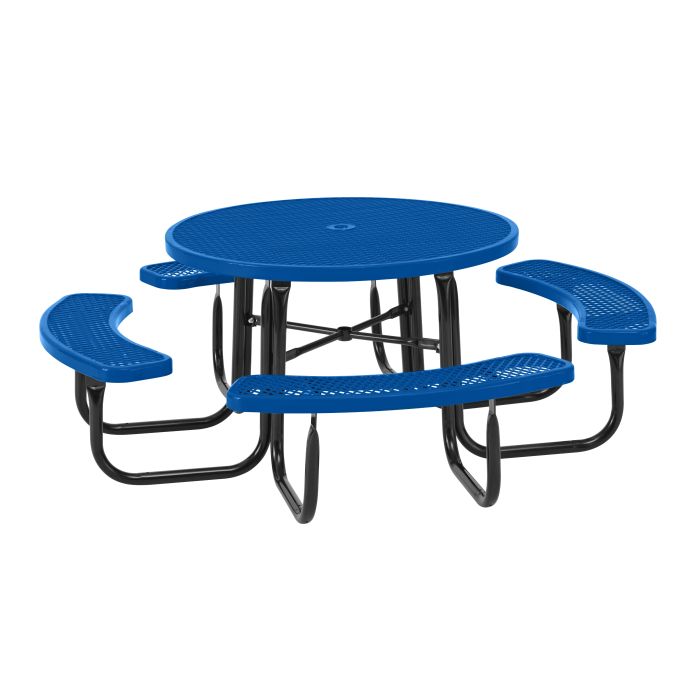
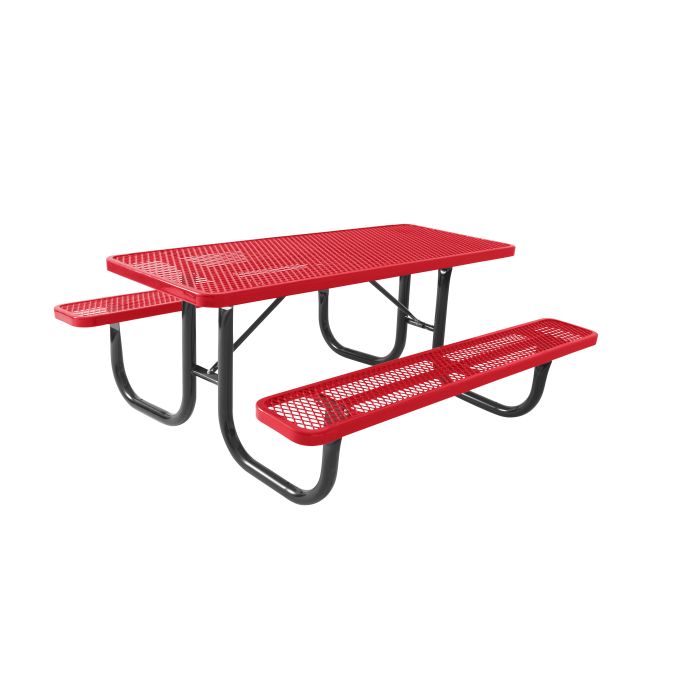
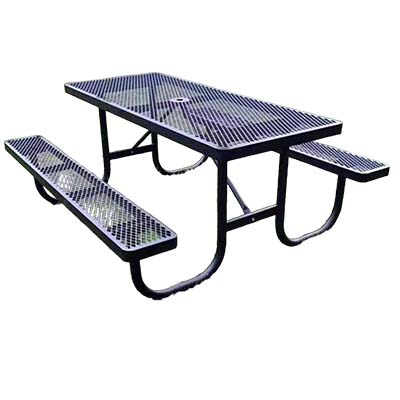
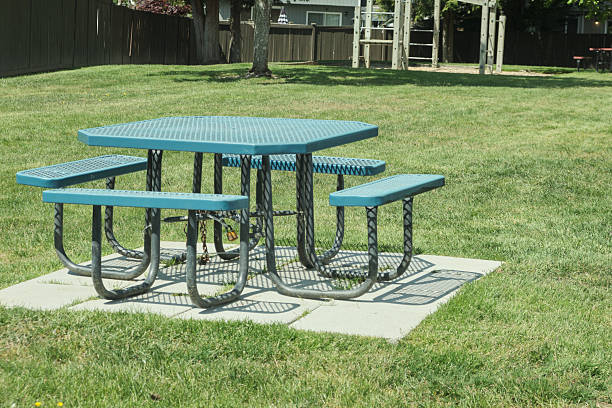
Expanded metal surfaces — steel mesh rather than solid panels for the tabletop and seating — drain freely and don’t hold standing water after rain. For uncovered outdoor installations in wetter climates, this is a practical advantage over solid surface options.
Climate conditions are worth factoring in at this stage rather than after the order is placed. Salt air in coastal environments accelerates corrosion, particularly on exposed hardware like bolts and fasteners, coating quality matters more in these locations. High UV exposure degrades lower-grade finishes faster than manufacturers’ estimates tend to suggest. In regions with freeze-thaw cycles, coatings that develop micro-cracks under thermal stress will let moisture in and create a maintenance problem that compounds over time.
Safety and ADA Compliance in School Picnic Tables
For schools in the United States, ADA compliance isn’t optional, it’s a procurement requirement. The ADA Standards for Accessible Design specify that a percentage of tables in any accessible area must accommodate wheelchair users. This means at least one open end or side without an attached bench, a knee clearance of at least 27 inches (68.5 cm) underneath, and appropriate surface reach ranges.
Beyond compliance, there are practical safety considerations that apply regardless of regulation. Welded edges and rounded corners reduce injury risk, particularly for younger students. Surface finishes should be free of sharp protrusions or exposed hardware. For schools, it’s also worth confirming that any coatings used meet relevant standards for heavy metal content, some jurisdictions have specific requirements for finishes used in environments where children are present.
Anti-graffiti coatings are not a luxury in a school context. They protect the surface and reduce the time and cost of cleaning.
Installation and Placement Considerations
Choosing the right table is only part of the decision. Where and how it gets installed has a direct effect on how long it lasts, how well it gets used, and how easy it is to maintain.
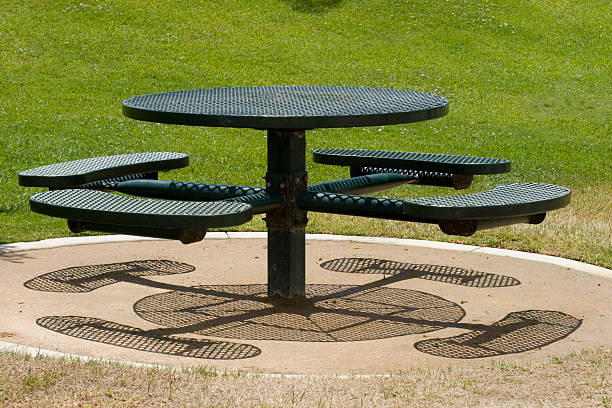
Ground fixing vs. movable units comes down to how permanent the installation needs to be. Surface-mounted and in-ground tables are the standard for most school outdoor dining areas, they stay in place, they don’t shift when students lean on them, and they’re harder to misuse or relocate without authorization. Portable units make sense for flexible-use spaces like multipurpose courtyards, but they require more oversight to keep them in position and in good condition over time.
Shade and positioning is something that gets overlooked in the purchasing stage but becomes obvious the first summer the tables are in use. Tables placed in direct sun for most of the day will go unused during warm months, regardless of how well they’re built. Where permanent shade structures aren’t in place, positioning tables near existing buildings, walls, or mature trees makes a practical difference. If the school is planning shade sails or canopy structures as a separate installation, coordinate the table placement with that layout before any ground fixings go in.
Coordinating with surrounding facilities is also worth thinking through at this stage. Outdoor dining areas work better when trash and recycling bins are placed nearby — ideally one bin cluster per table grouping rather than a single collection point that students have to walk to. If HD’s outdoor metal trash bins are being specified for the same project, it’s worth mapping both installations together so the placement actually supports how students move through the space. The same applies to any lighting, paving, or drainage work happening in the same area.
What to Ask Your Supplier Before Placing a Bulk Order
For a school procurement, the unit spec is only part of what you need to confirm with a supplier. These are the questions worth getting clear answers on before committing to an order.
HD Outdoor Facilities handles bulk orders for school and institutional projects, with options for custom sizing, surface finish selection, and direct factory pricing. Contact the team to discuss your project requirements.
Related Products