
IoT-Enabled Waste Compactors: What Fill-Level Sensors Actually Save You?
Most waste compactor stations still run on a fixed collection schedule. A truck shows up Monday, Wednesday, and Friday, whether the bin sits at 30% or is already overflowing onto the pavement. That schedule was built around driver convenience, not actual waste volume, and it’s why so many municipalities and property managers end up paying for pickups they didn’t need one week and dealing with an overflow complaint the next.
Fill-level sensors change that, though not in the sweeping way vendor brochures tend to describe it. Below is what these sensors actually measure, where the cost savings genuinely show up, and where IoT monitoring falls short regardless of how good the hardware is.
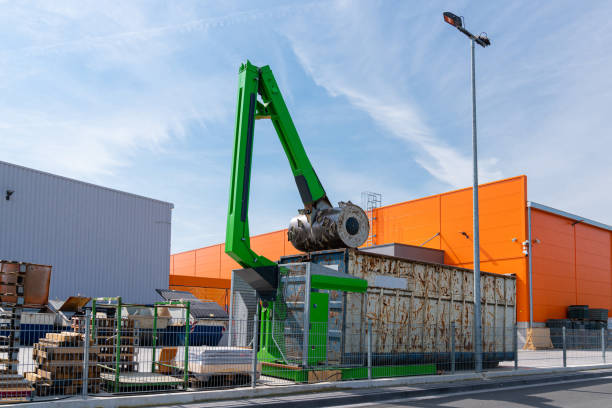
How Do Fill-Level Sensors Work in a Waste Compactor?
Modern mobile waste compactors generally use ultrasonic sensors mounted inside the compaction chamber or hopper. The sensor sends a sound pulse downward and times how long it takes to bounce back off the waste surface, which gives a fairly reliable fill reading even as material settles or shifts around.
That’s just one of three things a properly equipped compactor tracks in real time:
- Fill level — how full the chamber or container currently is
- Compression pressure — how much hydraulic force is going into compacting the load, which can signal a change in material composition or a ram working harder than it should
- Operating status — whether the unit is running normally, sitting idle, or throwing an error code
This data typically moves over a cellular connection to a central dashboard, either continuously or at set intervals, and can be set up to alert someone once fill level crosses a threshold — 80%, for example. That’s a real step up from older telemetry systems, which mostly just told you a machine was on or off. Pressure and status readings let a facilities team catch a jammed ram or a failing hydraulic pump before it turns into a multi-day outage.
The Real Cost of Fixed-Schedule Waste Collection
Fixed-schedule collection wastes money in two directions, and most operators only ever notice one of them.
The obvious one is sending a truck to a bin that’s still half-empty. Fuel, labor, and vehicle wear all get spent on a trip that didn’t need to happen yet. The less obvious one shows up when a bin fills faster than usual during a busy week, gets missed on the regular route, and turns into an overflow complaint, a rush collection, or in some cases a sanitation violation fine.
Fill-level monitoring deals with both problems using the same data. Instead of collecting on a calendar, crews collect based on what’s actually happening at each site. Simple enough in theory — but the harder part is getting operators to actually rebuild their dispatch process around that data, and that’s where a lot of IoT rollouts stall. Installing the sensor is the easy step. Restructuring a collection route around real-time fill data is the part that takes real coordination.
Where Smart Waste Compactors Cut Operational Costs
It’s worth being specific here rather than throwing out a single “up to X%” number, because the savings come from a few distinct sources and they don’t all apply equally to every site.
Collection frequency. Sites with inconsistent or seasonal fill rates tend to see the biggest reduction — commonly somewhere in the range of 20–40% fewer pickups once routes are adjusted to actual fill data instead of a fixed calendar. Sites with very consistent, predictable waste volume see a smaller effect, because the fixed schedule was probably already close to optimal.
Fewer emergency dispatches. Overflow and odor complaints tend to trigger unscheduled, often same-day collection requests, which cost more than a routine pickup. Cutting even a handful of these per month adds up, particularly at high-traffic sites like transfer stations or dense residential areas.
Preventive maintenance instead of reactive repair. Compression pressure data can flag abnormal load resistance before it causes a hydraulic failure. Catching that early is generally far cheaper than an emergency repair call, and it avoids the collection gap that happens while a unit is down. The U.S. EPA’s guidance on solid waste facility operations treats equipment downtime as one of the more disruptive and costly failure points in a collection system, which lines up with what pressure-monitoring data is designed to catch early.
Longer equipment life. Operating status logs build a maintenance history over time, which makes it easier to plan replacement or service intervals around actual usage patterns instead of guesswork. This is a slower, less dramatic saving, but it compounds over the life of the equipment.
None of these are guaranteed outcomes. They’re the range operators in similar setups tend to report once the system is fully integrated into dispatch decisions — not a result you get just by installing the hardware.
What IoT Monitoring Won’t Fix
Most product pages skip this part entirely.
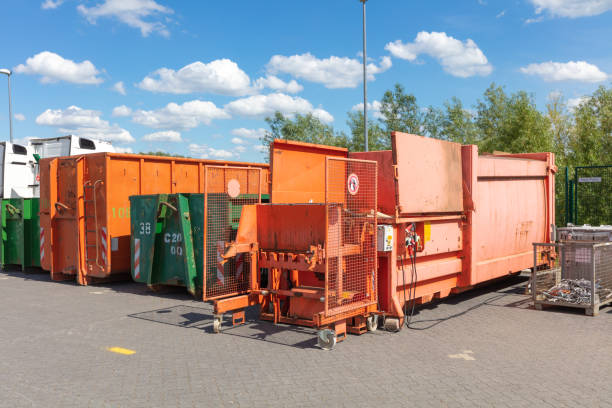
A fill-level sensor won’t fix a compactor that was undersized for the site from the start, it’ll just confirm, with accurate data, that you’re overflowing more often than you should be. If the equipment doesn’t match the waste volume, the answer is a different unit, not better monitoring.
Cellular coverage matters too. Rural or remote sites with weak signal can end up with delayed or patchy data, which defeats the purpose of real-time monitoring. Anyone looking at this for a site outside a dense urban area should check coverage before assuming the system performs as expected.
Weather is another practical limit worth knowing upfront. Heavy snow sitting over an ultrasonic sensor can throw off readings until it melts. Not a dealbreaker, but it’s exactly the kind of detail that gets cut from sales material and turns into a support call six months after installation.
The data itself doesn’t save anything on its own, either. A dashboard full of accurate fill readings does nothing if the operations team isn’t using it to adjust routes. Operators who see real cost reduction are the ones who pair sensor data with route optimization — through their own dispatch software or something that integrates with it. Buying the hardware without changing the process around it is the most common way this investment falls short.
Which Sites Benefit Most from IoT Waste Compactor Systems
The return on this kind of system isn’t uniform. It tends to be strongest for:
- Municipal networks with many dispersed collection points, where route inefficiency compounds across dozens or hundreds of sites
- Facilities with seasonal or unpredictable waste volume — campuses, tourist areas, event venues — where a fixed schedule is almost guaranteed to be wrong part of the year
- Remote or high-cost-per-trip sites, where every unnecessary dispatch carries a disproportionate cost
Sites with small, stable, predictable waste streams may find the added hardware and subscription cost harder to justify against the modest savings available.
What to Ask Before Buying a Smart Waste Compactor
Before committing to a fill-level monitoring upgrade, it’s worth getting clear answers on a few things:
- Is cellular coverage reliable at every site being considered, including during peak collection hours?
- Can the sensor data platform integrate with the collection or dispatch software already in use, or will it operate as a separate system?
- Is the sensor type suited to the climate and waste composition at the site — dust, moisture, and material density can all affect ultrasonic accuracy?
- What’s the realistic payback period given current collection costs, and does that timeline match how long the equipment is expected to stay in service?
These aren’t complicated questions, but skipping them is how a lot of monitoring upgrades end up underused within the first year.
Fill-level monitoring isn’t a fix-everything upgrade, and the sites that get the most out of it are the ones with real route inefficiency to begin with. If you’re weighing whether it makes sense for your operation, our team can walk through your current collection pattern and estimate where the savings would realistically land — get in touch with HD’s solutions team for a site-specific assessment.