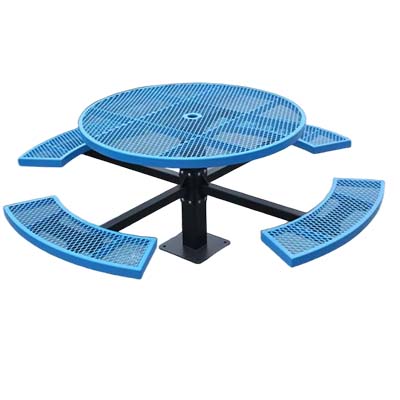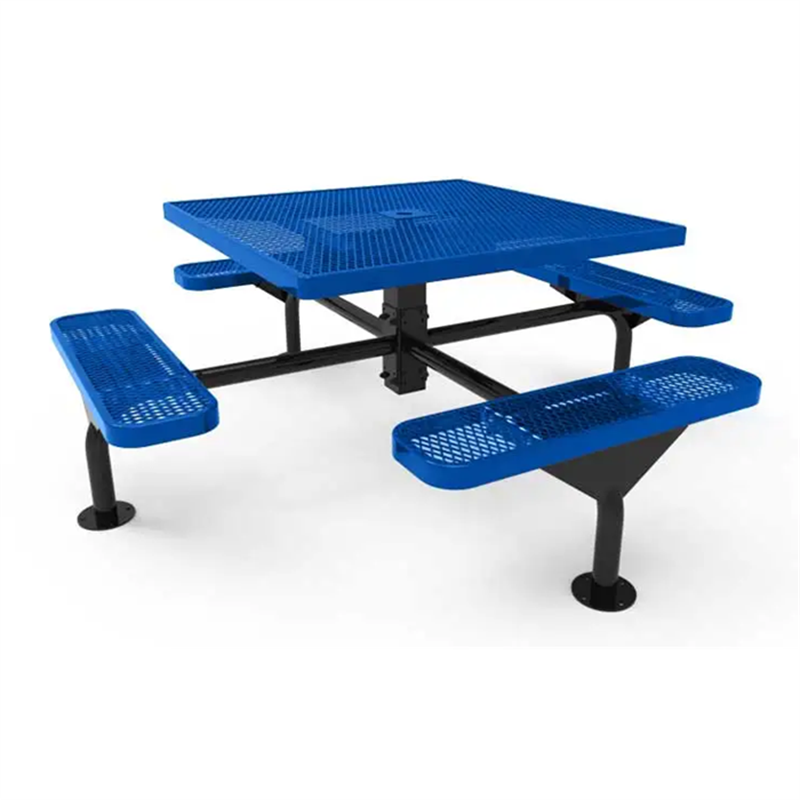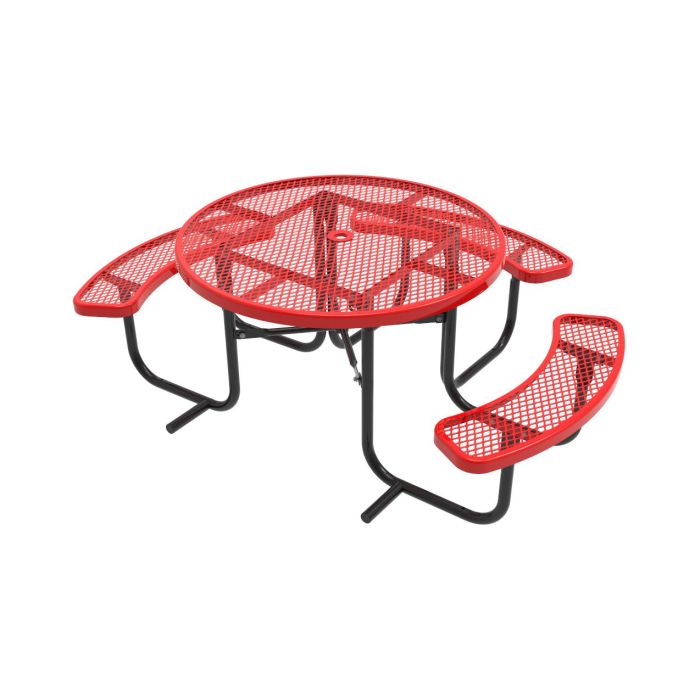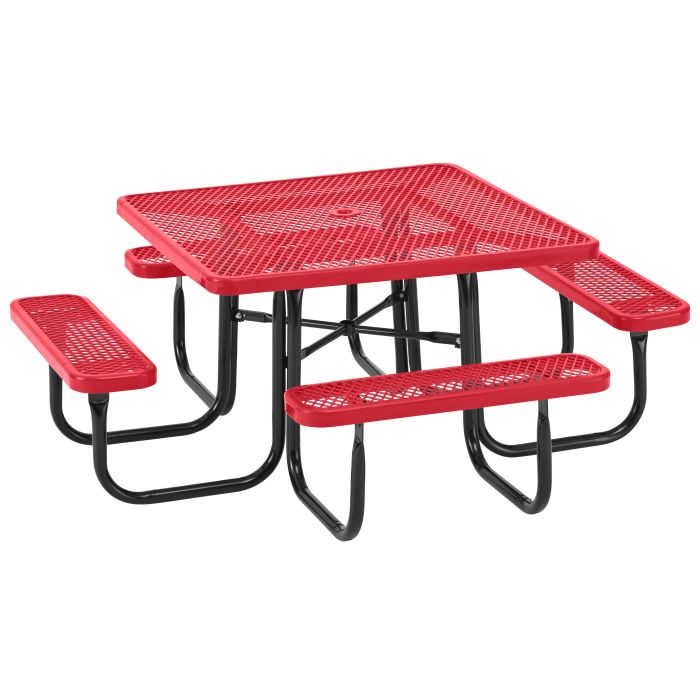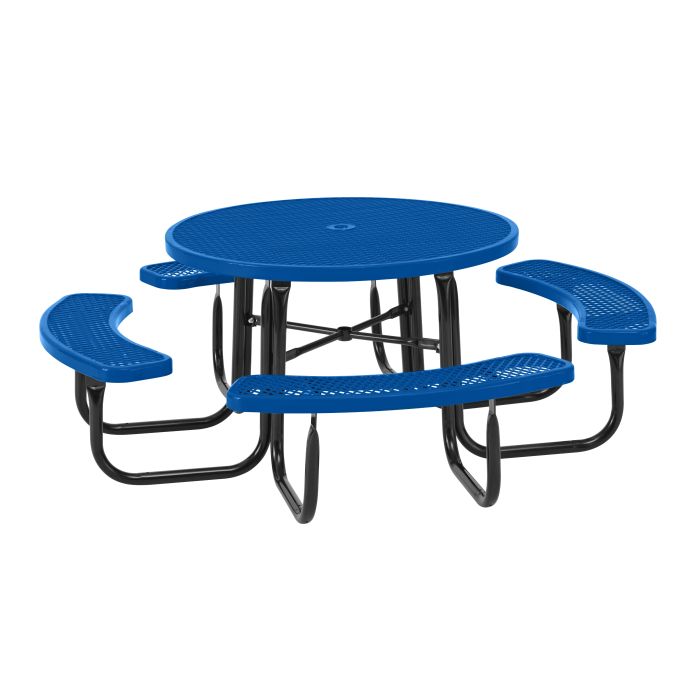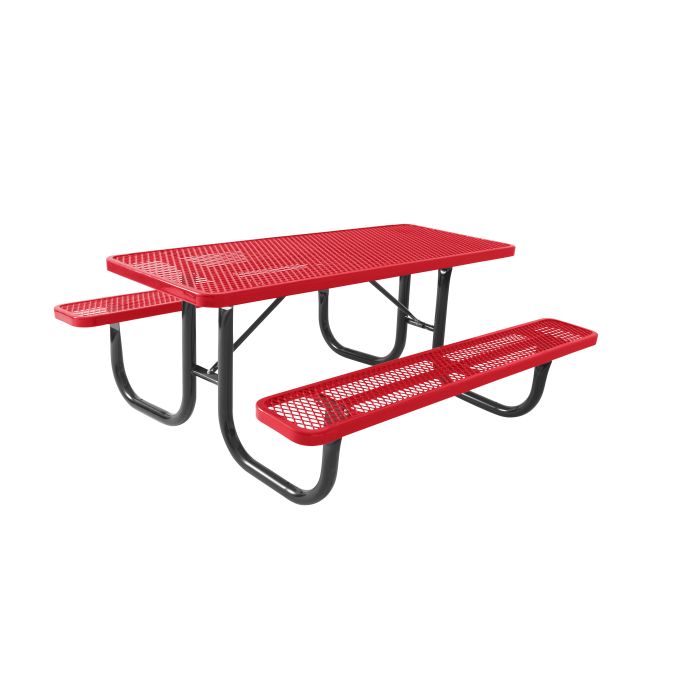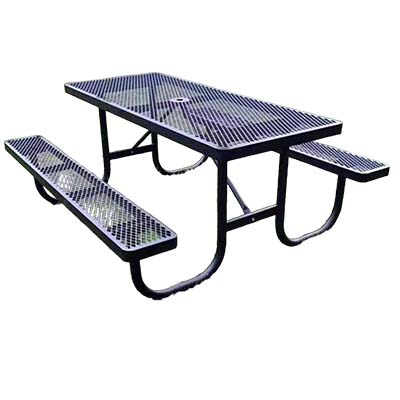
How to Build a Commercial-Grade Metal Picnic Table? Materials, Process, and Standards
The creation of an indestructible metal picnic table is based on a good knowledge of industrial manufacturing standards. While a home-built one uses standard parts from any store and conventional paint spraying for a coating, a commercial-quality piece of street furniture will use industrial-grade Schedule 40 steel pipes with thick walls up to 2-3/8″ and special thermoplastic or powder coatings for a lifetime of more than 10 years without any maintenance.
The following article outlines the exact process of making this type of furniture in a factory environment, step by step – from sophisticated hydraulic tubing shaping to welding, weather-resistant finishing, and metal top attachment. In addition, we offer a cost comparison between DIY manufacture and factory production.
Material & Tool Selection: Residential DIY vs. Commercial Grade
For constructing outdoor tables that will stand up against extensive usage and adverse weather conditions, one cannot rely upon common materials found in the hardware store. The difference between a project built in one’s backyard as a hobby and an industrial structure depends solely on the engineering specs.
Steel Specs
- The DIY Way: Structural carbon steel that is light gauge or structural tubing that is thin walled and commonly 14-gauge to 16-gauge thick, which equates to a thickness of roughly 1.5 mm to 2.0 mm. Such a material will bend, dent, and/or warp in response to any substantial pressure put on the structure.
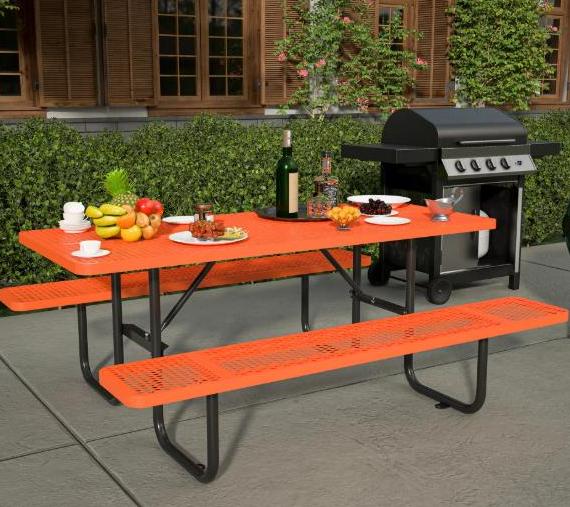
- Industrial Specs: Heavy-duty, high-strength structural steel pipe, preferably 2-3/8″ Outer Diameter (OD) Schedule 40 steel pipes for the main support frame. This is necessary for a commercially durable structure that can withstand structural stress, substantial load bearing, and intentional vandalism.
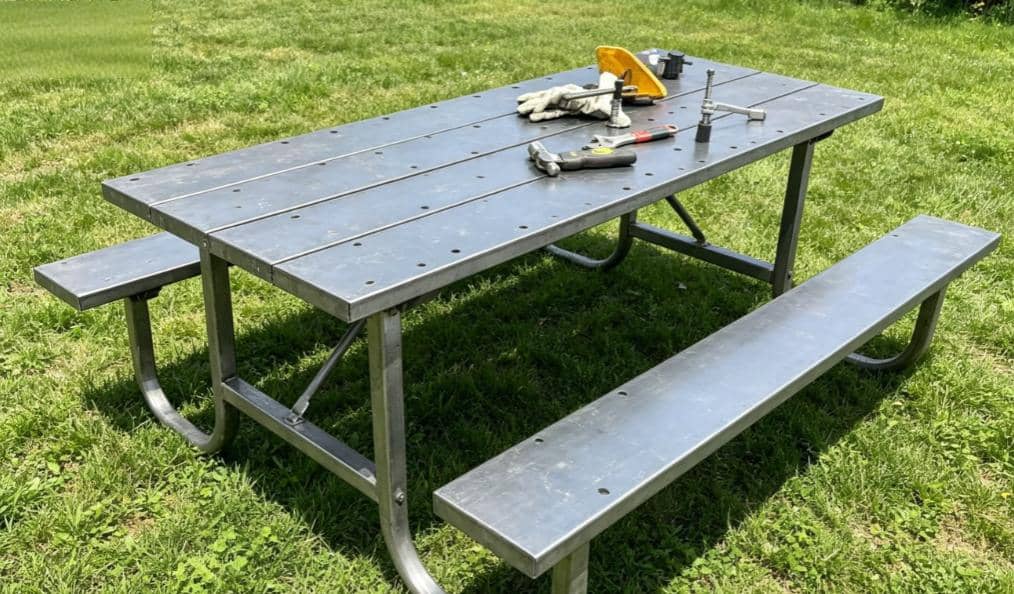
Hardware and Latches
- DIY Hardware: Regular bolts or wood screws made from Grade 5 zinc-coated steel for mixed-materials construction. The plating deteriorates after 12 to 18 months in an open environment, resulting in rust stains, slackness, and swaying.
- Professional Hardware: Grade 316 stainless steel or galvanized carriage bolts with tamper-proof lock nuts. Public structures require professional hardware to reduce any hazards due to joint slack or deliberate interference.
Need for Advanced Tooling
For commercial compliance, tooling must be highly advanced beyond the ordinary, portable angle grinder or basic workshop tools:
- Welding: A large, industrial metal inert gas (MIG) or tungsten inert gas (TIG) welding machine producing an output greater than 200 amps to provide deep penetration for thick-walled steel tubular structures.
- Bending: A hydraulic rotary draw bend machine designed to work with specific mandrels for making the desired perfect ergonomic bends without wrinkles or pinching of the pipes’ surface.
- Cutting: An industrial fiber laser table for cutting and making holes without burrs or rough edges in the tabletop plate.
The 4-Step Industrial Manufacturing Process
It involves converting raw steel into a valuable resource through a systematic four-stage industrial manufacturing process.
Stage 1: Accurate Cutting and Tubing Bending
Firstly, mechanical saws or laser equipment cuts the Schedule 40 pipe based on engineering drawings. When constructing a conventional 6 feet (180 cm) or 8 feet (240 cm) walk-in picnic table, the parts are placed in a tube bender.
The machine bends the legs in one continuous line, making them walkable. Calibration is essential in this phase because a slight angle of 0.5 degrees leads to misalignment, causing a wobbly table on a level concrete surface.
Stage 2: Fully Welded Frame Assembly & Grinding
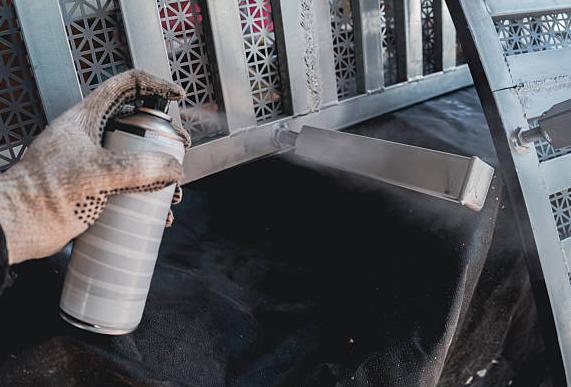
Whereas the residential systems employ a lot of bolt-together joints, which eventually become loose after some years, commercial systems have fully welded structures.
- Fixtures: The raw cut and bent pipes are fixtured in a robust welding jig made from heavy steel. It serves as a guide for maintaining the precise dimensions of each fabricated frame.
- Welding: Professional welders then perform continuous multi-pass welding on every joint to create a single piece of steel that will not come loose due to vibration and movement of weight in the high-use environment.
- Grinding: Post-assembly, all welding joints are ground and polished in three processes through increasingly finer abrasive discs (beginning from 36 grit to 120 grit) to make them smooth and eliminate the chance of snagging clothes or cutting the skin of people using it.
Stage 3: Advanced Weatherproof Surface Treatment
This level marks the final distinction between home-made production and mass-produced products. Unlike common paint, which breaks down easily after sun exposure, a professional factory uses a superior multi-layer protection process:
- Pre-Treatment: Welded structures are subject to shot blasting to remove mill scale, oil residues, and oxidation, creating a high anchor finish ready for coating.
- Hot-Dip Galvanizing (HDG): Structures are dipped into a bath of liquid zinc at a temperature of 450° C (840° F), forming a 360° metallurgic connection which stops both internal and external rusting.
- Thermoplastic Coating: A heavy-duty layer of polymer material is applied via an electrophoretic process and cured in an oven. This highly resistant coating resists UV fading and salt air, and provides outstanding durability while staying comfortable when touched in the summer heat.
Stage 4: Tabletop & Bench Pattern Integration
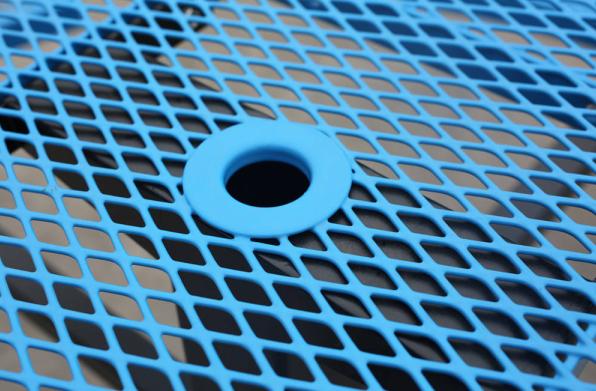
The surfaces of the table and chairs are designed to support heavy loads and resist weather conditions. In factories, two basic designs use stamping or expansion techniques applied to sheet metal:
- Expanded Metal (Diamond Pattern): Heavy-gauge sheet metal is slitted and stretched into the form of diamonds. Such a pattern provides an excellent weight-to-strength ratio and self-draining properties.
- Perforated Metal (Hole Punches): Computer-controlled machines punch clean round holes in the sheet steel. This type provides a smooth surface for writing.
These materials keep rainwater from sitting and reduce wind resistance during storms to prevent tipping and allow easy removal of debris.
Cost Analysis: Is DIY Actually Cheaper?
Although in-house construction or assembling seems like a cost-effective solution at first glance, it doesn’t take long for the costs of machinery, labor, and maintenance to add up and even exceed the cost of buying straight from a manufacturing plant.
A closer look at the ROI for each case is shown in the following table:
| Cost Factor | DIY / In-House Fabrication | Factory-Direct Sourcing |
| Material Costs | Retail pricing on raw steel; high localized shipping fees. | Bulk wholesale material sourcing; direct mill pricing. |
| Tooling Investment | High capital expense for industrial MIG welders, benders, and CNC tools. | Amortized automated production lines and specialized tooling. |
| Service Life | 1–2 years before requiring stripping, priming, and repainting due to rust. | 10+ years maintenance-free via hot-dip galvanizing and thermoplastic coatings. |
| Labor Opportunity | Diverts internal engineering or maintenance teams for days of fabrication. | Zero internal labor required; rapid on-site assembly upon delivery. |
| Safety & Liability | Uncertified load capacity; high structural liability risk in public spaces. | Certified weight capacities (exceeding 1,000 lbs) compliant with municipal codes. |
With respect to public parks, schools, and commercial property, the commercial-grade sourcing removes the necessity for periodic maintenance and replacement of equipment, thereby reducing costs substantially over the life span of the table.
Final Words
While creating a simple homemade metal picnic table for personal residential use is feasible, producing a more robust piece that will stand up to years of use by customers, varying weather conditions, and frequent physical wear and tear would need industrial-level construction expertise.
Going for factory direct means avoiding the extra costs of labor, tools, and maintenance involved. When you are overseeing a commercial improvement project for a business, school, or community recreation area, collaborating with a reputable metal picnic table supplier can guarantee quality and compliance.
Related Products