Recycled vs Virgin Plastic Outdoor Trash Cans: Which One Should You Actually Buy?
If you’re sourcing outdoor trash cans whether for a park, commercial property, or a municipal project, you’ve probably run into this choice: recycled plastic or virgin plastic? Both look similar on a spec sheet, and suppliers don’t always make the difference clear.
This guide breaks it down honestly, so you can make the right call based on your actual needs.
What Is Virgin Plastic and Why Has It Been the Default?
Virgin plastic is made directly from raw petrochemical materials, typically crude oil or natural gas. It has never been processed before, which means its molecular structure is consistent and predictable from batch to batch.
For manufacturers, that consistency is a real advantage. Virgin plastic is easier to color uniformly, mold precisely, and test for performance standards. That’s why it became the default for outdoor products decades ago, reliable material means fewer surprises during production and after installation.
The most common types used in outdoor trash cans include:
- HDPE (High-Density Polyethylene) — tough, weather-resistant, the most widely used
- LLDPE (Linear Low-Density Polyethylene) — more flexible, with good impact resistance
- Polypropylene (PP) — lightweight, though less tolerant of cold temperatures
These materials perform well. The concern isn’t performance, it’s where they come from, and what happens when the product reaches the end of its life.
What Is Recycled Plastic? (It’s Not All the Same)
Here’s where things get a little more nuanced. “Recycled plastic” isn’t a single material, the quality and characteristics depend heavily on the source.
Post-consumer recycled plastic (PCR) comes from materials that have already been used and collected through recycling programs: milk jugs, shampoo bottles, plastic bags. These get sorted, cleaned, and re-processed into new raw material.
Post-industrial recycled plastic (PIR) comes from manufacturing scraps that never reached a consumer. It’s generally cleaner and more consistent than PCR, making it easier to process into higher-quality end products.
For outdoor trash cans, most recycled options are made from recycled HDPE, typically sourced from post-consumer bottles and containers. Some manufacturers blend recycled content with virgin material to hit specific performance targets which is why a product labeled “made from recycled plastic” might only contain 30% recycled content, or it might be 100%.
When a supplier makes that claim, it’s worth asking: what percentage, and what type?

Recycled vs Virgin Plastic Outdoor Trash Cans: A Practical Comparison
Durability and UV Resistance in Outdoor Settings
This is usually the first concern, and it’s a reasonable one.
Virgin plastic has a structural advantage since the material hasn’t been through a previous use cycle, its properties are more uniform from the start. This also makes it easier for manufacturers to add UV stabilizers at precise concentrations, which matters for products sitting in direct sunlight year-round.
Recycled plastic used to lag behind here, but manufacturing processes have improved considerably over the past decade. High-quality recycled HDPE, when properly processed and UV-stabilized, performs comparably in real outdoor environments.
That said, not all recycled plastic is created equal. Lower-grade recycled material especially from inconsistent feedstocks can show greater color variation and slightly reduced impact resistance over time. The quality of the source material matters as much as the recycled label.
Color Consistency and Visual Appearance
If aesthetics matter and for commercial or civic installations, virgin plastic has a clear edge. Because the material is uniform to begin with, colors come out crisp and consistent across production batches. This matters when you’re ordering 50 trash cans for a hotel courtyard and need them to match each other and the surrounding environment.
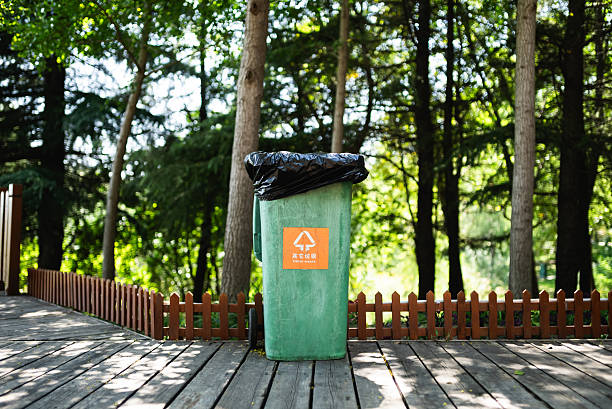
Recycled plastic tends toward darker tones such as black, dark gray, or dark green because mixed feedstocks don’t allow for tight color control. Some manufacturers address this with UV-stable surface colorants or coatings, but producing a bright white or custom-colored recycled plastic trash can at scale is still a genuine challenge.
If your project requires specific color matching or Pantone compliance, this is a conversation worth having directly with your supplier before placing an order.
Cost of Recycled vs Virgin Plastic: Don’t Assume Either Is Cheaper
In the past, recycled plastic was often less expensive. But that’s no longer consistently true.
As demand for recycled content has grown, driven by corporate sustainability commitments and government procurement mandates, the price of post-consumer recycled resin has risen. According to Plastics News, PCR resin prices have fluctuated significantly in recent years, sometimes matching or exceeding virgin resin costs in high-demand material categories.
What that means practically: don’t assume recycled equals cheaper. Get actual quotes for both options, and look at the full picture.
One area where recycled HDPE may offer longer-term value is in total cost of ownership. Products made from recycled HDPE are often denser, which can improve resistance to denting and cracking under heavy daily use. Over a 10-year period, fewer replacements can offset a higher upfront cost.
Environmental Impact: What the Numbers Actually Show
Using recycled plastic reduces demand for virgin petroleum-based resin. The U.S. Environmental Protection Agency (EPA) reports that recycling HDPE uses roughly 88% less energy than producing it from raw feedstocks, a meaningful difference at scale.
That said, recycling has its own footprint. Collection, sorting, transportation, and reprocessing all require energy and water. A proper life-cycle assessment (LCA) gives the most accurate comparison, and most show recycled plastic still comes out ahead on emissions and resource consumption — but the margin varies depending on the supply chain and regional recycling infrastructure.
If sustainability documentation is a procurement requirement, increasingly common in public sector projects, look for products certified under the Global Recycled Standard (GRS) or verified by SCS Global Services. These third-party certifications confirm that recycled content claims are accurate and traceable, which matters when you’re filing compliance reports.
Maintenance and Long-Term Performance Outdoors
Neither material requires significant maintenance, that’s a key reason plastic became dominant in outdoor settings in the first place.
Both recycled and virgin plastic trash cans resist moisture, rust, and most common cleaning chemicals. They don’t require painting or seasonal sealing, and they’re straightforward to clean with standard commercial products.
Where recycled plastic occasionally shows differences is surface texture. Some recycled products have a slightly rougher finish that can trap dirt more readily, though this varies considerably by manufacturer and the specific production process used.
For high-traffic commercial or municipal environments, it’s worth requesting accelerated weathering test results from your supplier, specifically ASTM G154 (UV resistance) or ASTM D4329.
When to Choose Recycled Plastic vs Virgin Plastic
Virgin plastic makes more sense when:
- Specific color matching or color consistency across large orders is required
- The project has strict material specifications with no flexibility
- Batch-to-batch uniformity is a non-negotiable requirement
Recycled plastic is the better fit when:
- Sustainability certification or recycled content documentation is required
- Standard colors (black, gray, dark green) work for the project
- You want to align with environmental procurement policies or green building certifications
- Long-term performance and durability matter more than appearance
For most standard outdoor applications like parks, university campuses, commercial properties and transit hubs, quality recycled HDPE performs well and supports broader sustainability goals without meaningful functional trade-offs.
What to Check Before Buying Recycled Plastic Outdoor Trash Cans
A few specific things worth verifying before committing to an order:
- Recycled content percentage — Many quality products use 50–100% recycled material. Ask for documentation, not just a label.
- UV stabilization — Confirm that UV inhibitors have been incorporated during manufacturing. Without them, outdoor degradation accelerates regardless of base material quality.
- Wall thickness — Recycled plastic products can vary more in thickness. Thicker walls generally mean better durability under heavy use.
- Warranty terms — A 5+ year warranty from a manufacturer signals confidence in the material. Short warranties on outdoor products are worth questioning.
- Certifications — GRS, SCS, or Buy America compliance if your project requires it.
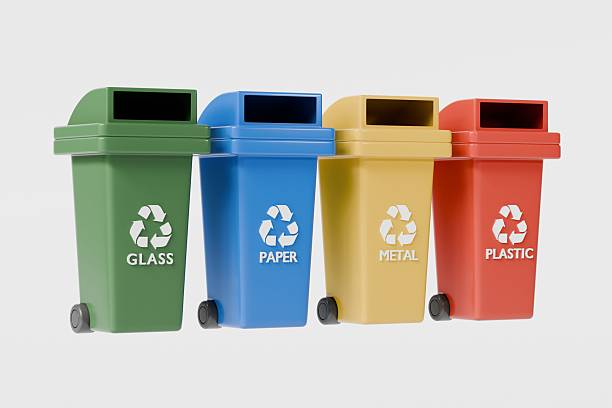
What matters more than the material category is the manufacturer’s quality standards and how the material was processed. A well-made recycled plastic trash can will outlast a poorly made virgin plastic one in almost any real-world environment.
If you are considering purchasing outdoor trash cans or have any related questions, please feel free to contact us. We will be more than happy to assist you.
FAQs
Are recycled plastic trash cans as durable as virgin plastic?
Yes, when made from high-quality recycled HDPE with proper UV stabilization. The technology has improved substantially over the past 10–15 years. Low-cost options may use inconsistent feedstocks, so sourcing from established manufacturers is important.
Do recycled plastic bins cost more or less than virgin plastic?
It depends on current resin market conditions, which shift regularly. PCR prices have risen with demand, so the price gap has narrowed. Always compare current quotes rather than operating on assumptions.
What’s the most common plastic used in outdoor trash cans?
HDPE — both in virgin and recycled form — is by far the most common. It handles temperature extremes, UV exposure, and heavy use better than most alternatives, which is why it dominates this product category.
How do I verify that a trash can is actually made from recycled plastic?
Request a material data sheet or look for third-party certification (GRS or SCS). Marketing claims without documentation vary widely in accuracy.
Related Products