
How Big Is a 13 Gallon Trash Can? Dimensions, Capacity & Fit Guide
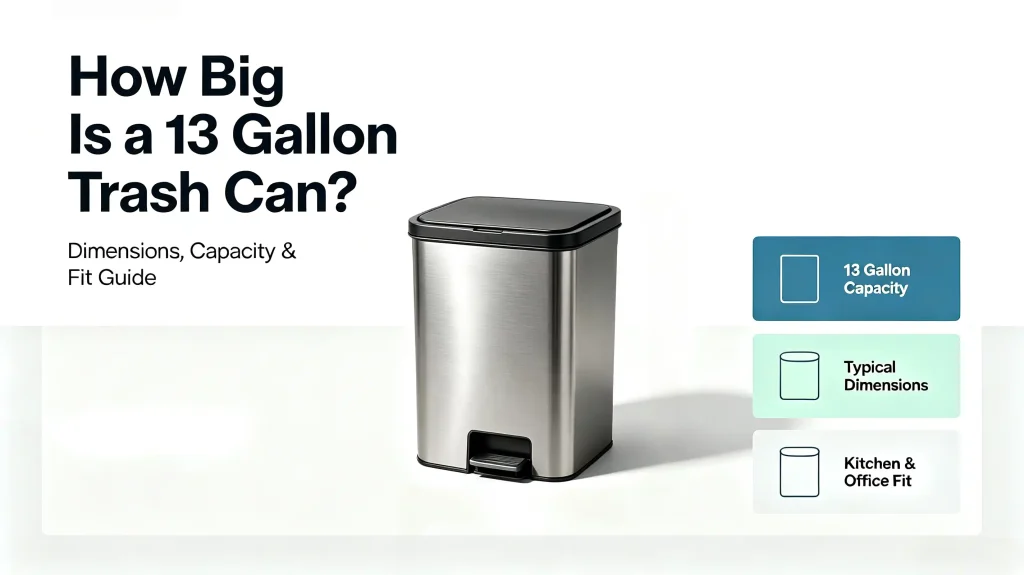
A 13-gallon trash can is one of the most common sizes for a kitchen, but “13 gallons” only tells you how much waste it can hold. It does not tell you how much space the can will actually take up.
If you are replacing an old trash can or planning where to put a new one, the height, width, and depth matter just as much as the capacity. A can that holds 13 gallons may be too wide for a narrow cabinet gap, while another 13-gallon model may fit easily in the same space because of its slimmer shape.
So, how big is a typical 13-gallon trash can? Most freestanding kitchen models are around 24 to 28 inches tall, 12 to 16 inches wide, and 12 to 15 inches deep. Round models are generally measured by diameter instead of width and depth.
Standard Capacity of a 13-Gallon Trash Can
A 13-gallon trash can has a nominal capacity of about 49–50 liters. This is the amount of space available inside the container when its full capacity is considered.
For everyday kitchen use, this size is commonly suitable for households of around two to four people. Depending on cooking habits and the amount of packaging or food waste produced, a 13-gallon can may hold roughly one to three days of typical kitchen waste.
The actual amount of waste you can put in it will vary. Loose packaging, food containers, and bulky items can fill a can much faster than compacted household waste.
For a broader look at how this size compares with other common kitchen options, see the overview of average kitchen trash can sizes.
Typical Dimensions of a 13-Gallon Kitchen Trash Can
There is no single standard exterior size for every 13-gallon trash can. Manufacturers use different shapes and proportions, so two cans with the same capacity can take up noticeably different amounts of floor space.
For common freestanding kitchen models, the following ranges are a useful starting point:
| Measurement | Typical Range |
| Height with lid closed | 24–28 inches |
| Width | 12–16 inches |
| Depth, rectangular models | 12–15 inches |
| Diameter, round models | 15–17 inches |
These measurements refer to the outside dimensions of the can rather than the internal storage space.
A slim rectangular model may stay near the lower end of the width range, making it easier to place beside a cabinet or kitchen island. Some models may also be taller and narrower, while others use a shorter and wider shape. That is why checking the manufacturer’s listed dimensions is more reliable than choosing a can based only on its gallon capacity.
Remember to measure the space where the entire can will sit. Handles, hinges, lids, and other parts can extend beyond the main body.
Rectangular vs. Round: How Shape Affects Size and Fit
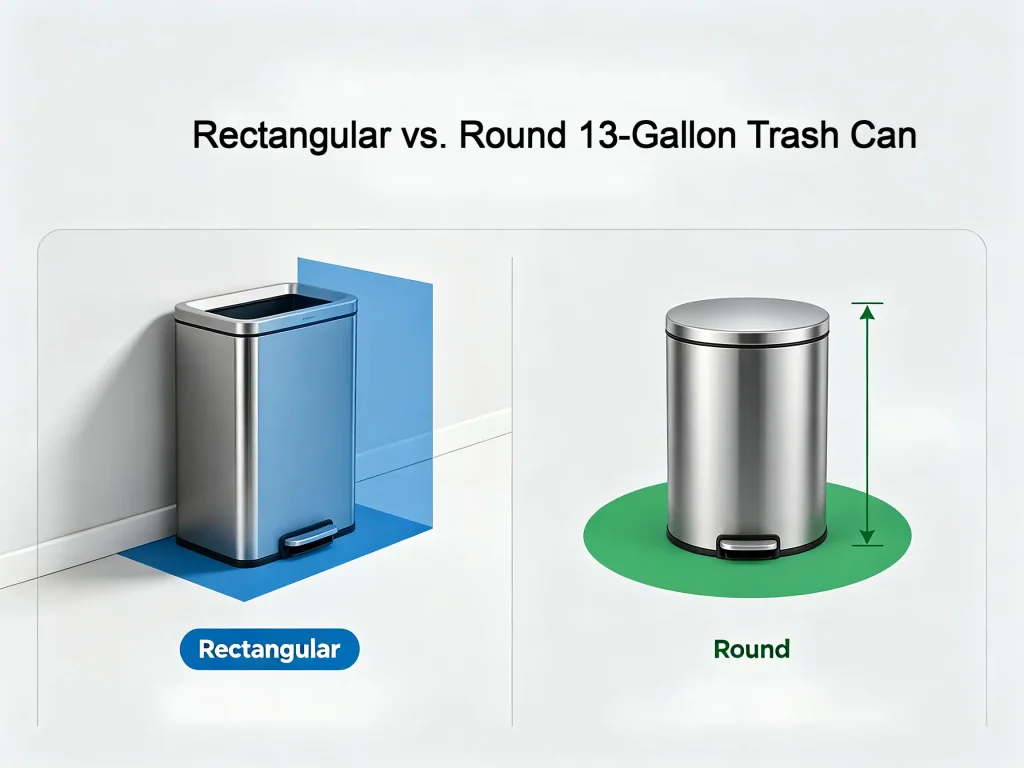
The shape of a 13-gallon trash can can make a noticeable difference when floor space is limited.
Rectangular models are usually easier to position against a wall, cabinet, or kitchen island. Their flat sides can sit closer to other surfaces without leaving as much unused space. For a narrow kitchen, this can make a rectangular can easier to work into the available layout.
Round models are generally measured by diameter. A typical 13-gallon round can may have a diameter of around 15 to 17 inches. Although the footprint can be wider than a slim rectangular model, the circular shape can work well where there is open floor space around the can.
If you are placing the trash can in a specific gap, do not compare capacity alone. Measure the available width and depth first, then compare those numbers with the can’s exterior dimensions.
How These Dimensions Relate to Standard 13-Gallon Trash Bags
A 13-gallon kitchen trash can is generally designed to work with standard tall kitchen bags. A commonly used bag size is roughly 24 inches wide when laid flat and 30 to 33 inches tall, although actual dimensions vary by manufacturer and bag style.
The bag should extend far enough over the rim to stay securely in place. An overhang of around 4 to 6 inches is often useful for keeping the liner from slipping into the can when waste is added.
Bag dimensions are important because the gallon number does not guarantee that every 13-gallon bag will fit every 13-gallon can perfectly. A bag can have the right stated capacity but still be too short, too narrow, or difficult to secure around a particular rim.
When buying replacement bags, compare the bag’s actual width and height with the dimensions of your trash can. This is especially important for unusually narrow or wide models.
Practical Fit Considerations for Kitchens
Before buying a 13-gallon trash can, measure the location rather than assuming the standard size will fit.
For a freestanding can, leave enough floor space for the door to open and for people to walk past it comfortably. Most 13-gallon kitchen cans are compact enough to sit beside cabinets or islands, but a few extra inches can make a difference in a narrow walkway.
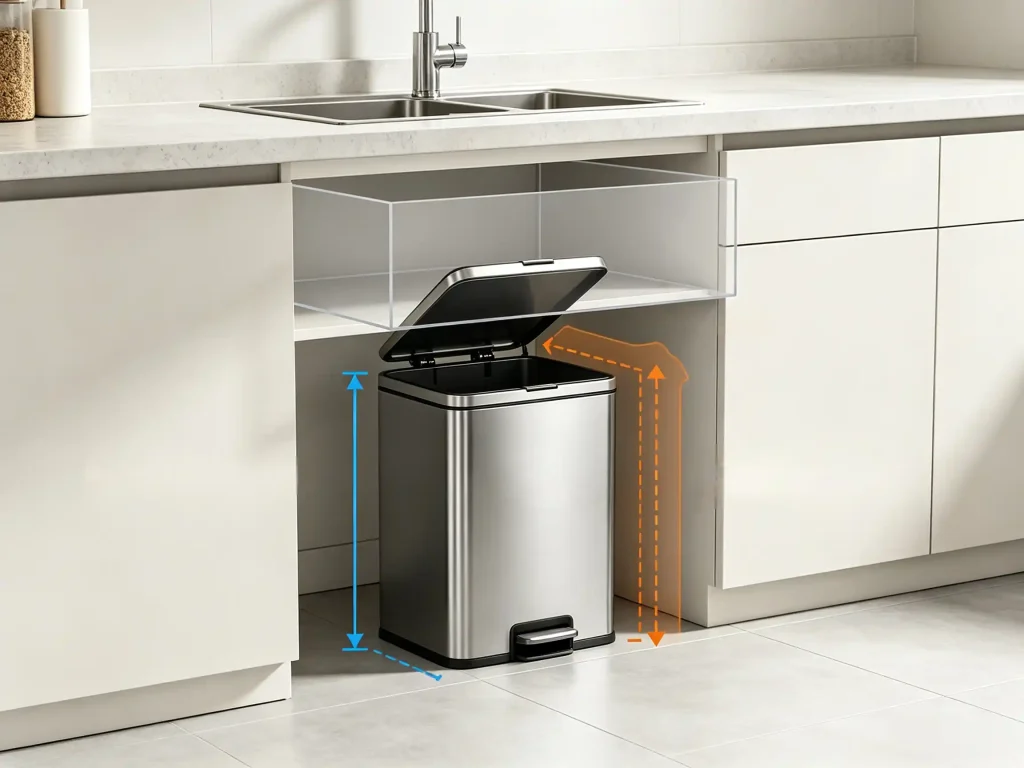
Height is another measurement that is easy to overlook. A can that is 26 inches tall with the lid closed may require considerably more vertical space when the lid is fully open. If the trash can sits beneath upper cabinets or a shelf, check the manufacturer’s open-lid height when available. In many kitchens, allowing roughly 30 to 35 inches of vertical clearance can help prevent the lid from hitting nearby surfaces, although the exact requirement depends on the model.
For an under-sink or pull-out installation, measure the cabinet opening separately. Check the available height, width, and depth, including any plumbing or hinges that take up space. A 13-gallon capacity does not necessarily mean the can will fit inside a standard cabinet.
Common Measurement Mistakes to Avoid
A few simple measurement mistakes can turn an otherwise suitable trash can into a poor fit.
- Assuming every 13-gallon can has the same dimensions. Capacity and exterior size are not the same thing.
- Measuring only the height. Width and depth can be more important when fitting a can beside cabinets or inside a narrow space.
- Forgetting the open lid. Check the vertical clearance if the can will sit beneath cabinets or shelves.
- Choosing bags only by gallon capacity. Compare the actual width and height of the bag with the can.
- Ignoring protruding parts. Hinges, handles, pedals, and lids may increase the space required beyond the main body of the can.
Frequently Asked Questions
What are the exact dimensions of a standard 13-gallon trash can?
There is no single exact dimension. A typical kitchen model is around 24–28 inches high and 12–16 inches wide, while rectangular models are commonly about 12–15 inches deep. Round models may have a diameter of roughly 15–17 inches.
Will a 13-gallon can fit under a standard kitchen counter?
It depends on the specific model and the available clearance. Measure the space under the counter, including height, width, and depth. If the can has a lid, check its open position as well.
Do all 13-gallon bags fit every 13-gallon can?
Not necessarily. Most standard tall kitchen bags are intended for this capacity, but their actual dimensions vary. Checking the bag width and height is the safest way to avoid a loose or undersized liner.
How much floor space does a 13-gallon rectangular can need?
A typical rectangular model may require about 12–16 inches of width and 12–15 inches of depth. The exact footprint depends on the model’s shape and proportions.
Is 13 gallons the right size for a family of four?
A 13-gallon can is a common kitchen size for a four-person household, but actual use depends on how much waste the household produces. Cooking frequency, packaging, and how often the trash is taken out all affect how quickly it fills.
Conclusion
A typical 13-gallon kitchen trash can is around 24–28 inches high, 12–16 inches wide, and 12–15 inches deep when it has a rectangular design. Round models are commonly around 15–17 inches in diameter. The capacity itself is approximately 49–50 liters and is generally compatible with standard tall kitchen trash bags.
The most important point is that 13 gallons does not define the physical size of the can. If you are buying one for a particular kitchen space, measure the available height, width, and depth first. Then check the manufacturer’s exterior dimensions and open-lid clearance. For more information on outdoor waste and trash receptacle solutions, visit HD Outdoor Facilities to explore available products and sizing options.A few minutes spent checking these measurements can prevent the most common fit problems, especially when the trash can needs to sit inside a cabinet, beside an island, or in a narrow space.