How to Choose Weather-Resistant Patio Furniture for Coastal Areas?
If you live near the ocean, you already know the deal: furniture that looks fine at a regular backyard can start showing rust, fading, or warping within a single season by the coast. The salt air, constant humidity, and strong winds create a combination that most standard outdoor furniture simply isn’t built for.
The good news is that choosing the right furniture isn’t complicated once you know what to look for. This guide breaks it down so you can make a smart decision before spending money on something that won’t last.

Why Coastal Environments Are Harder on Furniture
Before getting into materials and features, it helps to understand what you’re actually dealing with.
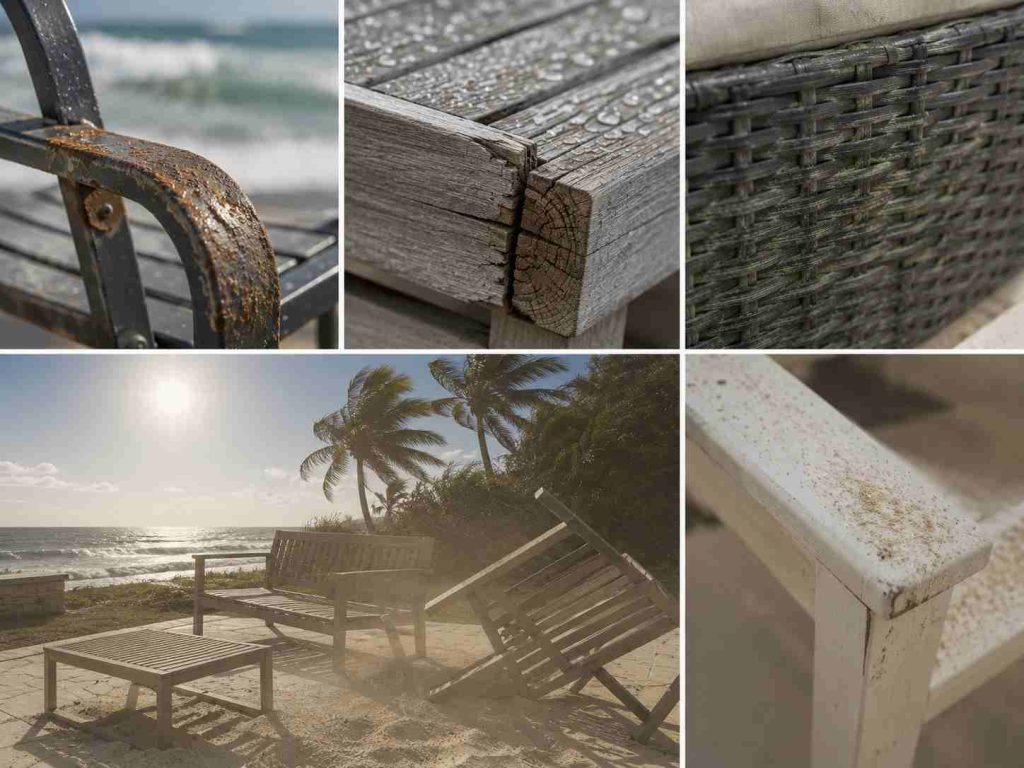
Salt air and corrosion are the biggest culprits. Salt particles carried in the breeze settle on furniture surfaces and accelerate oxidation which is why you’ll see rust on standard steel or iron furniture much faster near the coast than anywhere else. What might take years inland can happen in a few months by the water.
Humidity adds to the problem. Wood absorbs moisture and expands, which leads to cracking, warping, and mold over time. Even some synthetic materials can trap moisture in their joints or weave, leading to mildew buildup.
UV exposure is often underestimated. Coastal areas tend to get intense sunlight, and UV rays break down plastics, fade fabrics, and degrade painted or coated surfaces faster than you’d expect. A chair that looked great in the showroom can look dull and chalky within a year if the materials aren’t UV-treated.
Wind and sand round out the challenge. Lightweight furniture is a liability, a strong gust can send chairs across the patio or into the water. And windborne sand acts like fine sandpaper, slowly scratching away surface coatings.
Knowing this, the question isn’t just “is this furniture outdoor-rated?” but it’s “is it built for this kind of outdoor environment?”
The Best Materials for Coastal Patio Furniture
Not all weather-resistant furniture is equal. Here’s how the most common materials stack up for coastal use:
| Material | Salt Resistance | Moisture Resistance | UV Resistance | Maintenance |
| Marine-Grade Aluminum | Excellent | Excellent | Very Good | Low |
| Teak Wood | Very Good | Very Good | Good | Medium |
| HDPE / Poly Lumber | Excellent | Excellent | Excellent | Very Low |
| Resin Wicker | Good | Good | Good | Low |
| Wrought Iron | Poor | Fair | Good | High |
| Untreated Steel | Poor | Poor | Fair | Very High |
Marine-Grade Aluminum is generally the top pick for coastal settings. Unlike regular aluminum, marine-grade versions are treated to resist salt corrosion, and most quality pieces come with a powder-coated finish that adds another layer of protection. It’s also lightweight enough to rearrange easily, but not so light that it becomes a wind hazard especially in heavier gauge options. The Aluminum Association has useful background on how alloy grades affect durability if you want to dig deeper.
Teak wood is a strong natural option. It contains natural oils that repel water and resist cracking, which is why it’s been used in marine applications for centuries. The main thing to know is that teak quality varies — Grade A teak (from the heartwood of mature trees) is significantly more durable than lower grades. It does require some maintenance: a light oiling once a year keeps it looking good and extends its life.
HDPE (High-Density Polyethylene), often sold as “poly lumber,” is worth considering if you want something nearly maintenance-free. It won’t rot, splinter, or fade, and it holds up to salt and moisture as well as any material on this list. It’s also typically made from recycled plastic, which is a bonus. The tradeoff is that it can look less “natural” than wood, though the quality of finishes has improved a lot in recent years.
Resin wicker can work well as long as the frame underneath is aluminum or another corrosion-resistant metal. Natural wicker is not suitable for coastal use, it will deteriorate quickly. Resin wicker, on the other hand, handles moisture and salt reasonably well, though it’s not quite as tough as the top three options above.
What to avoid: Wrought iron and untreated steel are generally poor choices for coastal environments. They can be sealed or treated, but the maintenance burden is high and the salt air will eventually win. Unless you’re committed to regular upkeep, it’s not worth the hassle.

5 Things to Think About Before You Buy
Once you’ve narrowed down materials, here are the practical factors that often get overlooked:
1. Check the specific rating, not just the label. “Outdoor furniture” and “marine-grade” or “coastal-ready” are very different things. Look for products explicitly described as rust-proof, UV-resistant, and salt-air rated.
2. Think about wind stability. Heavier furniture or pieces with lower centers of gravity hold up better in wind. If you prefer lighter furniture, look for options with pre-drilled holes for anchoring, or plan to use furniture tie-down straps during storms. The National Weather Service recommends securing all outdoor items when coastal wind advisories are issued — it’s worth building that habit.
3. Pay attention to the fabric. Cushion and fabric choice matters as much as the frame. Standard polyester fades and deteriorates quickly in coastal conditions. Look for solution-dyed acrylic fabrics which are specifically engineered to resist UV, mold, and moisture. It’s a meaningful upgrade over standard outdoor fabric.
4. Match maintenance to your lifestyle. Be honest with yourself here. Teak looks beautiful and lasts well, but it needs annual treatment. If you’re not going to do that, HDPE or aluminum is a better fit. The best furniture is the one you’ll actually maintain even a little.
5. Think long-term on cost. Budget furniture that needs replacing every two or three years ends up costing more than a quality set that lasts a decade. In a coastal environment especially, the durability gap between mid-range and quality furniture is significant.

How to Make Your Furniture Last Longer?
Even the best coastal furniture benefits from a bit of regular care.
Rinse your furniture with fresh water every few weeks, especially after storms. This removes salt deposits before they have a chance to cause damage. For aluminum, check the powder coating periodically for chips or scratches, touching those up quickly prevents corrosion from spreading underneath.
Teak furniture should be cleaned with a mild soap and re-oiled annually. For cushions, let them air dry thoroughly after rain rather than leaving them sitting in moisture. Store them indoors or in a deck box during periods of heavy weather.
During hurricane season or extended periods away, it’s worth either bringing furniture inside or using quality furniture covers. Look for covers with vents, sealed covers trap moisture and can actually do more harm than good.
Quick Checklist: Is This Furniture Coastal-Ready?
Before purchasing, please check these questions:
- ✅ Is the material aluminum (marine-grade), teak, or HDPE?
- ✅ Is it labeled rust-proof, UV-resistant, or marine-grade?
- ✅ Are the cushions made from solution-dyed or Sunbrella-grade fabric?
- ✅ Are the joints welded or sealed rather than just screwed?
- ✅ Is the weight appropriate for your wind conditions, or can it be anchored?
- ✅ Does the maintenance level fit your schedule?
Coastal living is great, but it does raise the bar for outdoor furniture. The key takeaway is to prioritize material quality over aesthetics or price alone. Salt air and humidity will find the weak points in whatever you buy, so it’s worth choosing something specifically designed to handle those conditions from the start.
Get the material right, pay attention to the details, and your patio setup will hold up for years rather than needing replacement every season.As an experienced outdoor furniture manufacturer, we provide customized patio and garden furniture solutions for wholesalers, retailers, hotels, and commercial projects. If you’re exploring durable outdoor furniture options or OEM/ODM cooperation, feel free to contact us for more information.
Related Products