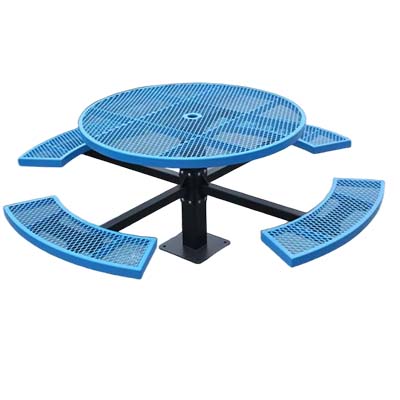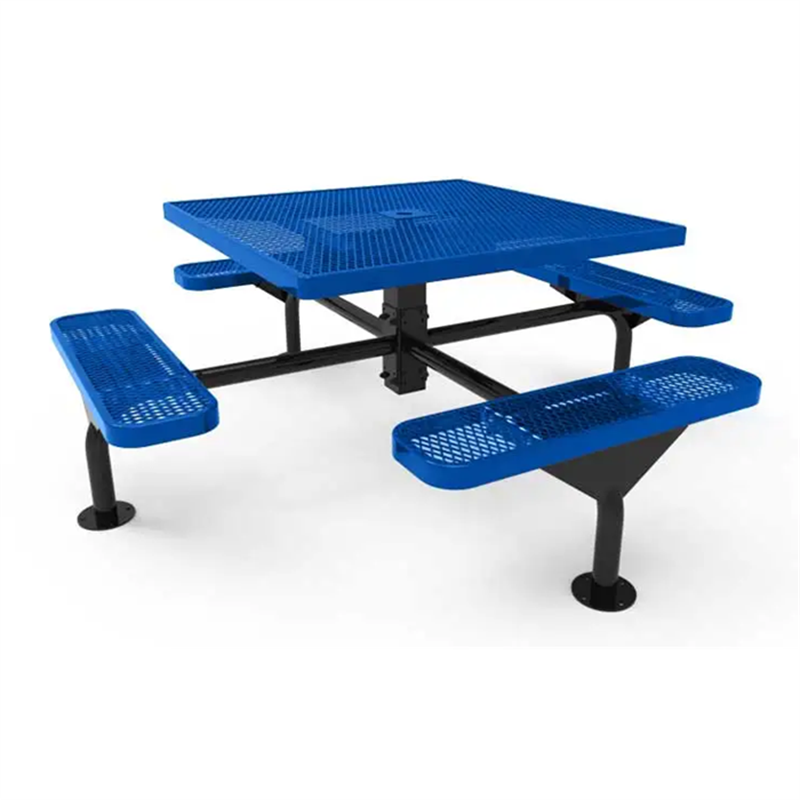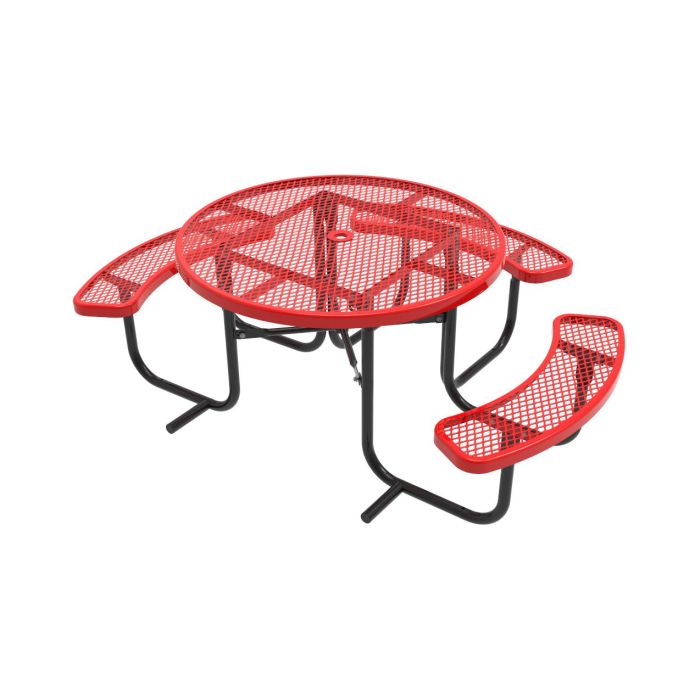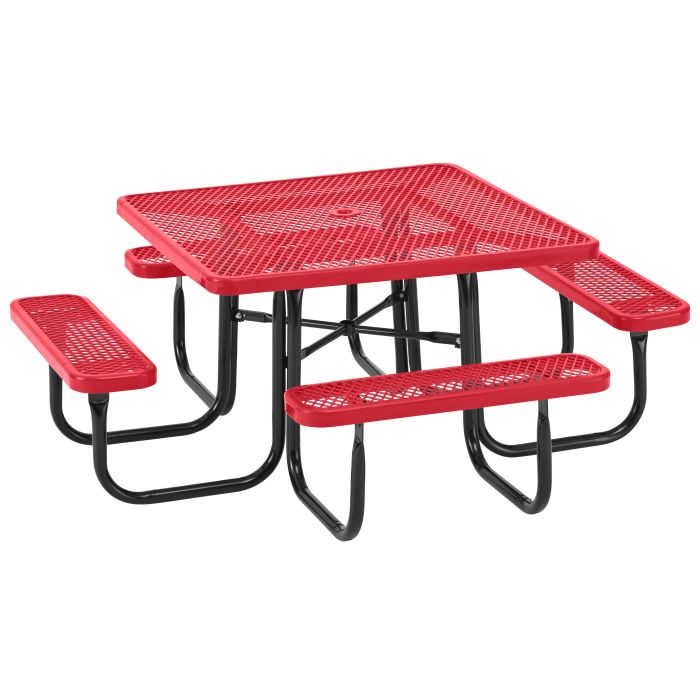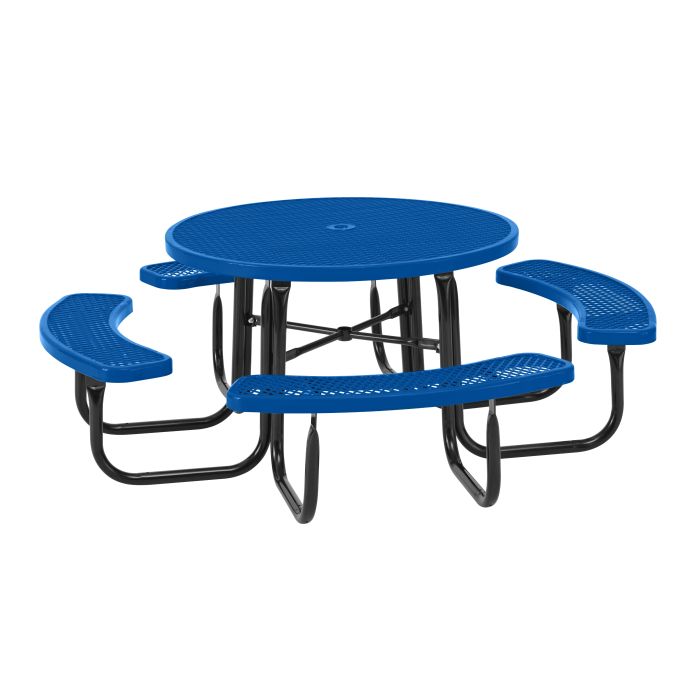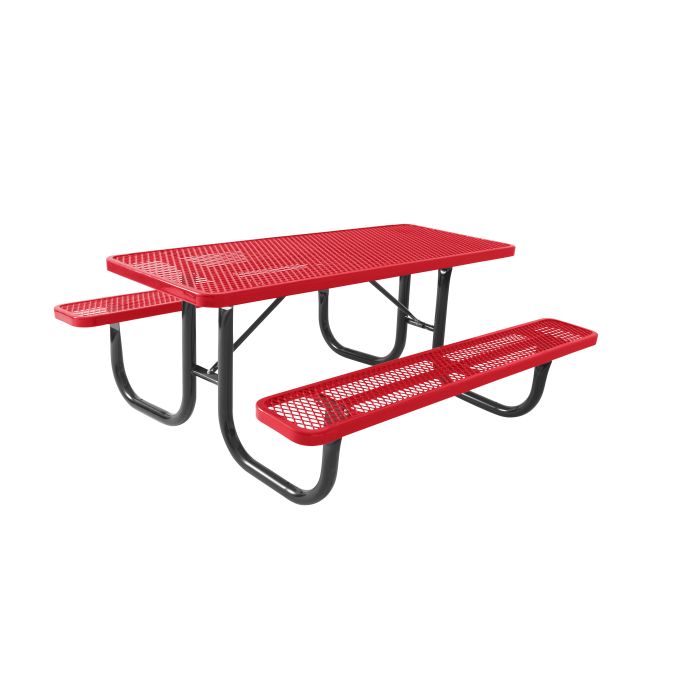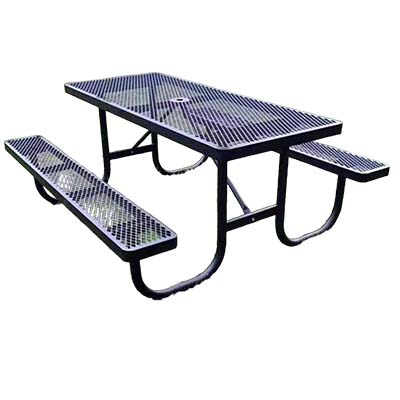
The Best Heavy Duty Picnic Tables for Schools: Safety & Durability Factors
Choosing outdoor furniture for a school is fundamentally different from equipping a public park or a company’s rest area. This is because in an elementary school setting, the usage conditions of the equipment are more demanding. Some students engage in continuous high-intensity activities, and there is an inevitable risk of human damage.
For facility managers, the goal is to ensure student safety while also considering the equipment’s lifespan.
Therefore, when purchasing, not only should aesthetics be considered, but also the technical specifications of truly durable commercial picnic tables should be given special attention.

Safety Engineering Beyond Rounded Corners
Safety is one of the primary issues of any educational institution. Though many tables claim to have “safe edges,” in terms of engineering, this is not always true. In the case of tables intended for use in elementary schools, a particular radius of curvature should be prioritized to minimize the danger of blunt trauma.
Key Elements of Safety:
- The 1.5-inch rule: All metal corners need to have a minimum radius of curvature of 1.5 inches. This would lower the force of impact if the child accidentally fell against the table.
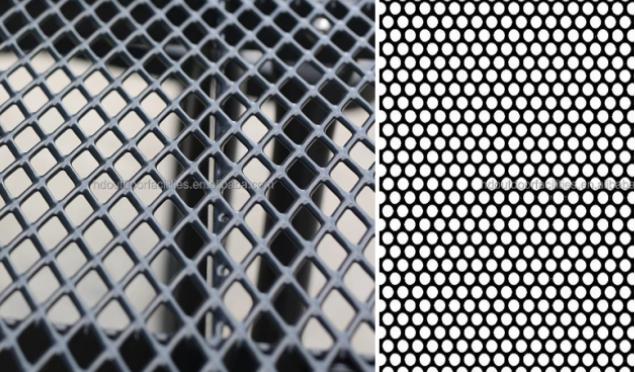
- Anti-pinch mesh design: If using an expanded metal top design, the holes need to be made such that no fingers could get pinched inside.
- Smooth Weld: All joints need to be hand-polished. Industrial processes sometimes cause metal burrs that can snag
Thermal Protection and Surface Integrity
Selecting finish solely based on color is one of the mistakes that occurs often when buying equipment for the school. After all, in an environment full of activity like a school, the finish is the only protection you have from structural rust caused by oxidation.
| Feature | Standard Powder Coating | Thermoplastic (Plastisol) Coating |
| Impact resistance | Low – chips easily | High – 1/8-inch thick barrier |
| Rust protection | Poor once chipped | Excellent – fully sealed |
| Thermal insulation | None – metal gets dangerously hot | Yes – stays touch-safe |
| Vandal resistance | Low – stains and scratches remain | High – markers clean off easily |
| Lifespan | 1–3 years | 10–15+ years |
Metal furniture exposed to sunlight will exceed temperatures of 140°F (60°C). This is extremely dangerous for kids. With thermoplastic finishes, however, this won’t be a problem since they absorb less heat and are safe for kids. Besides, thermoplastic finishes cannot be damaged with permanent markers or sprays.
Tip: It’s easy to clean a thermoplastic commercial picnic table using a citrus-based solvent.
Integrated ADA Accessibility for Inclusive Play
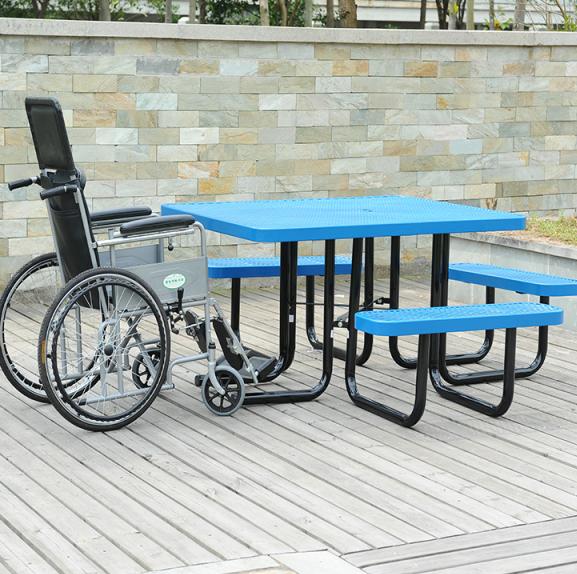
Inclusive design of classroom furniture may be an absolute necessity in the United States due to the Americans with Disabilities Act (ADA). Nevertheless, its implementation can involve much more than just extending the “table.”
Requirements for Compliance and Inclusion of the Layout:
- Clearance: 27 inches clearance below the tabletop for wheelchair armrests to slide underneath.
- Depth: Knee room of 19 inches or more should be provided.
- Placement: The ADA seating position is not located on one of the extreme ends of the table. The integrated seating, where wheelchair space is incorporated into the center of the bench, allows students with impaired mobility to have peers on both sides of them.
Material Comparison: Steel, Wood, or Plastic?
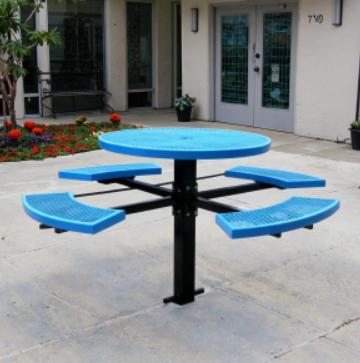
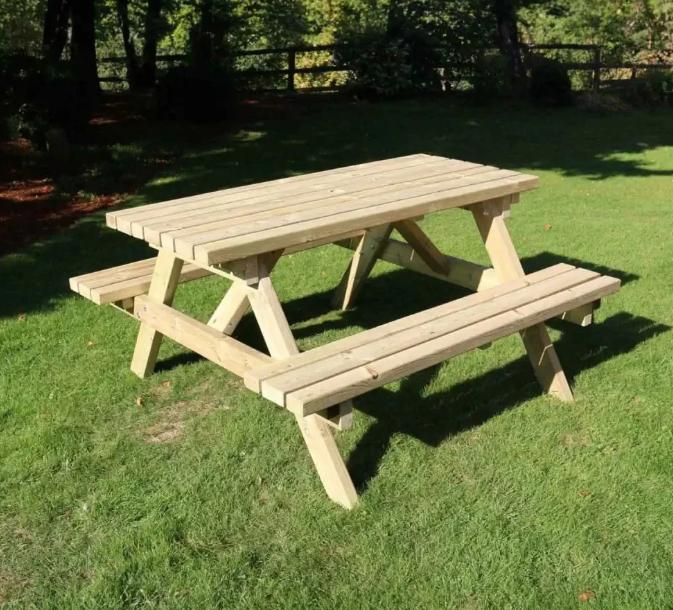
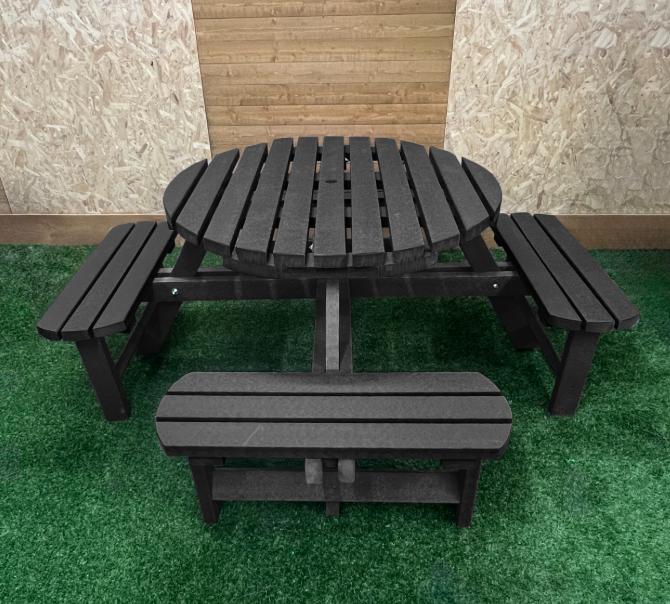
Although aesthetics factor in, the materials used will dictate your maintenance requirements and level of safety for your school campus. For elementary schools, there are three primary materials from which to choose:
- Heavy-Duty Steel: Best suited for high-wear areas. Steel becomes even more durable when coated with a thermoplastic material. This makes it resistant to warping, rotting, splitting and is vandal-resistant as it cannot be carved into or cracked by impact.
- Pressure-treated wood: The least expensive option at first, but high maintenance for any educational institution. It can easily split, creating a very dangerous situation for students, as well as needing to be refinished annually to combat warping due to weather conditions.
- Recycled Plastic: An eco-friendly option and resistant to corrosion. Plastics do not offer the same load-bearing properties as steel, meaning the boards will sag or bow with time and exposure to heat, necessitating replacement of the seating area.
Reinforced steel offers a low-maintenance solution that provides long-term safety for 15 years of service.
Expert Checklist for Facility Managers
Before approving a purchase order for your campus, use this checklist to ensure you’re getting a true heavy duty commercial picnic table:
| Checkpoint | Requirement |
| Material gauge | Tabletop and seating = 11-gauge steel minimum |
| Coating type | UV-stable Thermoplastic (not decorative powder coat) |
| Weld quality | Continuous, hand-ground with no burrs or sharp points |
| Hardware | Stainless steel, tamper-resistant |
| ADA ratio | At least 1 accessible table per 5 standard tables |
| Mounting | Permanent bolt-down or in-ground for unsupervised areas |
When outdoor seating is designed with engineering precision, it ceases to be a maintenance concern. Instead, it becomes a reliable tool for social interaction and outdoor learning.
As a heavy-duty commercial picnic tables manufacturer, we focus on the unseen details: the thickness of the zinc plating, the chemistry of the PVC dip, and the structural load-bearing capacity of the frames. For elementary schools, these details aren’t technicalities—they’re the difference between a safe, inviting campus and a recurring facility headache.
The right heavy-duty commercial picnic table doesn’t cost—it pays. Over 15 years, it has saved thousands of dollars, prevented injuries, and served generations of students without fail.
Related Products