Why Commercial Metal Picnic Tables Outlast Recycled Plastic in High-Traffic Parks?
When specifying outdoor picnic tables for high-traffic municipal zones, the decision usually narrows down to two materials: heavy-duty metal and recycled plastic.
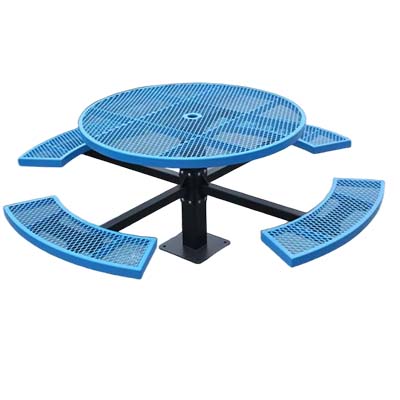
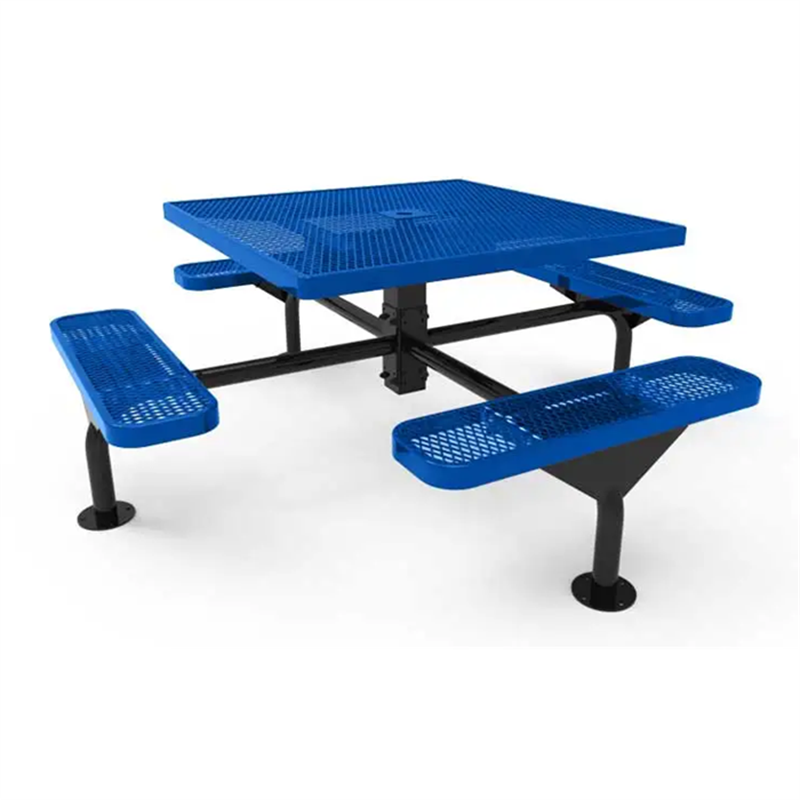
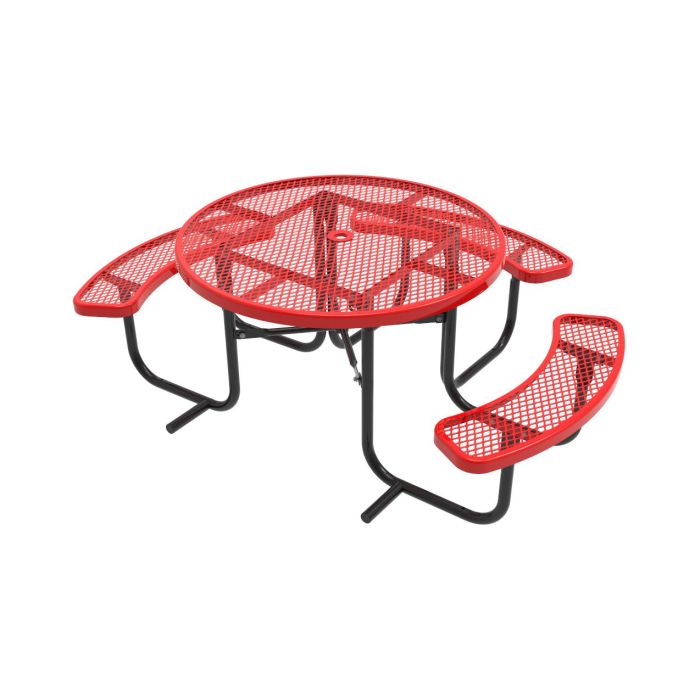
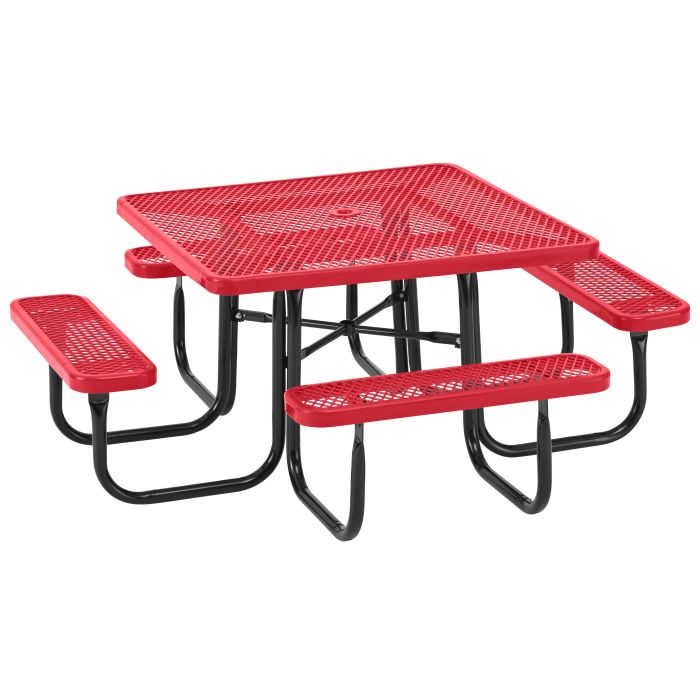
While recycled plastic is often marketed as an eco-friendly alternative, it frequently fails under the mechanical and environmental stresses of urban environments. For focusing on long-term structural integrity and minimal maintenance cycles, commercial metal picnic tables—specifically those utilizing thermoplastic-coated steel—remain the industry standard for durability.
This blog analyzes why metal outperforms plastic in high-traffic public spaces.
High-Traffic Park Challenges and Material Demands
A “high-traffic” park environment is characterized by three major stressors: continuous physical loading, environmental exposure, and deliberate abuse (vandalism). Regular residential-grade furniture is not designed to withstand this environment.
- Load Cycles: Public furniture must endure a load many times over its rated capacity for seated people. It is common to see people standing on tabletops or for multiple large groups to occupy a single piece of furniture.
- Climate Extremes: The furniture must endure UV breakdown in the summer and ice/thaw cycles in the winter without losing its elasticity.
- Surface Abrasion: With high turnover rates, workers are exposed to grit, food acids, and chemicals used for cleaning. This can cause abrasion on soft surfaces.
Steel used in this environment has high tensile strength and specific chemical coatings to cope with these demands, whereas plastic has visco-elastic properties that alter according to temperature and pressure.
Metal vs. Recycled Plastic – Core Material Differences
The basic difference is in the molecular arrangement and the rigidity of the materials.
Steel Construction
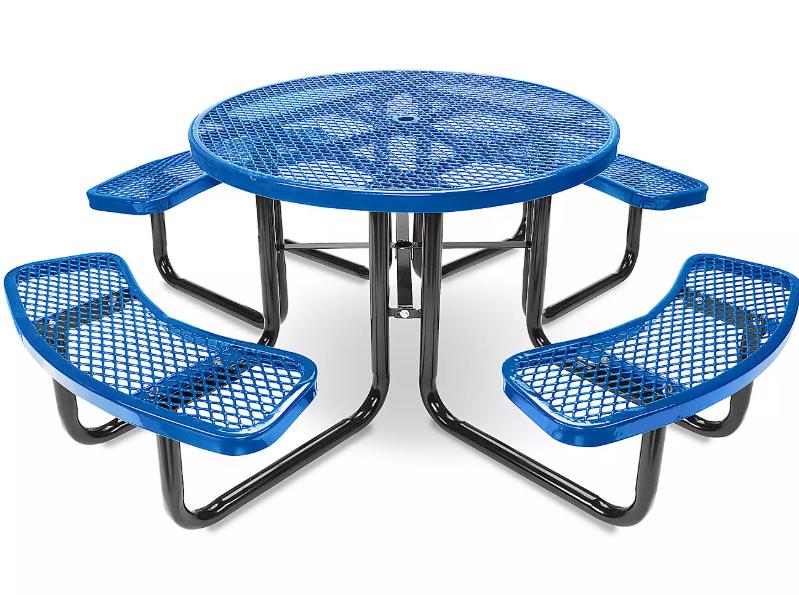
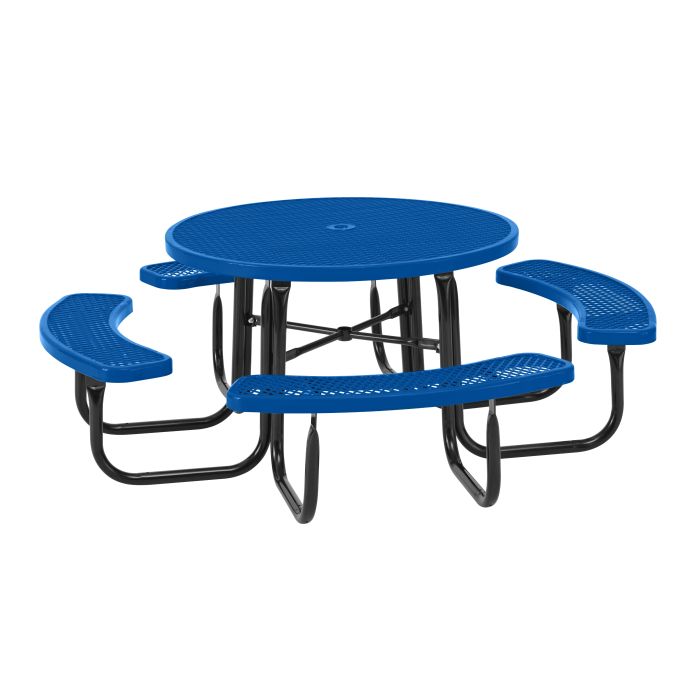
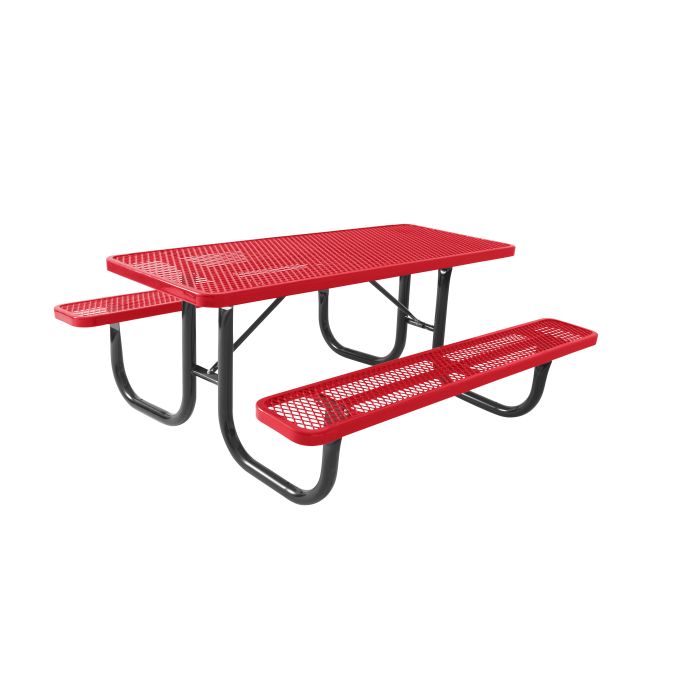
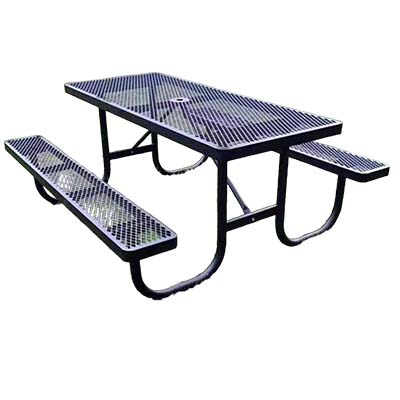
The majority of high-end commercial metal picnic tables are made from 9-gauge or 11-gauge expanded metal or perforated steel. Steel has a high Young’s modulus, which enables it to resist deformation under stress. When a heavy load is applied to a steel tabletop, it deflects very little and returns to its original shape.
Recycled Plastic Construction
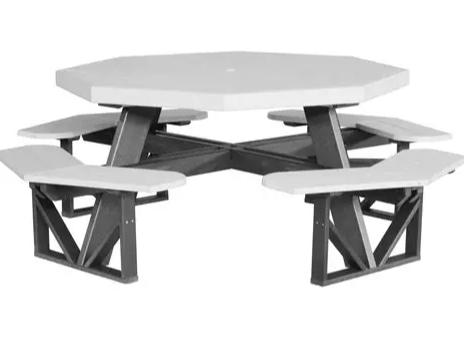
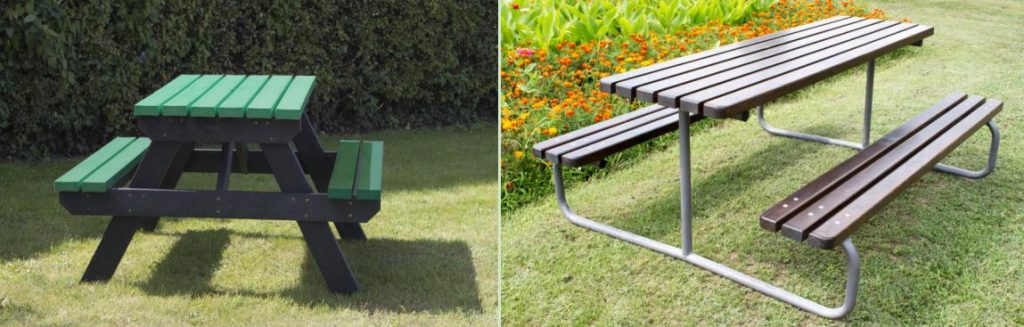
Recycled plastic lumber is made up of High-Density Polyethylene (HDPE). Although HDPE is very resistant to the elements in a vacuum, it doesn’t have the internal support of metal. Eventually, plastic will undergo what is called “creep,” or permanent deformation under its own weight or external forces. That is why some older plastic tables have “sagging” benches or warped surfaces that no longer sit flat.
Durability, Weather Resistance, and Maintenance
In an outdoor environment, the “weathering” of a material is what will ultimately dictate its lifespan.
- Thermal Expansion: Plastic has a large coefficient of thermal expansion. In one day, a plastic table will expand and contract greatly. Bolts will become loose, and tables will be “wobbly.” Steel’s coefficient is negligible, and mechanical joints will remain tight for decades.
- UV Degradation: Although plastic is UV-stabilized, eventually “chalking” occurs. The sun degrades the plastic polymers to the point where the top becomes brittle and cracks. The thermoplastic-coated metal has a thick layer of melted plastic bonded to the steel, making this very UV-stable and ensuring that the inner core is never exposed to the elements.
- Heat Dissipation: One misconception about metal tables is that they are too hot. However, because of the expanded nature of the metal top, there is constant airflow. Plastic slabs can become too hot to touch in direct sunlight, whereas the “open weave” of a metal table allows for quick heat dissipation.
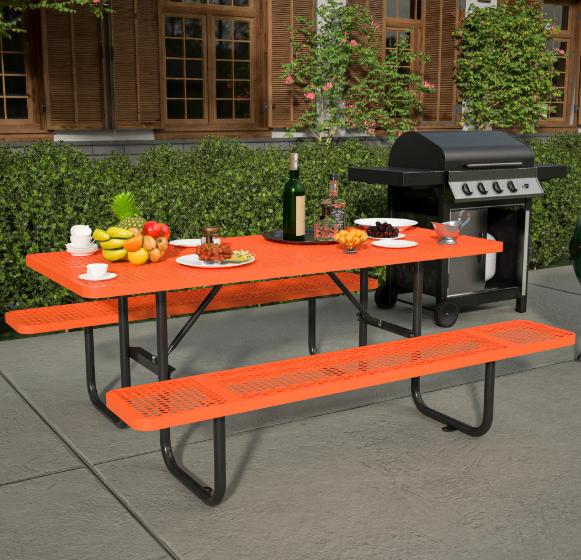
Vandalism Resistance and Lifecycle Cost Advantages
Vandalism is one of the biggest drains on the budget for municipal departments. This material has a direct impact on the time spent by your crew to make repairs.
- Cutting and Carving: Plastic is a soft material. It is easy for a vandal to carve their name and/or graffiti into a plastic bench using a common pocketknife. This will be permanent. Thermoplastic-coated steel is very hard to cut.
- Graffiti Removal: Due to the non-porous finish of the metal table tops, spray paint can be easily removed by using a mild solvent or power washer without damaging the table. On plastic, the spray paint can leach into the pores. This requires sanding down the top, which destroys the finish.
- Fire Resistance: In urban settings, fire damage can be a problem. Plastic can melt, and some plastics can even be used as fuel. Steel is non-combustible.
The Lifecycle Cost (ROI)
Though the purchase cost of recycled plastic is lower, it has drawbacks in terms of resistance to UV rays and sagging over time. The lifespan is only around 5-7 years. In contrast, heavy-duty commercial-grade metal picnic tables have an operational life of over 20 years, effectively making it half the cost with lower maintenance labor for frequent replacements.
| Feature | Recycled Plastic Tables | Commercial Metal (Steel) Tables |
| Initial Investment | Lower ($) | Moderate ($$) |
| Average Lifespan | 5–8 Years | 20+ Years |
| Structural Integrity | Prone to sagging (creep) | High tensile strength; remains level |
| Vandalism Resistance | Low (easy to carve/burn) | High (thermoplastic coating) |
| 20-Year TCO | High (due to 3x replacement) | Low (single-asset investment) |
Why Commercial Metal Picnic Tables Better?
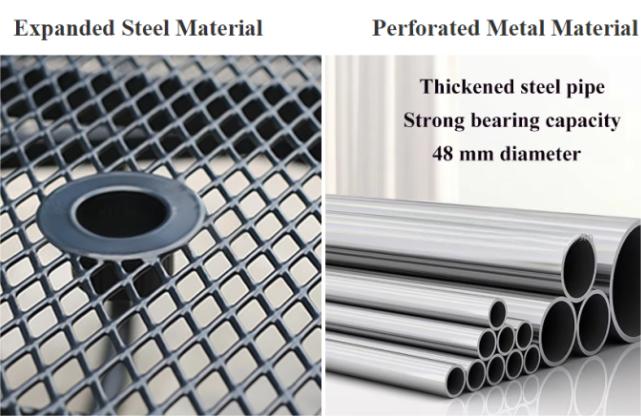
While there are many materials marketed as “outdoor-grade,” commercial-grade metal picnic tables are the only engineering solution that makes sense for high-traffic areas.
At HD Outdoor Facilities, we strive to provide a solution that closes the gap between architectural style and industrial-grade durability. By using high-gauge expanded steel and thick thermoplastic coatings applied through the oven-bonding process, our products eliminate the failure modes of structural sagging and UV discoloration associated with recycled plastic materials.
Choosing our metal site furnishings ensures a 20-year service life backed by superior resistance to physical impact and environmental corrosion. For municipal planners and facility managers, specifying HD Outdoor’s metal tables means fewer replacement cycles, reduced maintenance labor, and a safer, more reliable seating experience for the public.
Related Products