
What is a Good Pedal Kitchen Trash Can? 7 Clever Design Features
A kitchen trash can may be used dozens of times a day, but it is rarely something people think about until it causes a problem. The lid closes too loudly, the bag keeps slipping, fingerprints build up on the surface, or unpleasant odors start to linger. A well-designed pedal trash can can prevent many of these small annoyances with a few practical features. Things like a smooth pedal, a secure bag holder, a soft-closing lid, and an easy-to-clean surface may seem minor, but they make a noticeable difference in everyday use. These details are often what turn an ordinary kitchen trash can into one that is easier and more comfortable to live with.
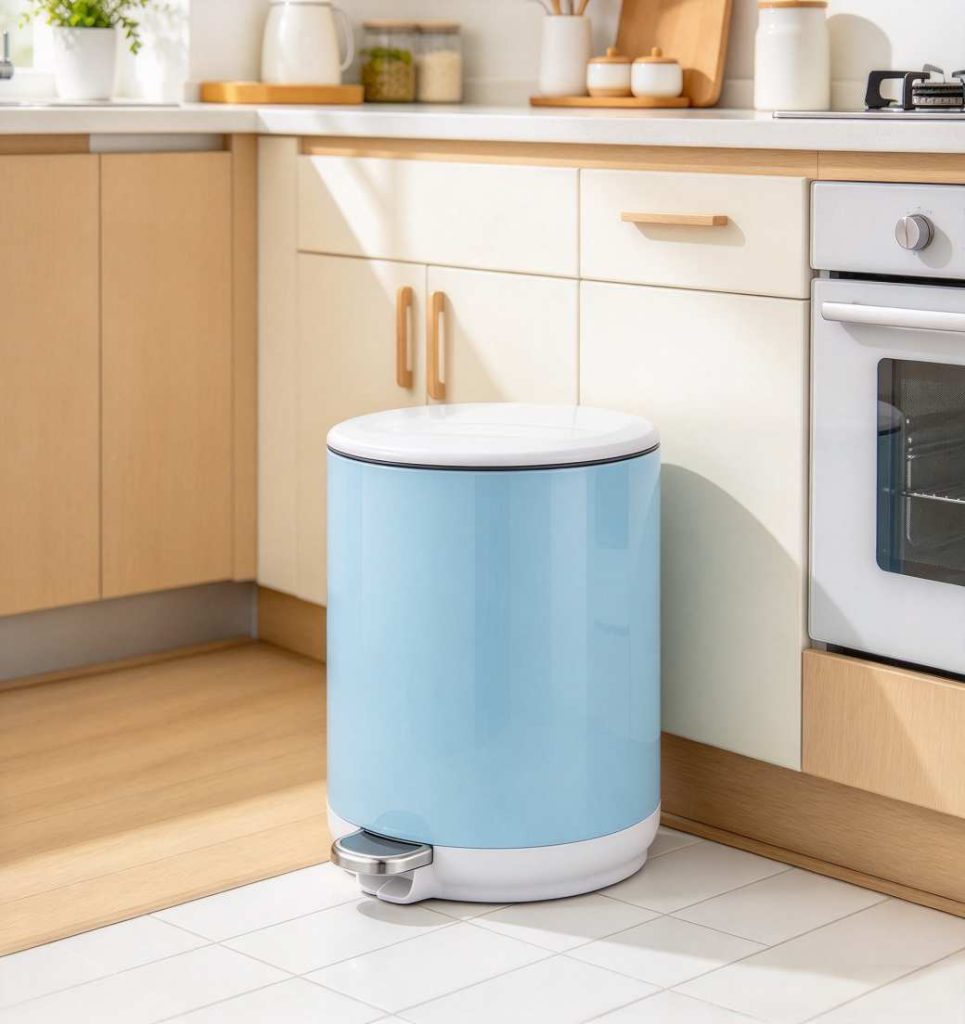
Why Pedal Kitchen Trash Cans Still Win for Home Use
Touchless sensor models may look more modern, but they are not always the most practical choice for a busy kitchen. They need batteries or a power source, and the lid can sometimes open when you do not intend it to. A manual lid is simple enough, but it means reaching for the trash can with your hands, which is not ideal when you are cooking or cleaning.
A foot pedal trash can avoids both problems. There are no batteries to replace, and pressing the pedal opens the lid when you need it. It is a simple mechanism, but that simplicity is part of its appeal. What makes one pedal trash can better than another often comes down to the details around the pedal, such as how smoothly it operates, how firmly the lid closes, and how well the bag stays in place.
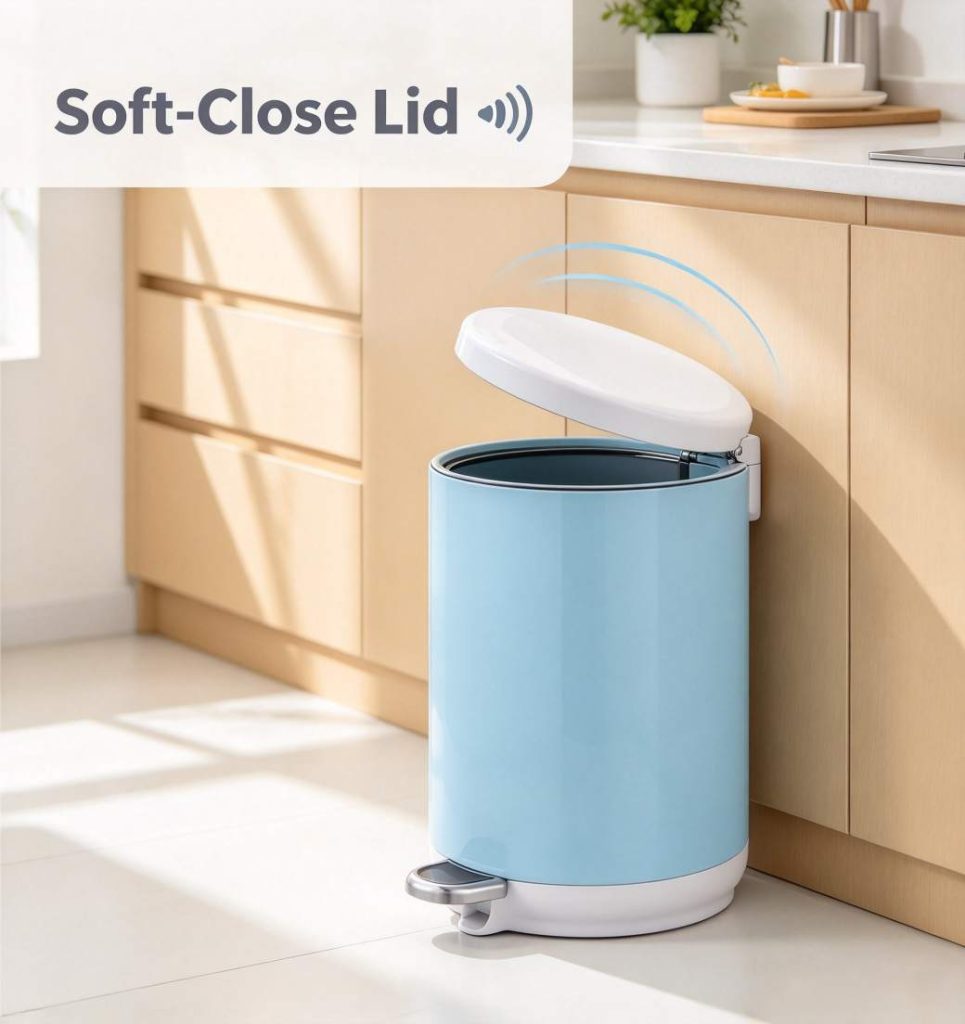
Soft-Close Lid: The Quiet Feature You’ll Notice Every Day
A cheap trash can can make quite a racket when the lid drops shut. That may not seem like a big deal at first, but the noise gets old quickly, especially in an open-plan kitchen or a home with pets or young children.
A soft-close lid uses a small damper to slow the lid as it comes down, so it closes gradually instead of falling shut. It only takes a few seconds, but the difference is noticeable in everyday use. The slower movement is also easier on the hinges, while a lid that closes properly can help keep odors contained.
If you are comparing different models, terms such as “soft-close,” “silent close,” and “damped lid” are more useful than a general claim that a can has “quiet operation.”
Durable and Responsive Foot Pedal Design
The foot pedal gets a lot of use, so its design matters more than it might seem. On a cheaper trash can, a small or flimsy pedal can feel awkward to use. You may need to position your foot carefully or press harder than expected just to open the lid.
A well-made pedal is usually wide enough to use comfortably and firmly connected to the mechanism inside the can. Steel construction can also add strength for everyday use. When you press it, the lid should open with relatively little effort, and the pedal should return smoothly when you take your foot off. There should be no noticeable wobbling, sticking, or need to stomp on it.
Some manufacturers also publish cycle ratings for their pedals, such as 150,000 steps or more. If a model provides this information, it can be a useful indication of how much everyday use the mechanism has been designed to handle.
Stay-Open Function for Hands-Free Convenience
There are times when you need the trash can to stay open, such as when scraping plates, replacing the liner, or throwing away a larger amount of waste. Some models let you push the lid back until it stays in place, while others only keep it open as long as you hold the pedal down.
For tasks that take more than a few seconds, a lockable lid is usually more convenient. You can keep both hands free to remove the old bag, adjust a new liner, or deal with bulky waste without having to keep your foot on the pedal. It is a small feature, but one that can make routine kitchen cleanup a little easier.
Smart Bag Holding Systems
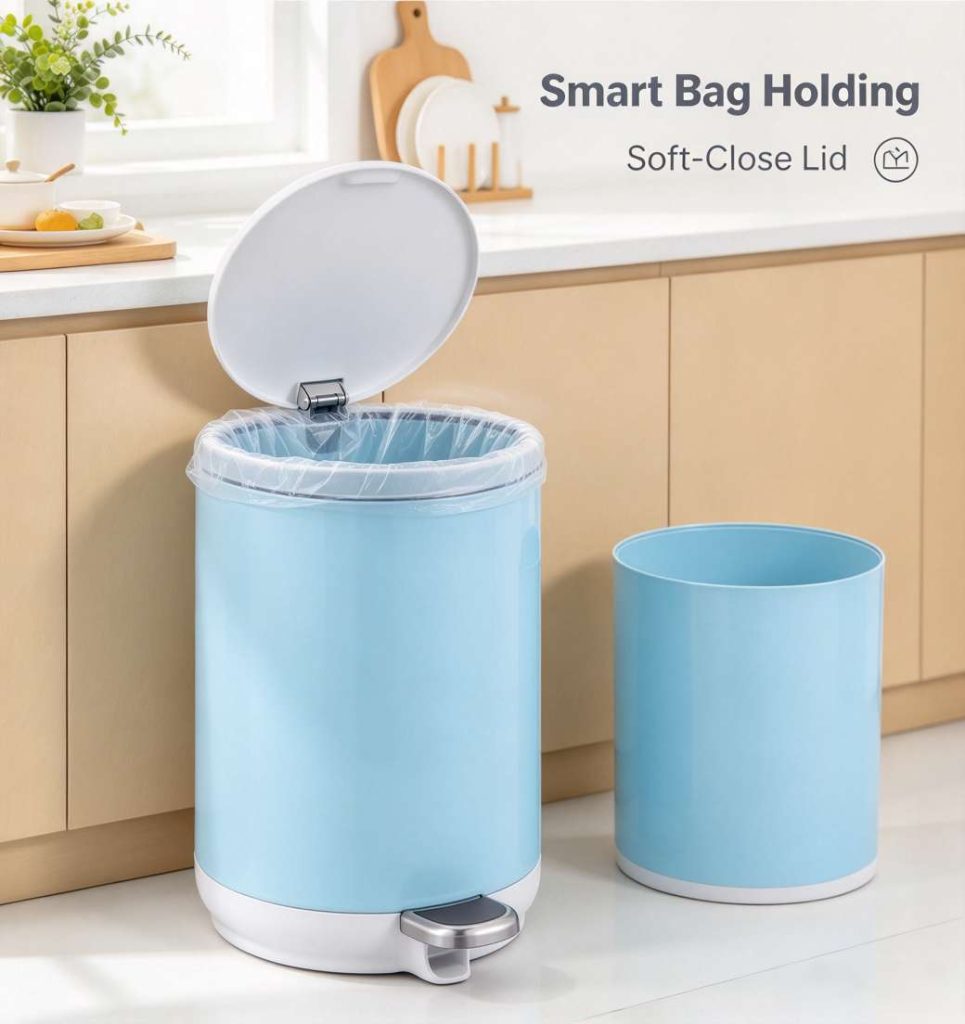
A trash bag that slips down into the can or hangs loosely over the rim can be frustrating to deal with. A good bag-retention system keeps the liner in place and helps hide the extra plastic around the opening. Some cans use an inner rim to hold the bag, while others have a small pocket or opening where the loose end can be tucked away.
Another option is a removable inner bucket. It can make changing the bag easier and gives you a separate container to take out when the inside of the can needs a thorough cleaning. These details may not seem important when choosing a trash can, but they make a difference once the can is used every day.
If you are unsure which size or bag capacity is suitable for your kitchen, you can also refer to this guide to common kitchen trash can dimensions.
Fingerprint-Resistant and Easy-Clean Surfaces
Stainless steel is a popular choice for kitchen trash cans, but it can quickly show fingerprints, especially when the can is used throughout the day. A brushed finish helps make these marks less obvious, and some models also have an anti-fingerprint coating to reduce smudging.
The surface will still need to be wiped from time to time, particularly if it is touched with wet or greasy hands. However, fingerprints tend to be less noticeable and can usually be removed with a quick wipe. For a trash can that sits next to a kitchen counter or other visible area, an easy-to-clean finish can save you from constantly wiping the outside.
Space-Saving Shape and Thoughtful Details
The shape of a kitchen trash can can make a difference, especially when space is limited. Rectangular and semi-round models with a flat back can sit closer to a wall or cabinet than a fully round can. Some also use internal hinges so the lid can open without hitting the wall behind it.
Other small features are useful for everyday cleaning and moving. A side handle makes it easier to pull the can away from the wall, while non-slip feet help keep it steady when you step on the pedal. Before choosing a model, it is worth checking more than its overall height. Measure the available floor space as well as the clearance above the can when the lid is fully open. A can that fits neatly when closed may need considerably more room once the lid is raised.
Odor Control Features That Actually Work
A kitchen trash can cannot completely eliminate odors, but its design can help keep them from spreading. A lid that fits tightly around the opening can contain some of the smell between uses. Some models also have a charcoal filter under the lid, which can help with lingering odors.
Keeping the inside of the can clean is just as important. Removable inner buckets are easier to take out and wash, particularly when something leaks inside the liner. Stainless steel is also less likely to retain odors than some porous materials. Along with changing the trash bag regularly, these features can help prevent unpleasant smells from building up inside the kitchen.
- Related reading: How to Keep Your 13-Gallon Kitchen Trash Can Odor-Free?
Conclusion
A good pedal kitchen trash can is not necessarily the one with the longest list of features. What matters is whether those details make everyday use easier. A smooth pedal, a soft-close lid, a secure bag holder, an easy-clean surface, and a shape that fits the available space can all make a difference, especially when the trash can is used throughout the day.
When choosing a model, it helps to focus on the problems you actually need to solve rather than simply looking for more features. For some kitchens, quiet closing may be the priority. For others, a stable pedal, better bag retention, or easier cleaning may matter more. Two or three well-designed features can be more useful than a long list of extras.
For businesses sourcing stainless steel pedal trash cans, practical details such as soft-close lids, secure bag retention, durable pedals, and easy-clean surfaces are worth considering alongside size and capacity. If you need a supplier for commercial or public-use applications, HD Outdoor Facilities can provide further information based on your requirements.