
Integrating Waste Management Bins into Modern Urban Landscape Design
Urban landscape design has moved beyond simple greening and the mere accumulation of facilities. Nowadays, both municipal authorities and designers emphasize the deep integration of functional practicality and architectural vision. However, waste disposal facilities often pose both visual and operational challenges.
If poorly designed or mismatched trash cans are randomly placed in newly built parks or squares, it not only disrupts the harmony of the space but also poses hygiene risks. To create a unified, clean, and sustainable environment, customized waste disposal plans must be incorporated in the initial planning stage rather than being remedied afterwards.
By integrating strategic layout, material aesthetics, concealed functions, and environmental certifications, designers can transform trash cans from simple collection containers into indispensable components of modern urban landscapes.
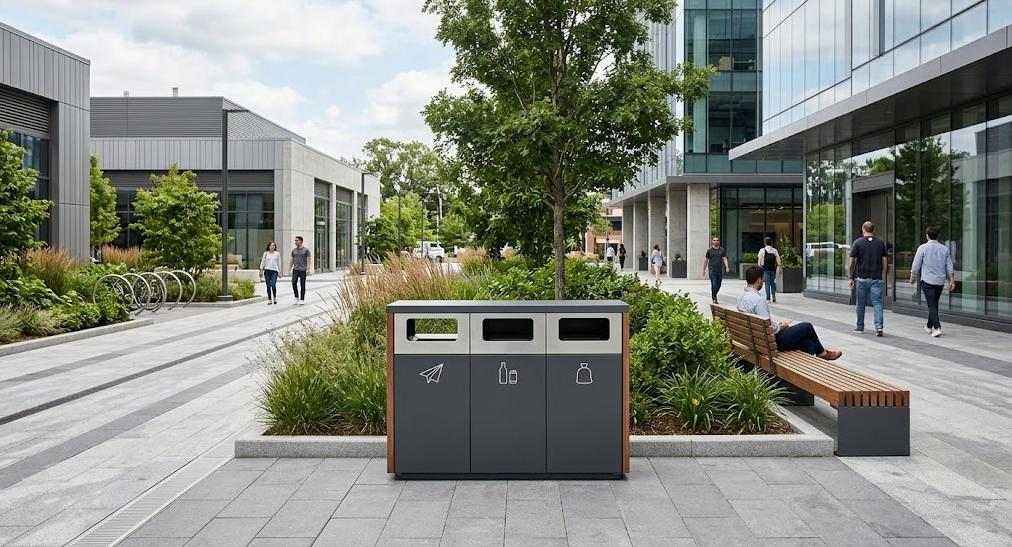
Strategic Placement in Urban Waste Bin Design
Effective public waste management begins with an understanding of the dynamics and behavior patterns of people. Randomly placing trash bins will result in garbage overflowing in high-traffic areas while the facilities in secluded areas remain unused.
Excellent urban planners usually ensure that people can easily find disposal points within a reasonable walking distance through flow analysis and the “30-step principle” (derived from the design of theme parks and squares). Key layout areas include:
- Intersection of main roads and entrances to squares;
- Concentrated areas such as rest areas, dining areas, etc.;
- Transit areas such as bus stops and park exits.
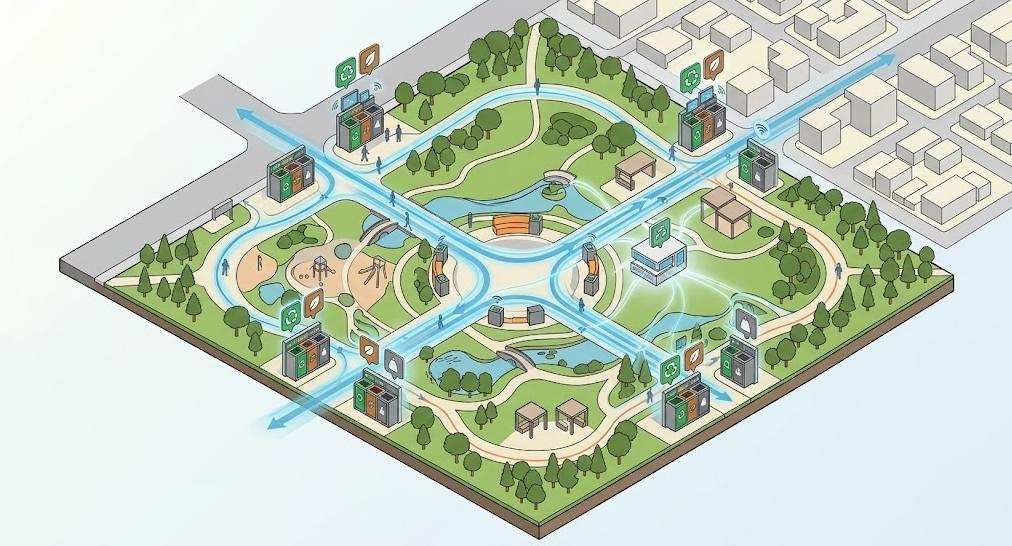
In addition, through ingenious visual guidance design, waste disposal habits can be shaped without the need for complicated signs. For example, using differentiated bin shapes—round holes for bottles and cans, narrow slits for paper, and wide openings for general waste—can not only promote source separation but also maintain the aesthetic appeal of the landscape.
Material Selection for Outdoor Litter Bins
The core of choosing outdoor litter bins lies in balancing durability and visual harmony. Public facilities must withstand harsh weather conditions, frequent use, ultraviolet rays, and potential damage, while also integrating with the surrounding architectural style.
- 1. Natural and recreational environments: Parks, waterfront walks, and botanical gardens are suitable for wood-plastic composites (WPC), wood-grain finished materials, or weather-resistant metals. These materials blend seamlessly with natural greenery and are not prone to deformation or decay.
- 2. Modern and commercial environments: Enterprise parks, high-end shopping malls, and transportation hubs prefer 304/316 grade stainless steel or matte powder-coated steel, presenting a simple and sleek texture.
Electrostatic powder coating and anti-graffiti techniques can ensure that the facilities remain clean and durable even under long-term exposure to sun and rain and frequent use.
Smart Functionality in Commercial Waste Receptacles
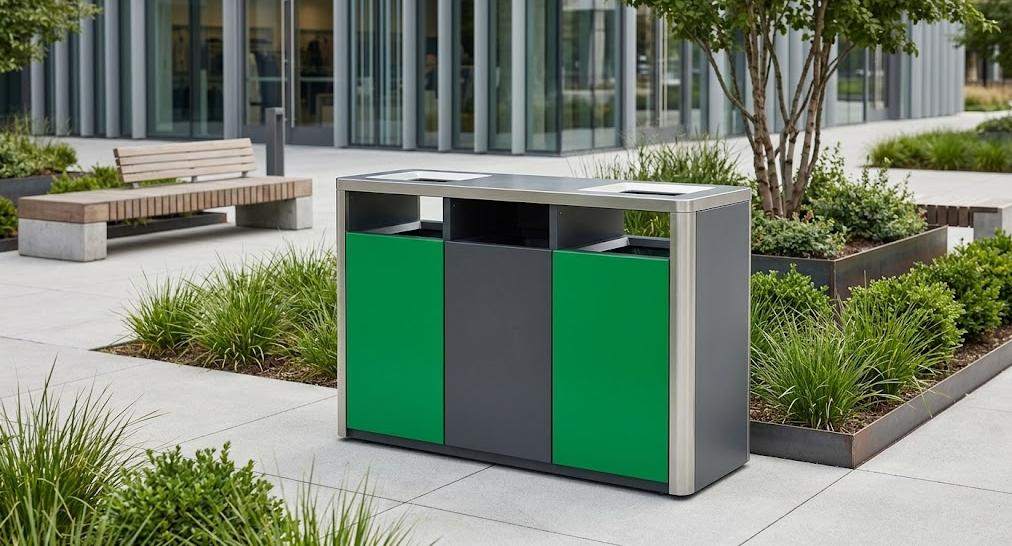
Modern environmental design also emphasizes the concealment of functions. High-performance commercial waste receptacles must meet hygiene standards while considering user experience and maintenance efficiency.
- Modular classification integration: Using a modular structure, recyclables, organic waste, and general waste are integrated into a single container, replacing multiple separate trash cans.
- Odor and pest control: Sealed lids, self-closing flaps, and leak-proof inner liners can block odors and prevent pests or wild animals from rummaging through.
- Ergonomic maintenance: Front-opening access doors and lightweight inner containers feature ergonomic design, which can shorten cleaning time and reduce the risk of garbage spillage.
In high-traffic commercial buildings or transportation hubs, front collection facilities can be connected with rear compression or transfer equipment to achieve efficient connection throughout the process.
Driving Green Standards via Landscape Integration
Sustainability has become a fundamental requirement for the development of public spaces. Complete landscape integration waste management infrastructure can directly contribute to green building certifications such as LEED and WELL.
The use of durable and recyclable metals or wood-plastic composite materials (WPC) reflects the concept of sustainable procurement. At the same time, the intuitive multi-category design can increase the recycling rate of garbage, reduce landfill volume, and promote the circular economy.
Urban furniture made of environmentally friendly materials and with a lifespan of several decades can reduce the frequency of replacement, significantly reducing the carbon footprint throughout the project’s life cycle.
To Conclude
Integrating waste collection facilities into urban landscape design requires striking a balance between architectural aesthetics, stable engineering structures, and practical operational convenience. Waste infrastructure should not be an “afterthought” in design; it is a crucial aspect related to public health, environmental responsibility, and community satisfaction.
At HD Outdoor Facilities, we strive to bridge the gap between design concepts and actual durability. With over a decade of manufacturing experience, we focus on providing comprehensive landscape-integrated waste management solutions—from customized commercial outdoor waste receptacles and intelligent recycling bins to industrial-grade waste compression systems- all available.
No matter what your project’s requirements are—whether it’s custom sizes, specific color schemes, unique aperture designs, or rapid prototyping—our team can offer you both durable and aesthetically pleasing customized solutions. Our service targets municipal departments, commercial developers, and park management teams worldwide.
Are you ready to enhance your next urban project? Visit HD Outdoor Facilities (https://www.hdoutdoorfacilities.com/waste-collection-and-management-solutions) to explore our full range of waste management facilities and outdoor public furniture solutions; you can also contact our design team immediately for a custom quote.