
What Is the Difference Between 9-Gauge and 11-Gauge Steel in Commercial Picnic Tables?
When comparing commercial metal picnic tables, you may see 9-gauge and 11-gauge steel listed in the specifications. These numbers refer to the thickness of the steel, and they are not interchangeable. The difference can affect how well a table handles daily use, outdoor exposure, and heavier impacts.
For parks, schools, campuses, and other commercial outdoor spaces, choosing the right gauge comes down to how the table will be used and how much durability is required.
What Gauge Actually Means
Gauge is a standard way of describing sheet metal thickness. With steel, a lower gauge number means thicker material. So, 9-gauge steel is thicker than 11-gauge steel.
For standard steel gauge measurements, 9-gauge steel is about 0.1495 inches (3.80 mm) thick, while 11-gauge steel is about 0.1196 inches (3.04 mm). That makes 9-gauge steel roughly 25% thicker than 11-gauge steel.
These measurements are based on the Manufacturers’ Standard Gauge for steel. The actual thickness may vary slightly depending on the manufacturer and the coating process, but the basic relationship between the two gauges remains the same.
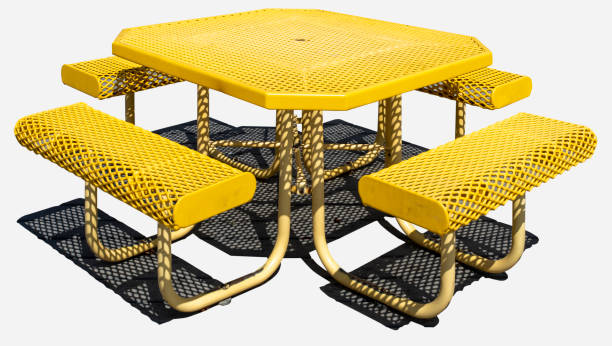
How the Thickness Difference Shows Up in Performance
The difference between 9-gauge and 11-gauge steel becomes more noticeable when a picnic table is exposed to heavy or repeated use.
The main difference is resistance to bending. Thicker 9-gauge steel is less likely to flex under concentrated loads. For example, if several people sit on one side of a table or someone puts heavy equipment on the bench, 9-gauge components will generally hold their shape better. 11-gauge steel can still work well for normal use, but it has more flex under the same load.
The thicker material also provides better resistance to dents and impact damage. Commercial picnic tables may be exposed to boots, coolers, sports equipment, and other hard objects. A 9-gauge top or seat is less likely to develop permanent dents from this type of use.
Long-term performance is another consideration. Outdoor tables are exposed to temperature changes, moisture, repeated loading, and regular cleaning. Thicker steel provides more material to resist deformation over time. For high-traffic locations where tables are expected to remain in service for many years, 9-gauge components can be a worthwhile upgrade.
The main trade-off is weight. A 9-gauge table will generally weigh more than an otherwise similar 11-gauge model. The added weight can improve stability, but it also increases shipping and handling costs and makes the table harder to move after installation.
Where Each Gauge Is Typically Used
In commercial picnic tables, 9-gauge and 11-gauge steel are both common. The choice usually depends on the surface design, expected traffic, and overall table construction.
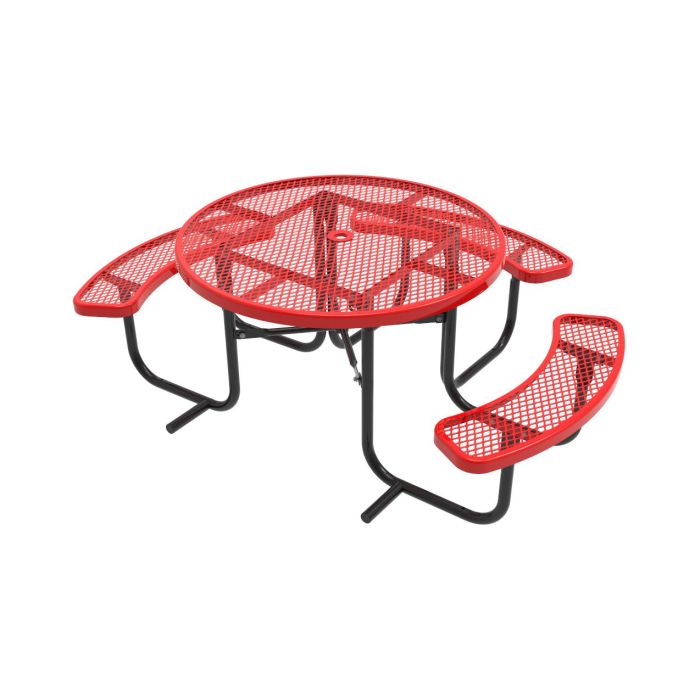
9-gauge steel is often used for expanded-metal tabletops and seats. The expanded pattern reduces the amount of steel used compared with a solid sheet, while the thicker material provides additional rigidity. This combination is common on commercial metal picnic tables used in parks, schools, and other public spaces.
11-gauge steel is also used for perforated-metal tops and seats. The evenly spaced holes create a lighter panel while maintaining adequate strength for many outdoor applications. Some tables also use 11-gauge tubing for legs and support components, while using thicker steel for the tabletop and seats.
For high-traffic locations such as municipal parks, school grounds, and rest areas, 9-gauge surfaces are often preferred when durability is a priority. 11-gauge can be suitable for moderate-traffic areas such as plazas, restaurant patios, and corporate campuses, particularly when the frame, coating, and overall construction are well designed.

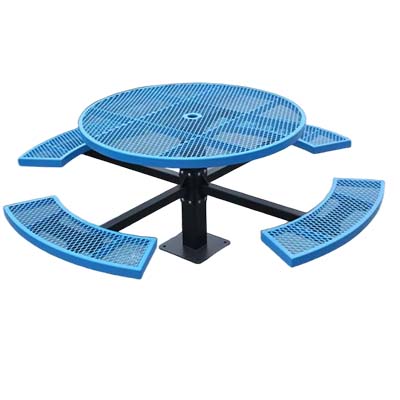
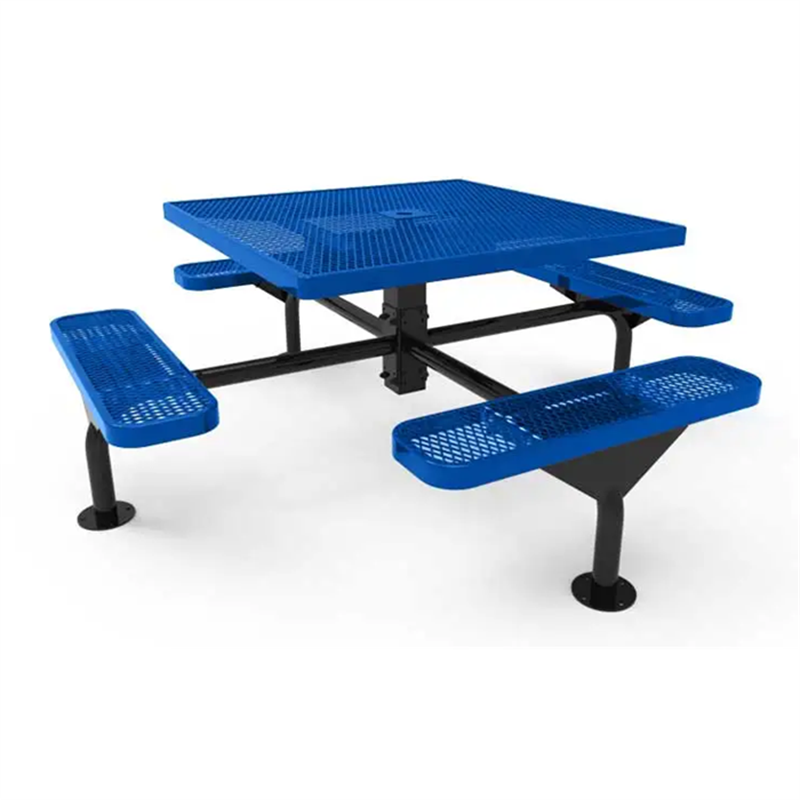
Common Misunderstandings
There are a few common mistakes when comparing 9-gauge and 11-gauge steel.
The first is assuming that a higher gauge number means thicker or stronger steel. It does not. With steel, 9-gauge is thicker than 11-gauge. When comparing products, check the actual material thickness rather than looking at the gauge number alone.
Another common mistake is assuming that a good coating can make up for thinner steel. Thermoplastic and powder coatings help protect the surface from corrosion, weather, and UV exposure, but they do not provide the same structural benefit as thicker steel. The steel thickness still affects how the table handles weight, impact, and repeated use.
It is also easy to assume that 11-gauge automatically means heavy-duty construction. It can be suitable for residential and light commercial applications, but high-traffic public areas may benefit from the additional thickness of 9-gauge steel, particularly where the furniture may be exposed to heavy use or impact.
How to Decide for a Specific Project
Start with how the tables will be used. Consider the expected number of users, daily traffic, and the level of physical abuse the furniture may face. High-traffic public locations generally make a stronger case for 9-gauge steel.
The expected service life is another factor. If the tables are intended to remain in place for 15 or 20 years with limited replacement, spending more on thicker components may make sense. The higher upfront cost can be easier to justify when durability is a priority.
Budget and logistics also need to be considered. 9-gauge tables are generally heavier and more expensive to manufacture and ship. For projects with many tables in moderate-traffic locations, 11-gauge steel may provide enough strength without adding unnecessary weight and cost.
Do not choose a table based on the sheet gauge alone. Look at the entire frame and assembly, including tubing wall thickness, welds, mounting points, and anchoring method. A thicker tabletop cannot compensate for a poorly designed frame.
If the specification is still unclear, ask the manufacturer for the full material and construction details of the model you are considering. Suppliers of commercial outdoor furniture can usually provide the gauge, tubing dimensions, coating system, and other specifications needed for a project-level comparison.
Closing Thoughts
The main difference between 9-gauge and 11-gauge steel is thickness. 9-gauge steel is about 25% thicker, which gives it better resistance to bending and denting under heavy or repeated use.
For commercial picnic tables in busy parks, schools, and other public spaces, 9-gauge steel can be a good choice when durability is a priority. For moderate-traffic areas, 11-gauge may provide sufficient strength while keeping the table lighter and more affordable.
When comparing commercial metal picnic tables, check the actual gauge and thickness of the tabletop and seat material. Also look at the frame, welds, coating, and anchoring system. These components all affect the table’s overall performance.
For projects with specific durability, material, or customization requirements, you can ask hdoutdoorfacilities for the complete construction specifications before placing an order.