
Is Your Mobile Waste Compactor 2026-Ready for Smart Waste Management?
The cost of operating a mobile waste compactor in 2026 is no longer determined by its mechanical lifespan. This is because fuel surcharges are increasing, and carbon reporting has become a necessity. This has altered the way industrial waste management equipment is used.
To ensure profitability, businesses must make a shift from traditional to data-enabled equipment that responds to particular business concerns.
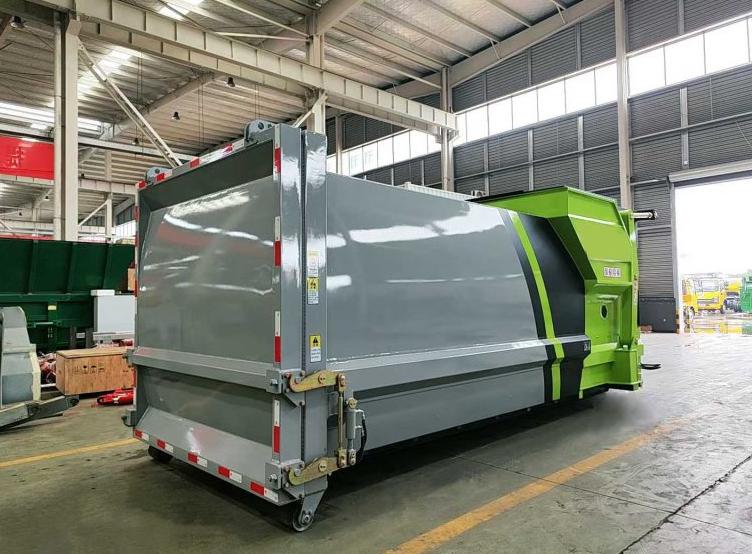
Boosting ROI with IoT-Enabled Mobile Waste Compactor Tech
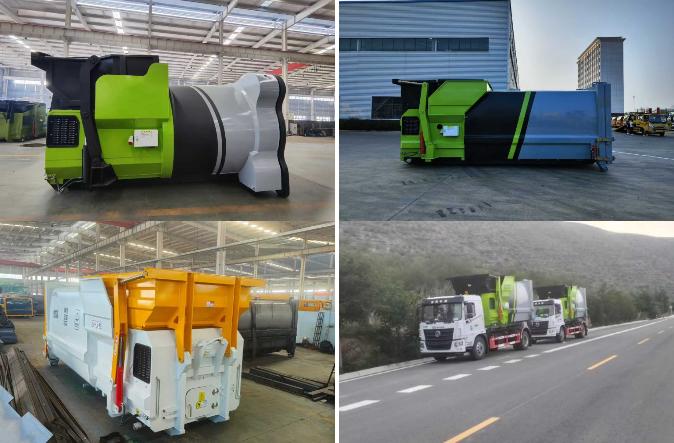
The main goal of contemporary waste management is to reduce the need to collect waste. Hauling space within waste containers means spending money on transportation fees and labor.
Predictive Analytics via Real-Time Fill-Level Monitoring Systems
The conventional waste collection system is based on a predetermined schedule, leading to waste collection before the bins reach their maximum capacity. The real-time fill-level monitoring system uses ultrasonic sensors to measure the waste volume in real time. By using predictive analytics, the system is able to determine the exact date and time when the waste unit will reach its 95% capacity. This helps the manager shift from a “reactive” to a “proactive” waste collection system, reducing the overall hauls by 20% to 30%.
Maximizing Payload Efficiency with High-Density Compaction
The second lever to achieve ROI is the compaction force. High-density compaction uses variable pressure hydraulics to adjust the force of the ram in relation to the materials’ resistance. This guarantees that the greatest amount of weight is contained in every load. By maximizing the efficiency of the payload per ton, the company can more effectively consolidate the wastes, thus reducing the cost per ton.
Navigating ESG Compliance with Automated Carbon Reporting
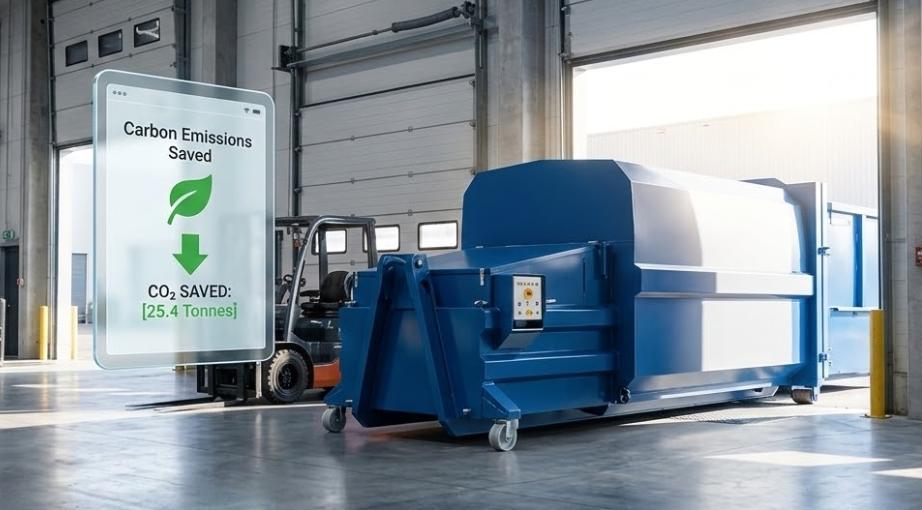
Environmental, Social, and Governance factors in 2026 demand detailed information on the waste streams and the emissions related to logistics. Estimates are no longer adequate for institutional audits.
Tracking Scope 3 Emissions through Smart Compactor Data
Scope 3 emissions, which cover indirect emissions generated in the value chain, such as the emissions from the waste management service, constitute the largest proportion of the organization’s emissions for most organizations.
The smart trash compactor is a data collection terminal for such emissions and activity data. Every time the trash is compacted, the event is recorded, giving us exact data about the waste being generated and how dense it is. This data is then sent to a cloud-based dashboard, allowing you to create an automated carbon footprint report, replacing manual guesstimates and giving you a trail of the exact emissions being generated by your waste processing and its subsequent hauling.
Reducing Truck Roll Emissions for Sustainable Waste Management
Every waste collection action, or “truck roll,” is a direct addition to your Scope 3 total based on the amount of fuel consumed by the hauler’s vehicle. Using sustainable waste management technology to optimize waste collection intervals has the direct effect of reducing the number of heavy-duty trucks entering a facility, providing a quantifiable measure in a company’s sustainability report to meet internal carbon reduction goals and avoid a carbon tax on inefficient operations.
Eliminating Downtime through Remote Compactor Diagnostics
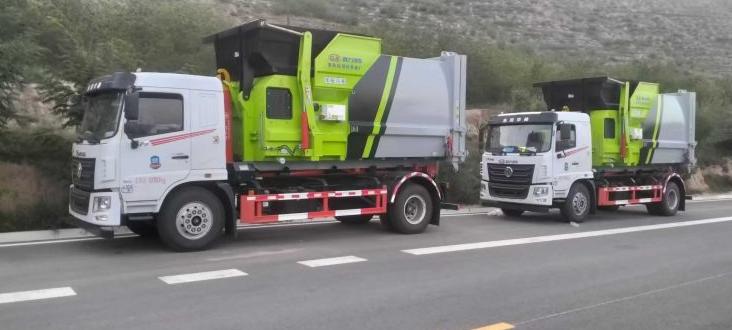
The compactor’s mechanical failure causes immediate bottlenecks in the warehouse and production workflows. The traditional repair practices, based on reactive service calls and physical inspections, often lead to days of system downtime. As of 2026, the industry has adopted a “Remote First” approach to ensure the system is running at all times:
- Cloud-Based Troubleshooting: Service providers can remotely access the machine’s PLC to reset sensors or install firmware updates, fixing software-based logical errors in minutes.
- Predictive Component Tracking: Sensors monitor the heat of the motor, the hydraulic pressure, and the vibrations of the components.
- Targeted Service Dispatch: If the problem requires physical repair, the real-time error logs ensure that the service technician arrives on site with the parts needed for the repair, reducing the number of diagnostic service visits.
Preventive maintenance for the compactors can transform the service model from costly repairs into a more controlled service approach, which ensures that the mobile waste compactor continues to operate as an integral part of the facility’s logistics network.
Financial Strategy: Smart Mobile Waste Compactor Leasing
The initial cost of smart technology is one of the main issues in the adoption of smart technology. This challenge has been addressed in the 2026 market, which has adopted the Waste as a Service (WaaS) model. This model allows the company to use waste equipment as an operational expense (OPEX) rather than a capital expenditure (CAPEX).
- Preserving Cash Flow: Leasing the mobile waste compactor eliminates the initial cost of the compactor, preserving the company’s cash flow for the business.
- Tax and Technology Benefits: WaaS contracts provide the company with tax-deductible monthly payments and the benefit of using the latest IoT technology.
- Integrated Maintenance: The majority of lease contracts include all preventive maintenance services for industrial compactors, ensuring the risk of unforeseen costs for repairs is eliminated from the balance sheet.
To determine the overall savings of operation, including reduced hauling costs, reduced carbon taxes, and no costs for repairs, the monthly lease is offset by the overall savings of reduced waste costs.
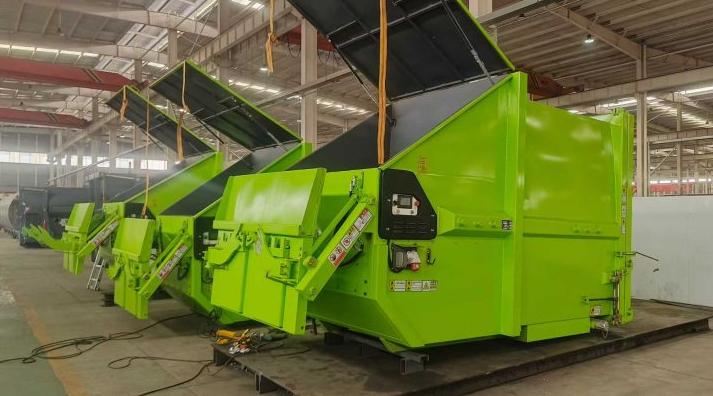
For those facilities looking to optimize costs immediately, the HD outdoor portable waste compactor is a high-end, IoT-enabled product designed to provide an instant ROI based on improved density of compaction and remote monitoring capabilities.
Ready to take your waste management into the future? Contact us today to schedule a custom 2026 Smart Waste ROI Analysis for your facility!