What Material Is Best for Outdoor Benches? Wood vs. Metal vs. Recycled Plastic
The selection of outdoor bench materials is of utmost importance. An incorrect choice may result in the bench looking great on the first day, but soon it will become a maintenance headache, with deformations, rusting or mold growth.
This guide provides a detailed overview of the three most common outdoor bench materials – wood, metal and recycled plastic – covering their durability, maintenance costs, and the specific environmental conditions in which each material is suitable. Whether you are equipping benches for public parks, hotel entrances or your own backyard, understanding the choice of outdoor bench materials for the space will save you time, money and reduce potential future troubles.
Why Does Bench Material Matter More Than You Think?
The challenges faced by outdoor furniture are quite different from those of indoor furniture. Ultraviolet radiation gradually damages the surface materials. Rain, humidity and water accumulation accelerate the decay and rusting of wood. Temperature fluctuations cause the materials to expand and contract over time. In areas with high foot traffic, benches also need to be able to withstand repeated use of heavy objects, without any loose joints or cracks.
The material you choose will determine the durability of this bench when exposed to these factors, as well as the effort required to keep its appearance tidy. If you select the right material, you can use it for decades without much maintenance. However, if you make the wrong choice, you will need to replace it more frequently, and the process will occur much earlier than planned.
Wood Outdoor Benches
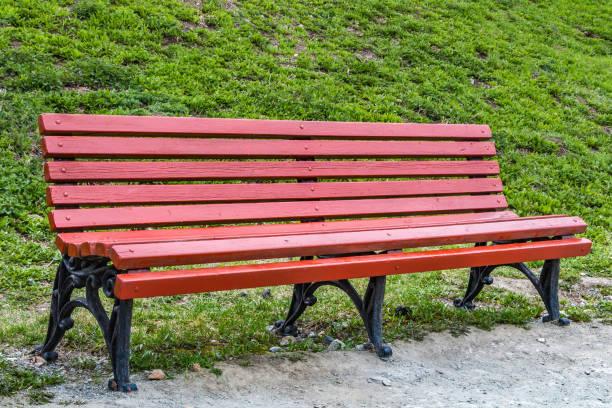
Wood is the classic choice for outdoor seating, and for good reason. It looks natural, fits into almost any landscape, and has a warmth that metal simply doesn’t offer.
Types of Wood Commonly Used
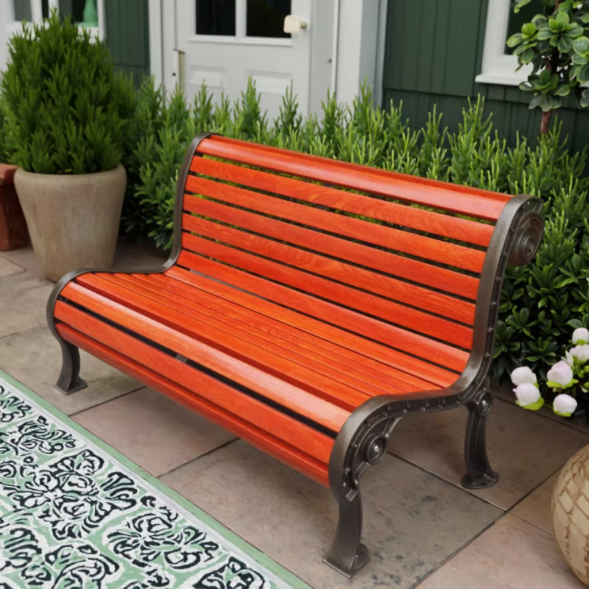
Not all types of wood perform the same outdoors. Hardwoods such as teak, iroko, and oak are the most durable options, especially teak, which has natural oils that can resist moisture and pests, and can remain in good condition without much treatment. Softwoods like cedar and pine are lighter and more affordable, but they require more protection in humid climates to remain intact. Wood that has been treated with preservatives undergoes chemical treatment to prevent rot and pests, making it a practical choice when cost is a factor, although its appearance is not as refined as that of hardwoods.
What Wood Does Well
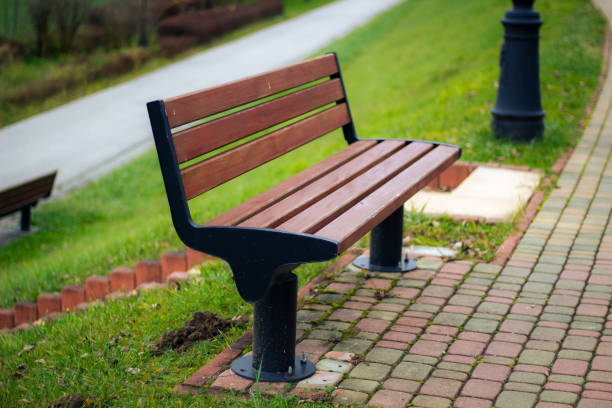
The main advantage of wooden benches lies in their aesthetic appeal. They can seamlessly blend with gardens, parks and the surrounding environment. The wooden seats are also very comfortable to sit on. Unlike metal, they won’t become hot under the sun and won’t feel icy cold in winter. If the wooden benches are damaged or worn out, they can usually be repaired by sanding rather than being replaced entirely.
Where Wood Falls Short
The ongoing maintenance is the biggest drawback. Hardwood benches typically need oiling or sealing every one to two years to prevent drying and cracking. Without that upkeep, even quality wood will start to look weathered quickly. In damp or humid climates, wood is also prone to swelling, warping, and eventually rotting if moisture gets into the grain repeatedly.
Long-term, wood can end up being the most expensive option once you factor in maintenance products and eventual replacement.
Best Situations for Wood
Wood benches are best suited to private gardens, low-traffic parks, and sheltered outdoor spaces, especially where appearance is a priority. If you’re in a dry or mild climate and willing to do seasonal upkeep, hardwood is a genuinely excellent choice.
Metal Outdoor Benches
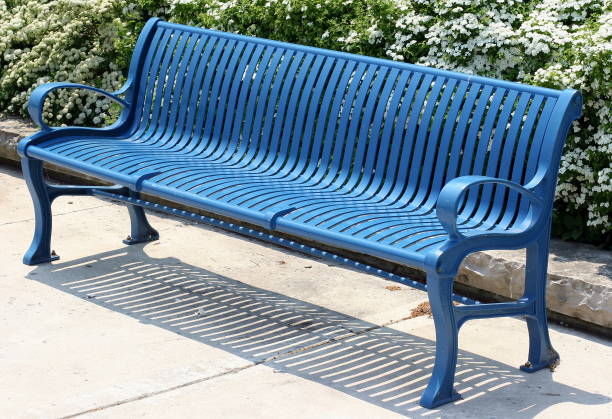
Metal benches are the workhorse of public outdoor furniture. Walk through any city park, train station, or shopping precinct, and metal benches are almost always part of the picture.
Types of Metal Used
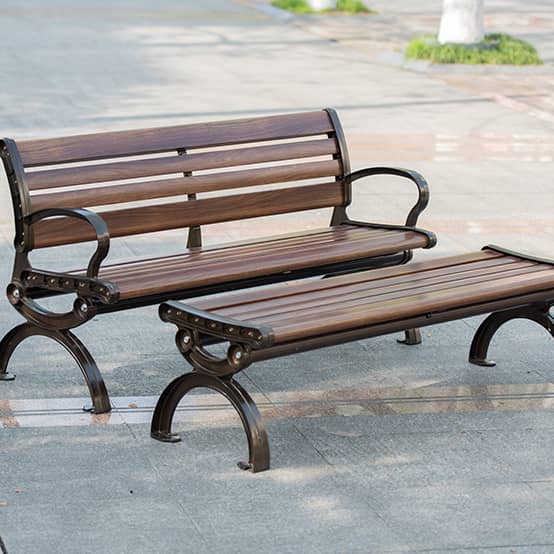
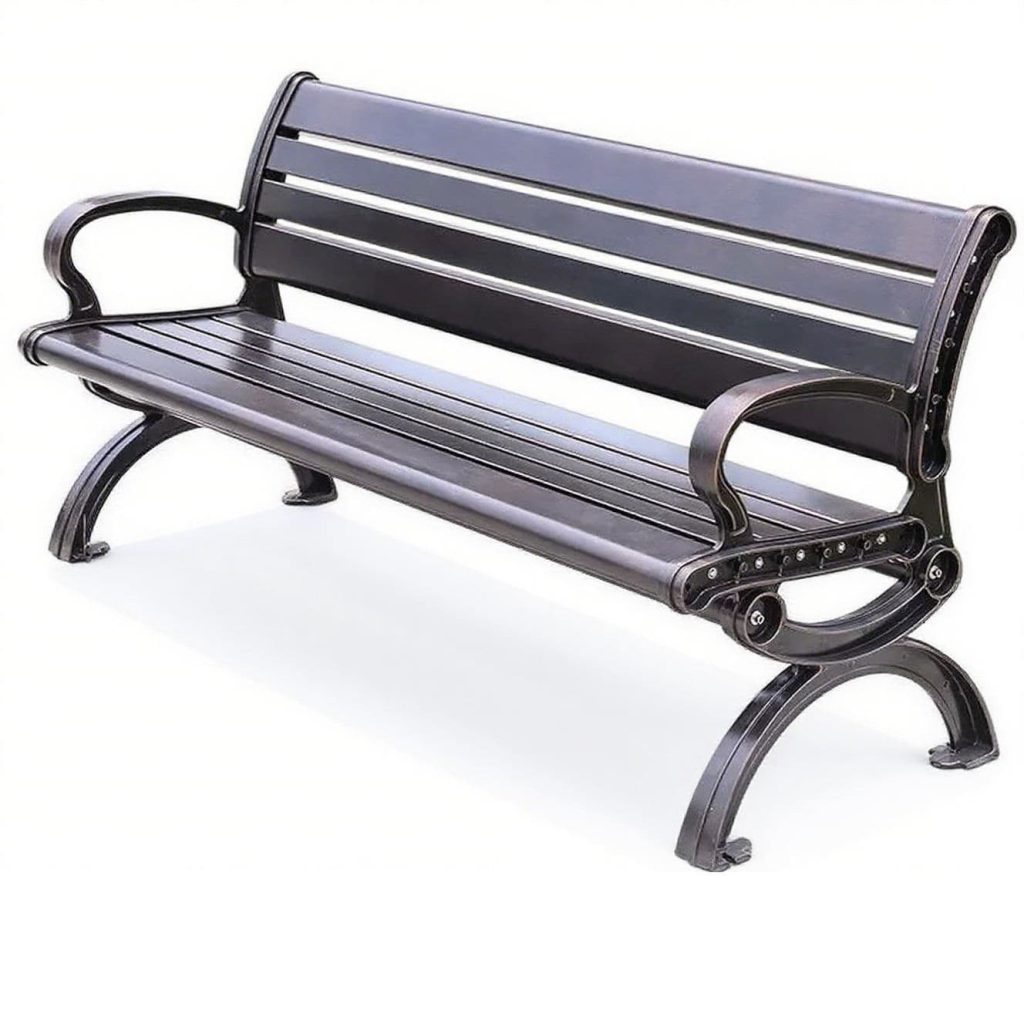
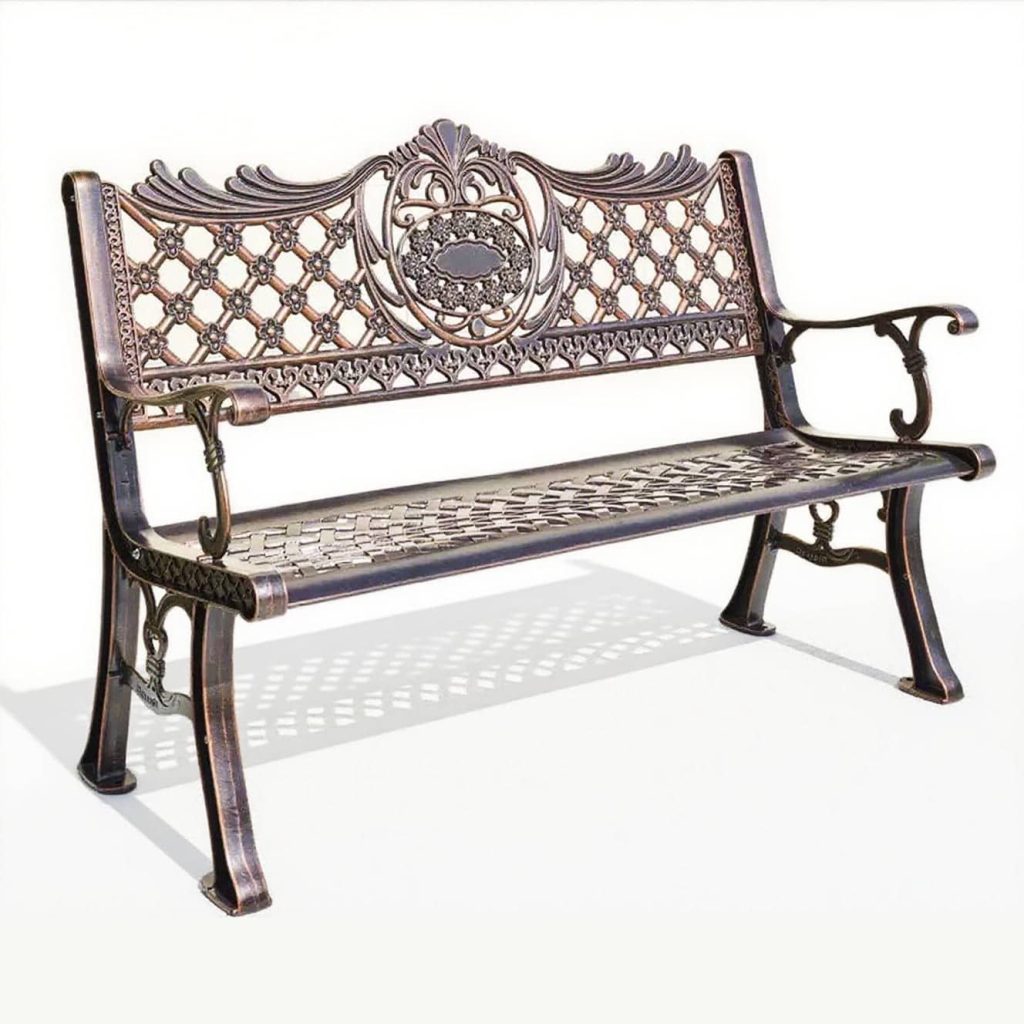
Galvanized steel is coated with a layer of zinc to prevent rusting. It is one of the most common materials used for commercial outdoor benches. Cast iron is very heavy and sturdy, and is commonly found in places with historical or Victorian styles. It is difficult to move and install. While aluminum is lightweight, corrosion-resistant and has extremely low maintenance costs, it has now become a popular choice for modern commercial and residential buildings. Stainless steel has the highest corrosion resistance and a clean, modern appearance, but its price is usually higher.
What Metal Does Well
The design of the metal benches is to enable them to be used for a long time in harsh environments. They can effectively resist damage, do not absorb water, and most metal materials only need regular cleaning to maintain good condition. Especially aluminum performs particularly well as it does not rust, is lightweight and easy to reposition, and is more resistant to the test in coastal environments than steel.
For high-traffic public spaces, metal is often the most practical and cost-effective long-term choice.
Where Metal Falls Short
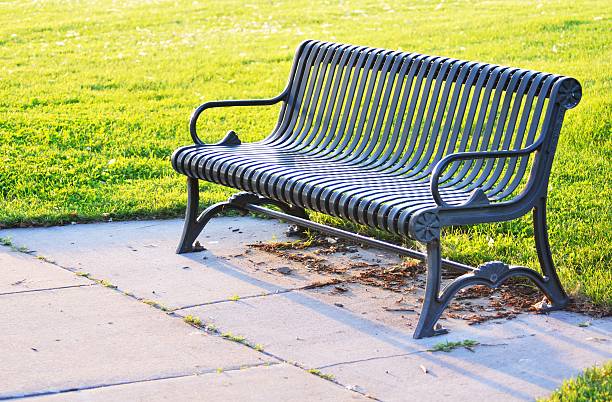
The main complaints about metal benches tend to come down to comfort and climate. Metal surfaces can become uncomfortably hot in direct summer sun and very cold in winter. In coastal or industrial areas with high salt or pollutant exposure, some metal types (particularly untreated steel) are prone to rust if the protective coating is damaged. Cast iron, while nearly indestructible, is heavy enough to make installation and repositioning difficult.
Best Situations for Metal
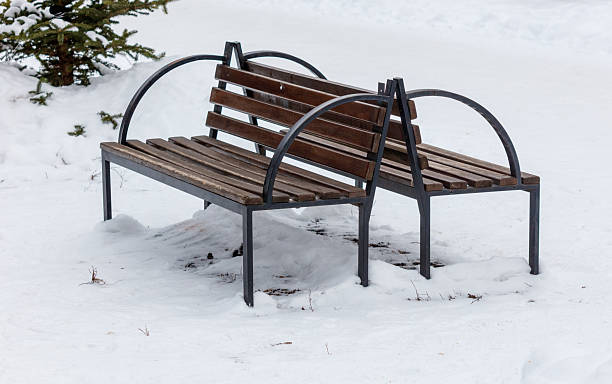
Metal benches are the preferred choice for parks, streets, transportation hubs, schools and commercial plazas, etc. In those places that prioritize durability and low maintenance costs rather than comfort or aesthetics, metal benches are the best option.
Recycled Plastic Outdoor Benches
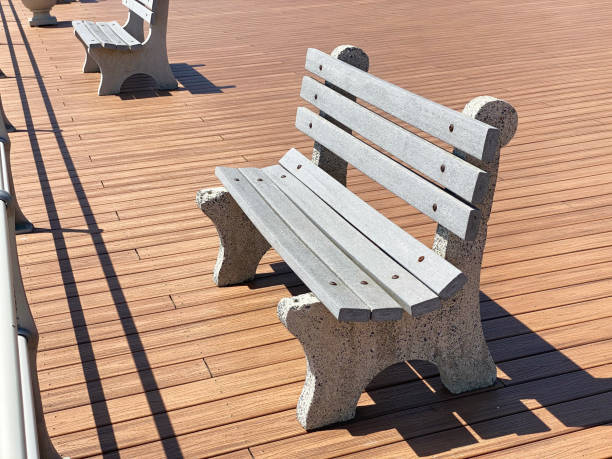
Recycled plastic lumber (RPL) is made from waste plastic materials, mainly high-density polyethylene (HDPE). These plastics usually come from items such as milk bottles and plastic packaging. In the field of outdoor furniture, this material is relatively new, but its application scope has been expanding in recent years, especially in commercial and municipal sectors.
What Makes Recycled Plastic Different
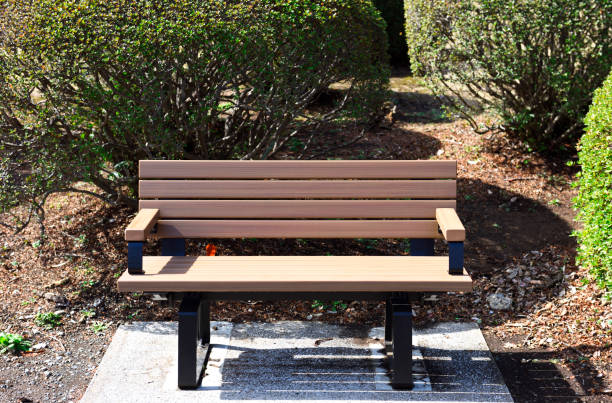
Unlike wood or metal, outdoor benches made from recycled material don’t rot, rust, splinter, or absorb moisture. The material is dense, colourfast, and largely immune to the weather conditions that degrade other materials over time. Many manufacturers produce it with a wood-grain texture and offer a range of colours, so it can visually approximate the look of timber while delivering far better performance.
According to research published by PlasticsEurope, HDPE is one of the most widely recycled plastics globally, and using it in durable products like outdoor furniture extends the lifespan of the material significantly before it ends up in landfill.
What Recycled Plastic Does Well
The headline benefit is zero maintenance. There’s no oiling, painting, staining, or sealing required. Recycled plastic benches won’t fade, crack, or degrade from UV exposure the way untreated wood does. They’re also resistant to moisture, salt air, and cleaning chemicals which makes them particularly well-suited to coastal locations, swimming pool surrounds, and environments where cleaning with pressure washers or disinfectants is routine.
Lifespan is another strong point. Quality recycled plastic benches are typically rated for 20 to 50 years of outdoor use, considerably longer than most wood or painted metal alternatives. The British Standards Institution (BSI) and similar organisations have developed testing frameworks for recycled plastic lumber products to verify durability claims, which has helped establish greater confidence in the material for public sector procurement.
On the environmental side, choosing recycled plastic directly diverts plastic waste from landfill and avoids the need to harvest timber.
Where Recycled Plastic Falls Short
The upfront cost is higher than most wood or standard steel options. If budget is the primary driver, that initial price difference can be a barrier. Though it’s worth noting that the near-zero maintenance costs and longer service life often make it cheaper over a 10 to 20-year period.
Aesthetically, recycled plastic won’t match the natural grain and texture of real hardwood. For settings where heritage appearance or a purely natural aesthetic matters, this is a consideration. The material can also expand slightly in extreme heat, though this is typically accounted for in the design of quality benches.
Best Situations for Recycled Plastic
Recycled plastic benches are the strongest choice for coastal areas, schools, swimming pools, public parks with heavy use, and any location where ongoing maintenance is either impractical or undesirable. They’re increasingly the preferred option for local councils and facility managers looking to reduce lifecycle costs and meet sustainability targets.
| Feature | Wood | Metal | Recycled Plastic |
| Durability | Medium | High | Very High |
| Maintenance Required | High | Low–Medium | None |
| Comfort | High | Low | Medium |
| Eco-Friendly | Medium | Low | ✅ Very High |
| Upfront Cost | Medium | Medium | Higher |
| Long-Term Cost | Higher | Medium | Lowest |
| Best Climate | Dry / Mild | Any | Any (esp. wet / coastal) |
| Vandal Resistance | Low–Medium | High | High |
| Typical Lifespan | 5–15 years | 10–25 years | 20–50 years |
If you plan to make a long-term investment in outdoor seating, whether for commercial venues, public areas, or your own property, don’t just focus on the initial price. You should also consider the additional costs these seats will bring you over the next 10 to 20 years, including usage costs, maintenance expenses, and replacement costs. Usually, the differences in these aspects will be more obvious.
Looking for outdoor benches that suit your space and budget? Browse our full range of commercial and residential outdoor seating options, or get in touch with our team for a recommendation.
Related Products